
Interview: Michael Strickland - “Of the Earth”
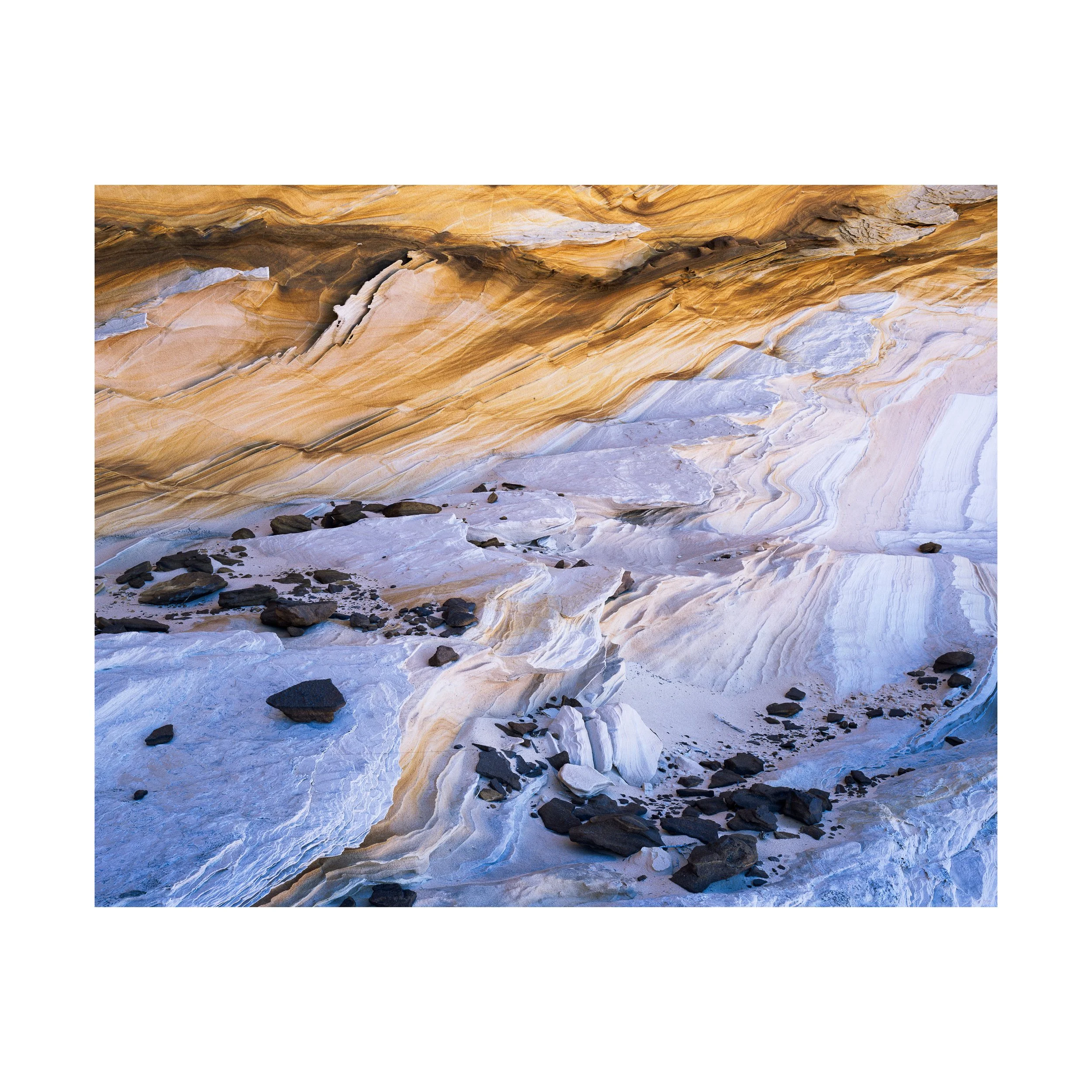
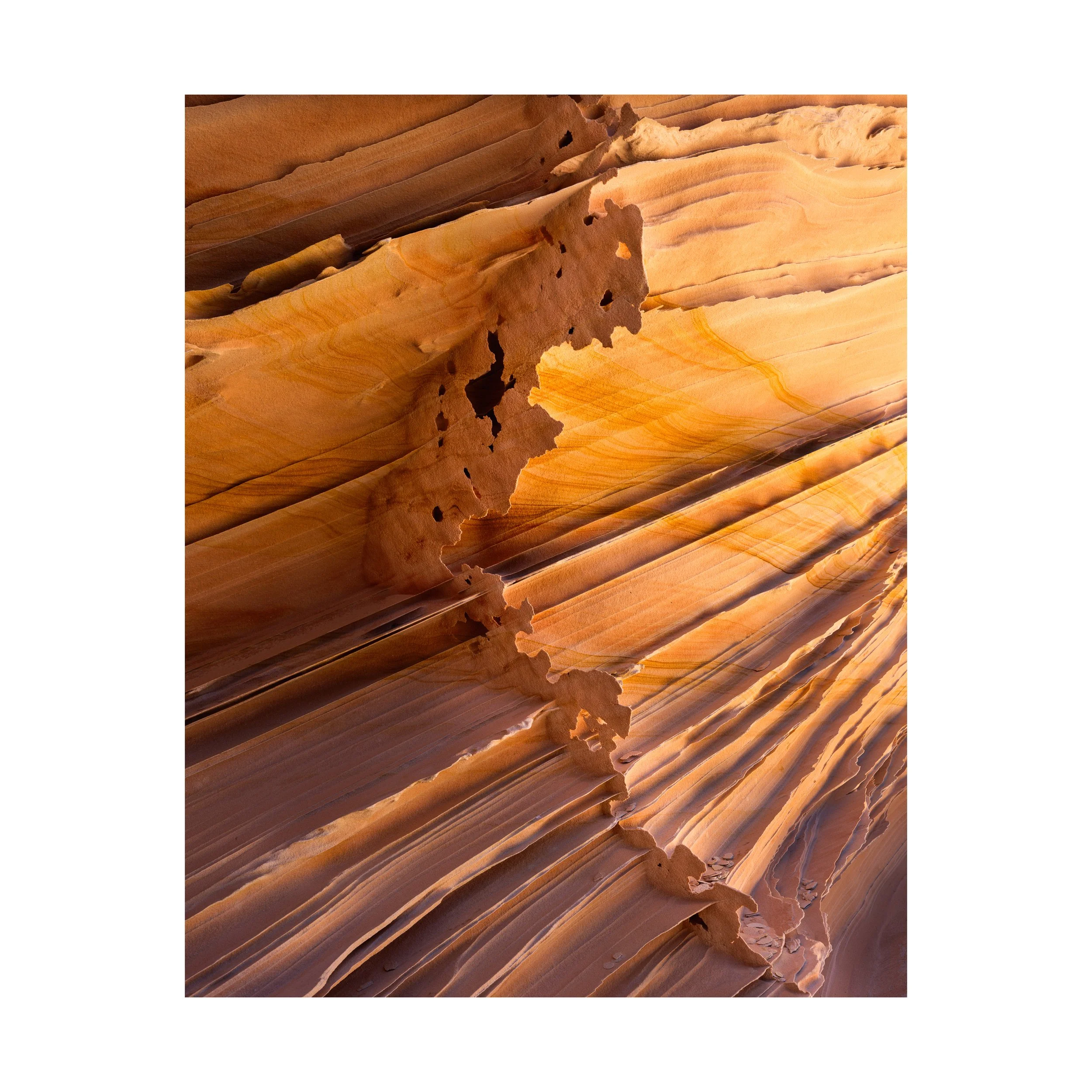
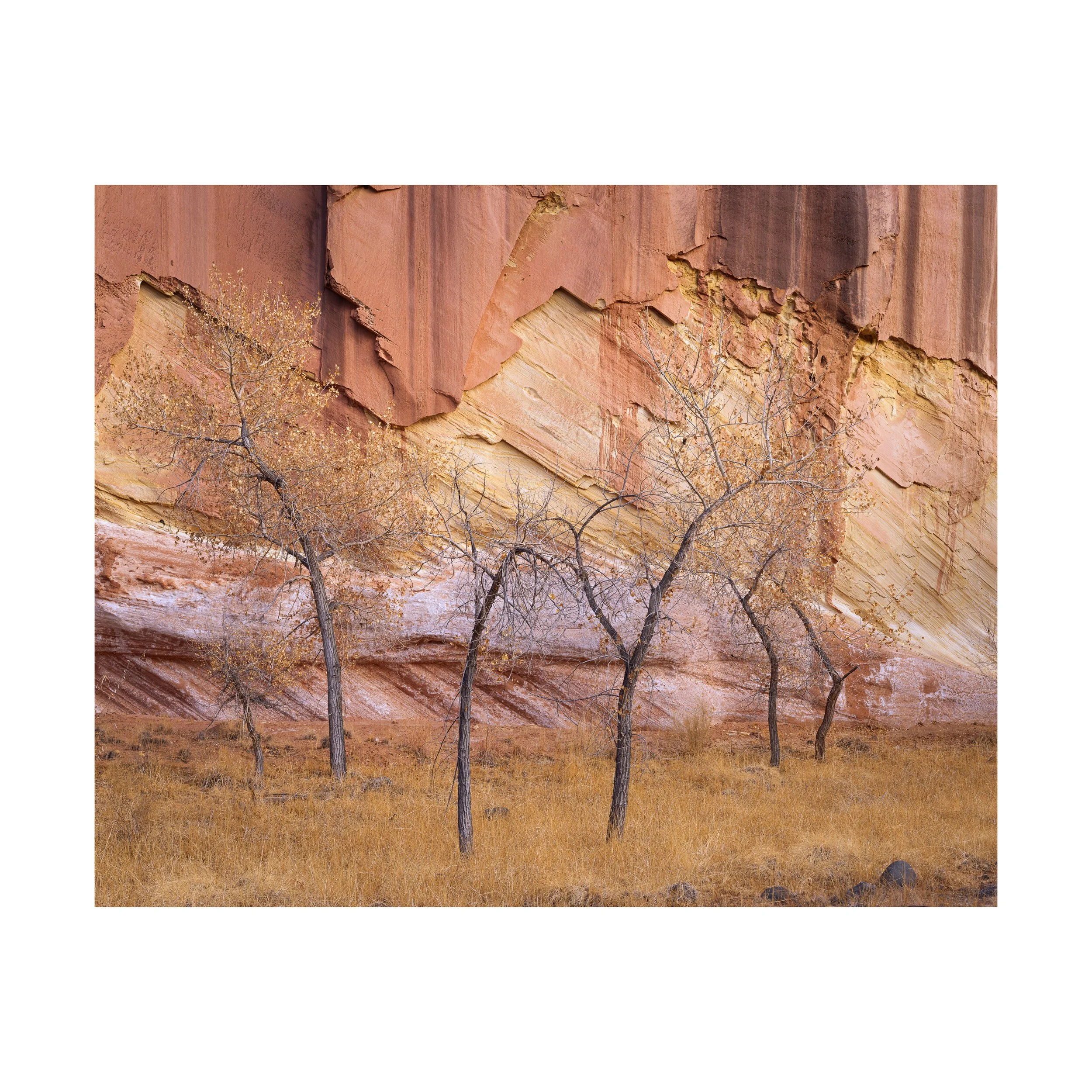
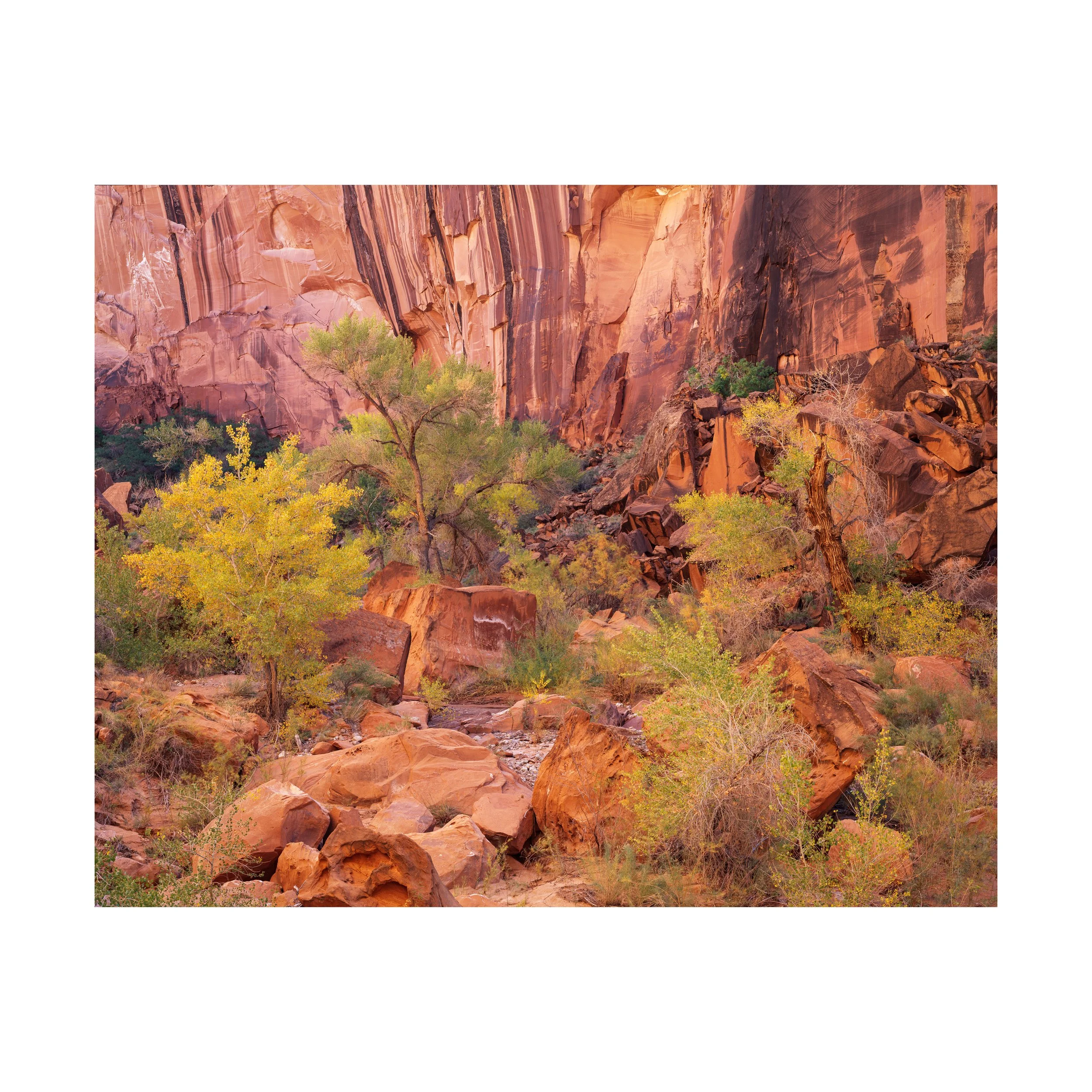
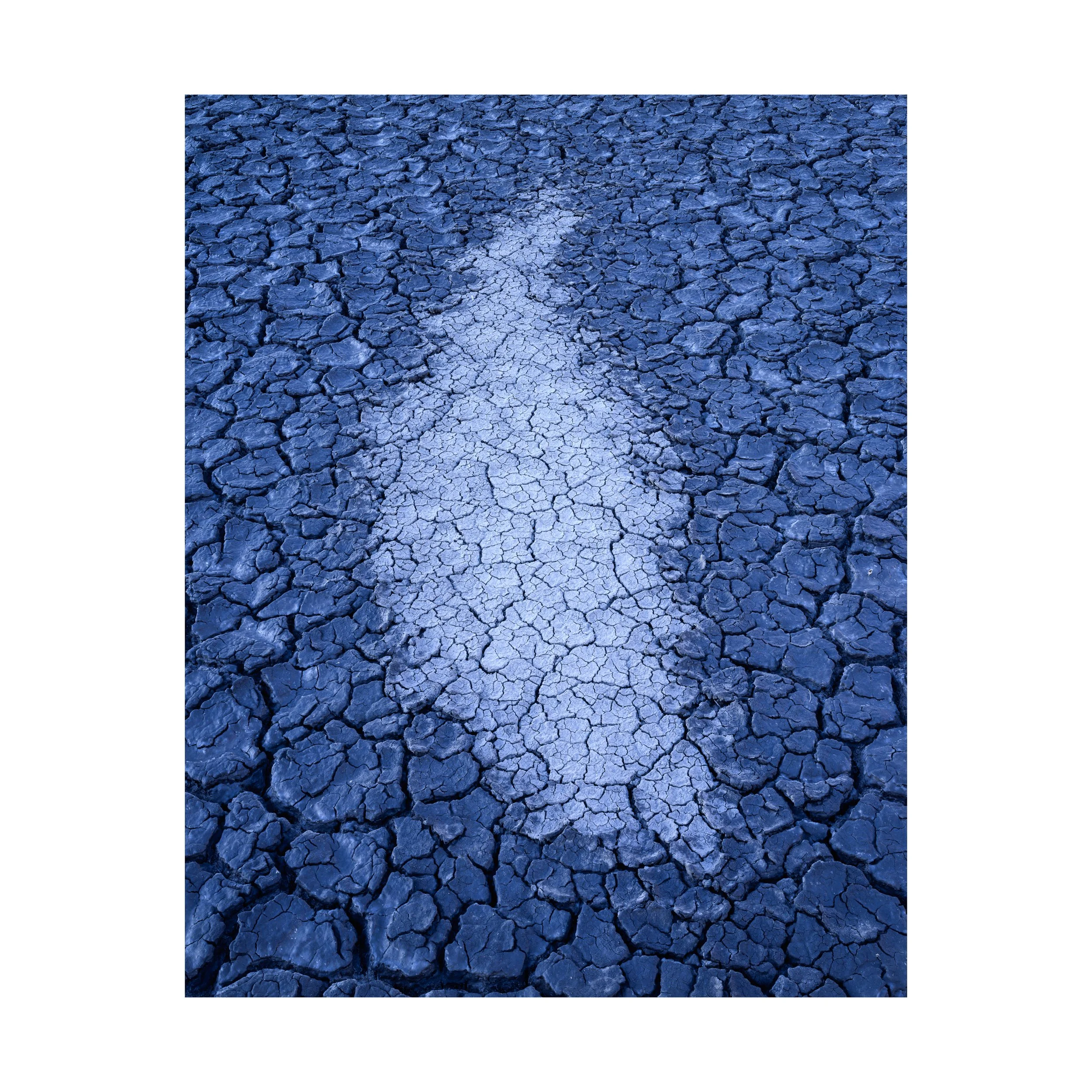
In the middle of goddamn nowhere, Kansas, Michael Strickland has built one of the most technically ambitious printmaking studios in the world, a facility designed from the ground up for a single purpose: producing color carbon prints, some of the largest ever made. Strickland is a large format landscape photographer, a self-described traditionalist, and a printer who grinds his own pigments from the very landscapes he photographs, suspending soil, clay, and charred wood into gelatin emulsions that become the photograph itself. His project Of the Earth collapses the distance between subject and artifact. The land is not just depicted in the print; it is physically embedded within it. We spent an evening talking about pigments, view cameras, trophy hunting, dying crafts, artist statements, and why the print, not the image, is what gets carried on to the next generation.
INTERVIEW
Michael Behlen: For the uninitiated, how does somebody take raw material from the ground and use it as color in a photographic print?
Michael Strickland: It's a little hard to describe technically, but at its core, we're grinding material into fine particulates that will suspend in photosensitized gelatin. The gelatin sets, the water evaporates, and with a sensitizer added, it becomes light sensitive. Dichromate is what was traditionally used, but hexavalent chromium is the same really, really bad stuff Erin Brockovich went after in California a long time ago. We don't use it because it kills you. Instead, I use a diazo sensitizer, a newer crosslinking sensitizer. When it's exposed to ultraviolet light, it takes gelatin and makes it insoluble in water, which is exactly what you want. The more ultraviolet light it absorbs, the more the gelatin crosslinks, and the less it will dissolve, increasing the density of the color. Development is essentially the reverse: you're washing away all the gelatin that remains soluble, because during exposure you've made the gelatin you want in that color layer insoluble. All the tonal detail you want stays on the print because it's been exposed. Then it gets transferred onto a piece of paper, and it becomes a print.
MB: The pigments, soils, and elements used in the printing process come directly from the places you photograph. Can you walk us through how you collect these pigments?
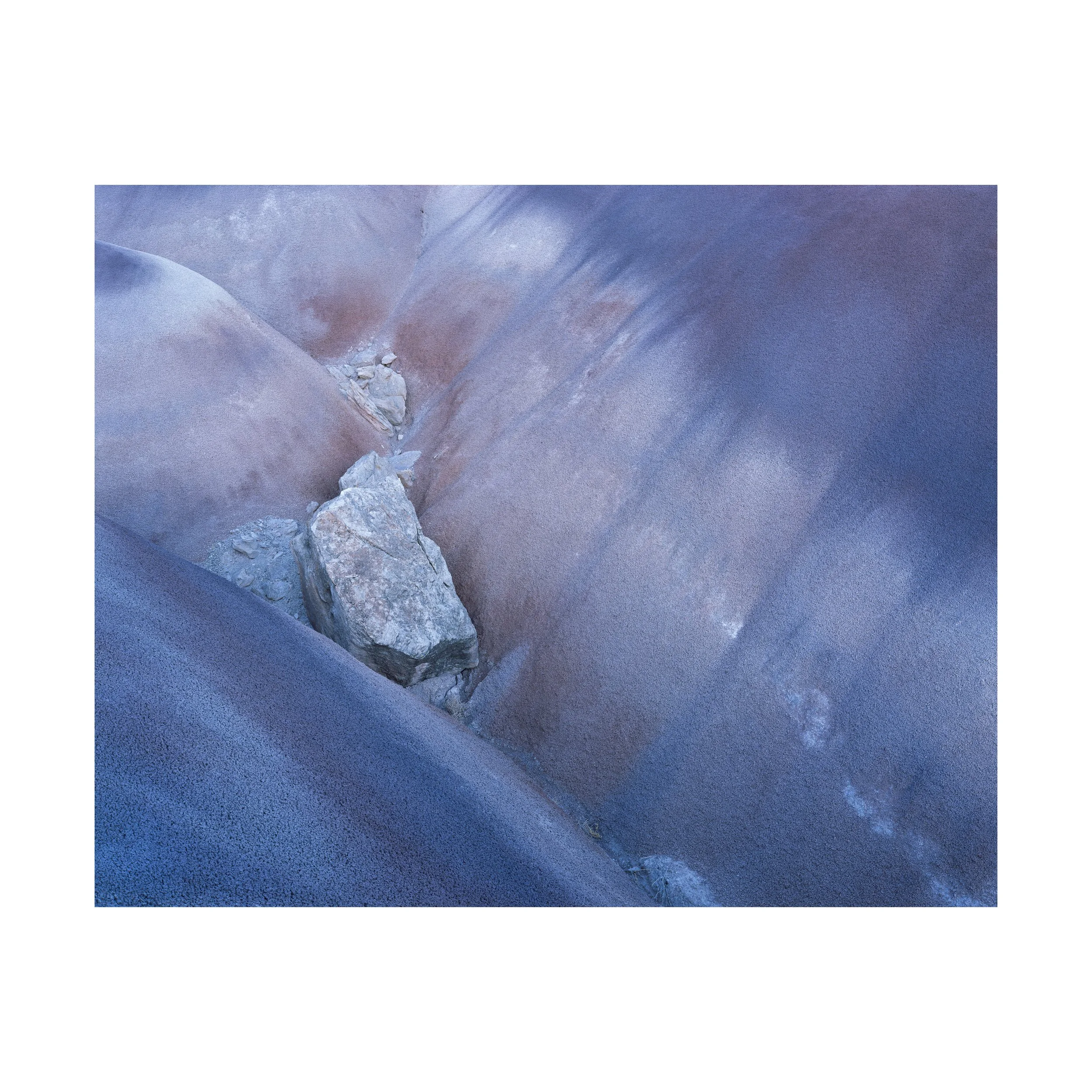
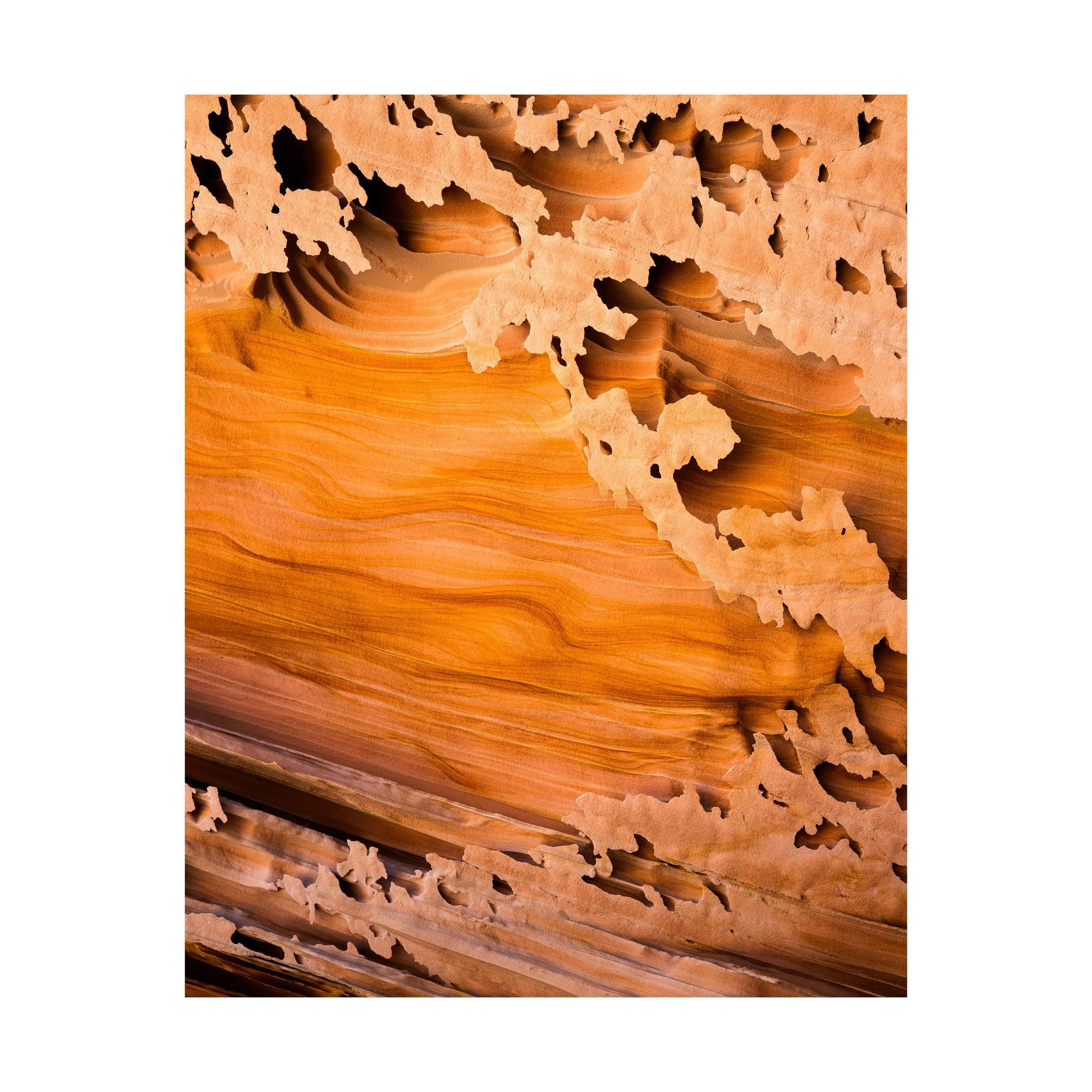
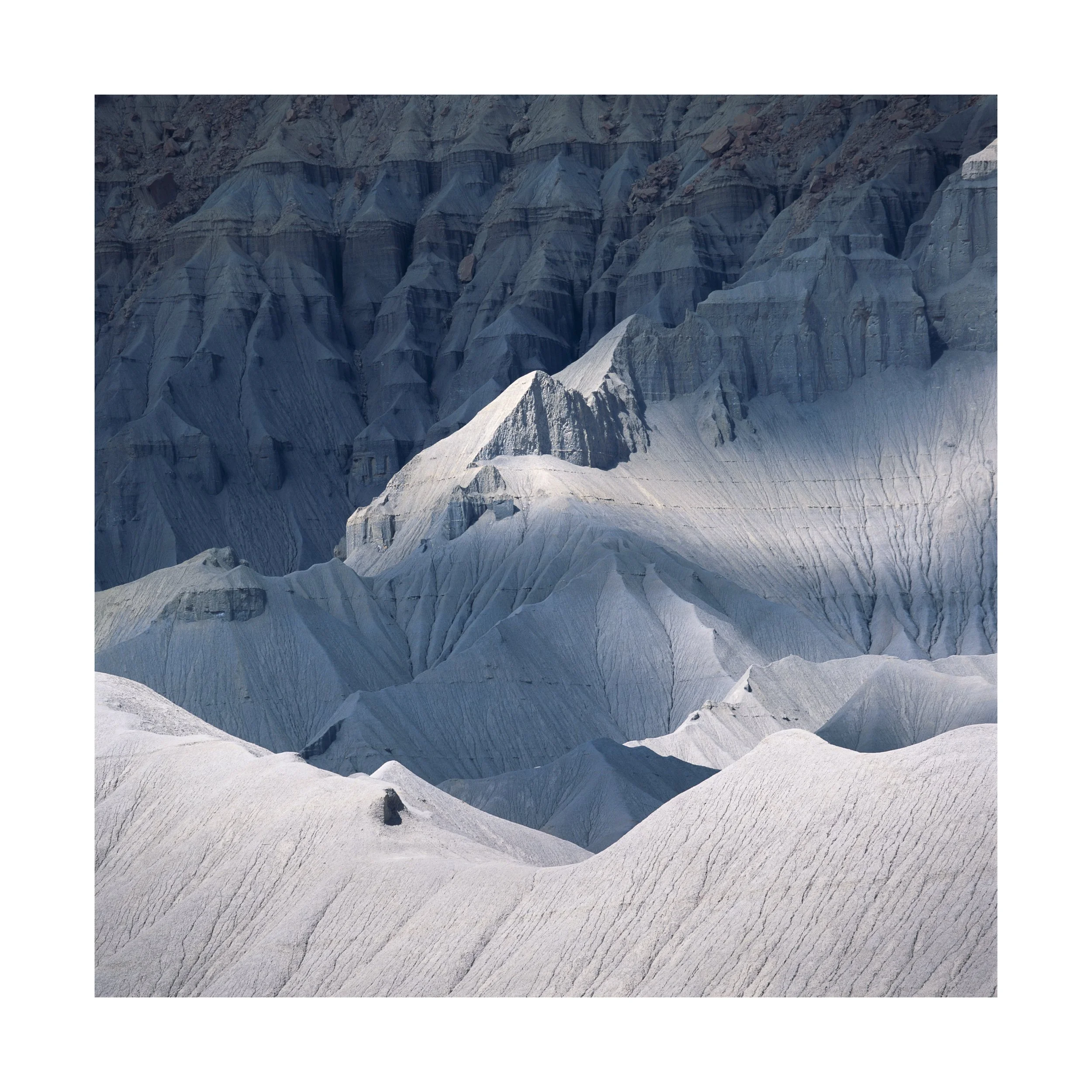
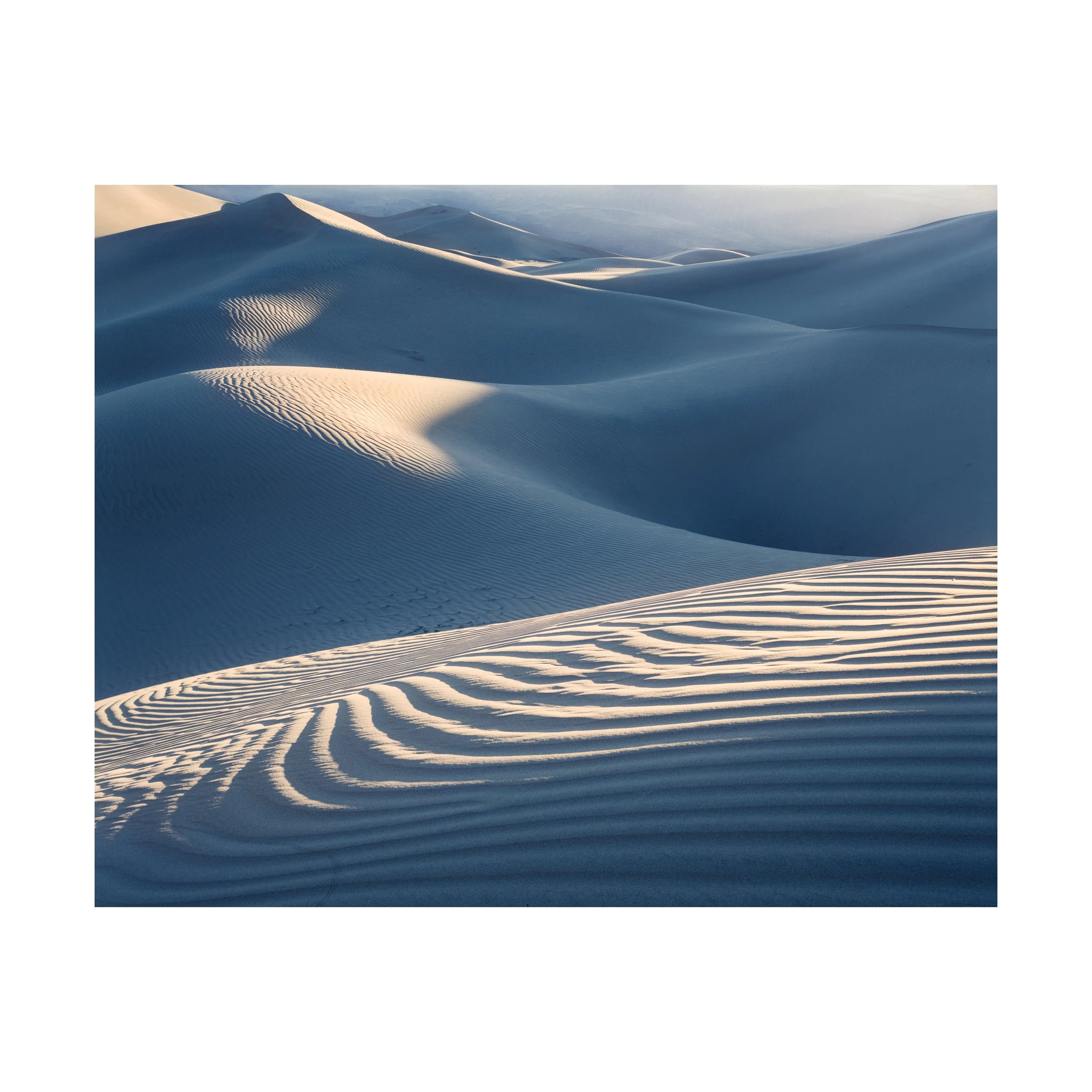
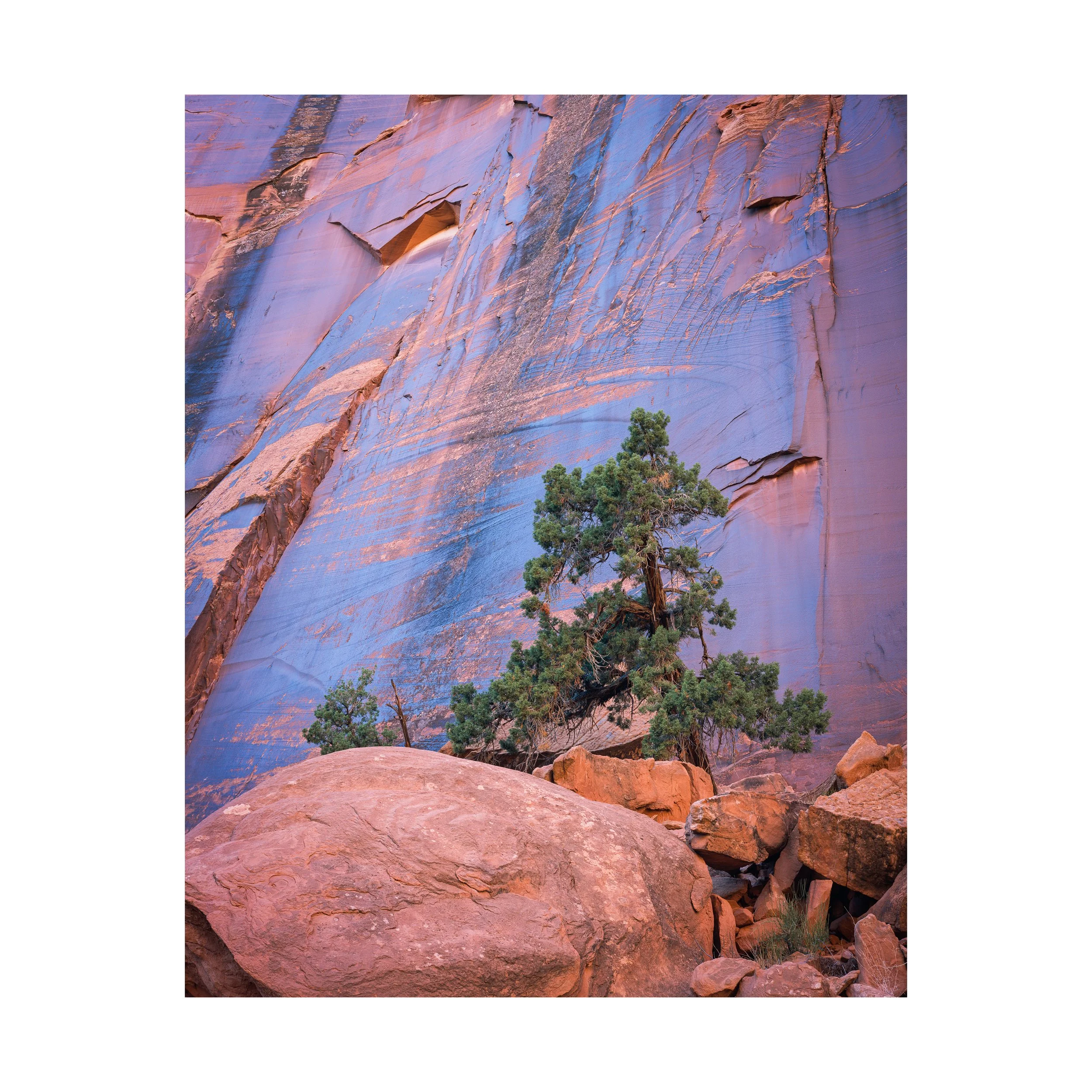
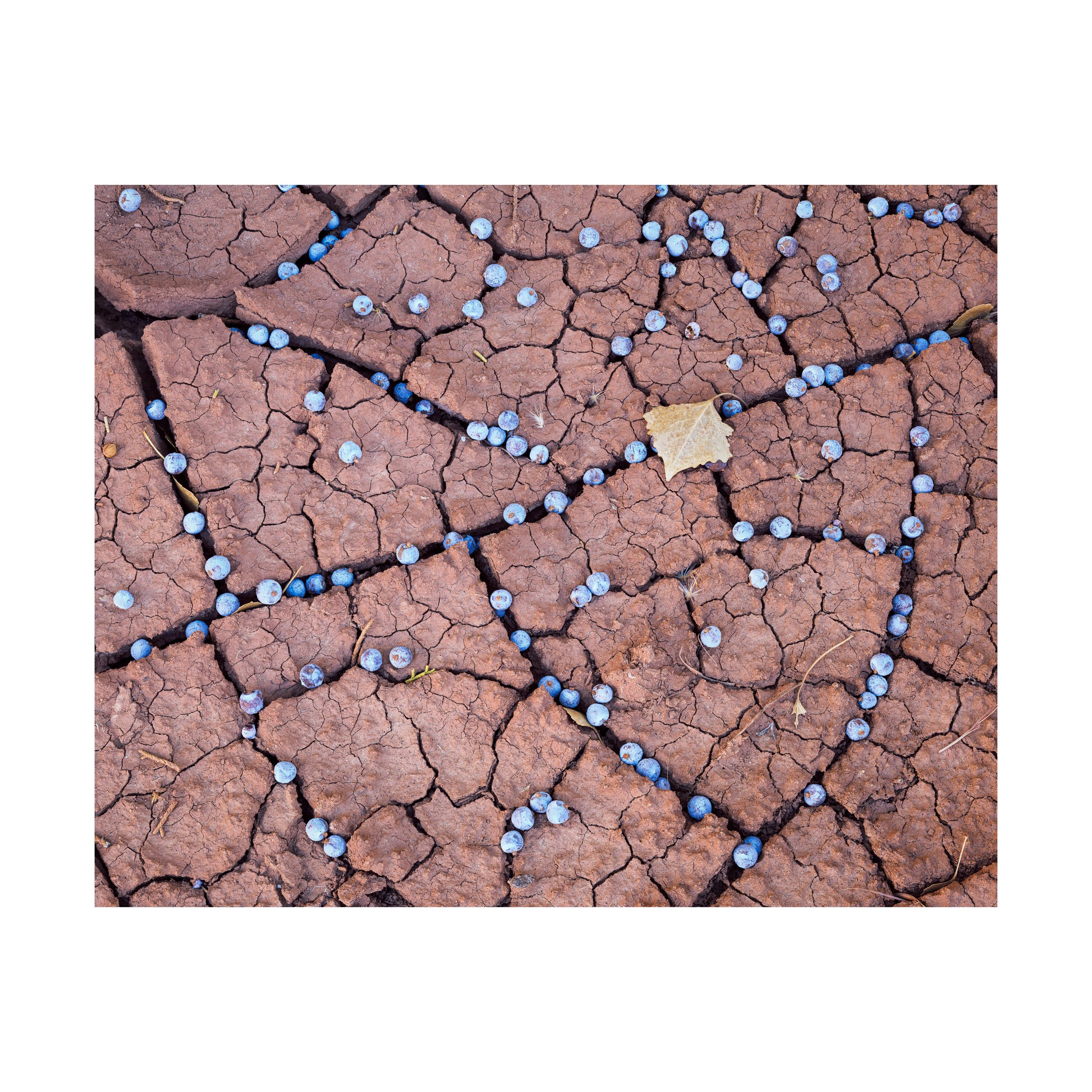
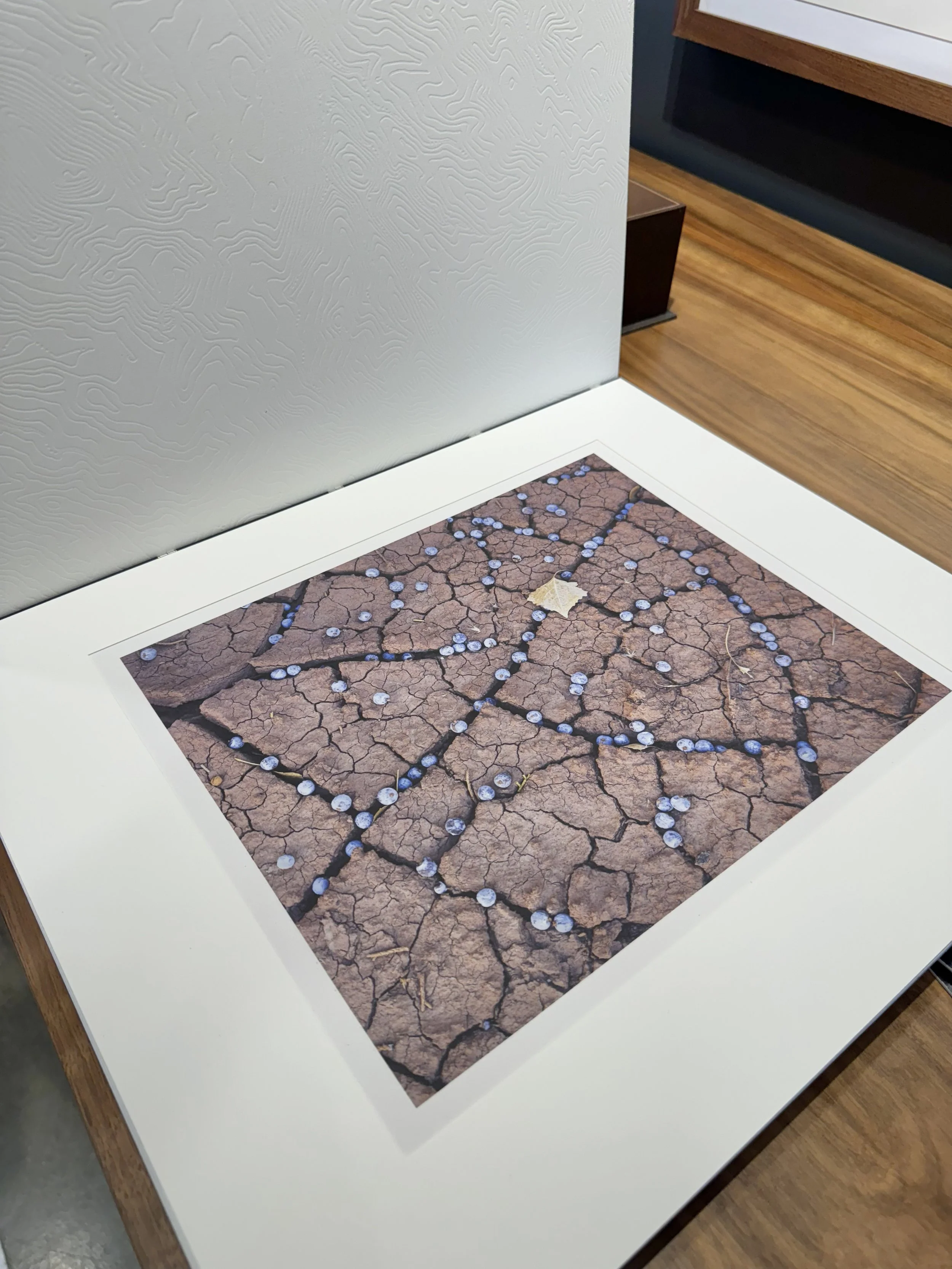
MS: What I'm doing is trying to find pigments that will resonate within the print itself, pigments that provide a color, something useful like a red or a yellow or a blue, something unusual in the actual images. I look for iron oxides, so anything with high red content. I look for yellow ochres and heavy yellow clays. And it's usually within the place itself that I try to find these things. If I can't find something within the actual region of a project, I'll typically find something like a tree branch, something dead. I'll burn it, grind it, and make it part of the carbon that goes into the print itself. Maybe it's not the most unique work in the world, but I'm doing something with the print that might connect the viewer a little bit more. And when you see them in person, and I always hate to be that guy, they're damn stunning.
MB: What does your full technical workflow look like, from the moment you make a photograph in the field to the final print?
MS: I shoot my chromes, and everything comes into my system as a digital file. I split it into all of the color channels and output each one as a negative. It ended up being twelve with earth pigments: a yellow, a light black, a medium black, a dark black, a light blue, a blue, a light red, a red, a light purple, a dark purple, a light green, and a dark green. From those twelve negatives come six emulsions that I make in the darkroom, each one gelatin, sugar, pigment, water, and sensitizer, poured onto a sheet. Traditionally, you would expose entirely through the material, and it would hold onto its substrate, but with this process the gelatin doesn't adhere to anything until it's exposed and mated to something. So we expose it, then soak it, and when the gelatin becomes so hydrated that it's sticky, almost like a glue, it gets mated to another substrate. You soak that in hot water and peel it away, and all the gelatin that has hardened sticks to the temporary support. Do that six times, and you have all of your color layers, and then everything transfers to paper. It's excruciatingly technical. That's why I have a table in there that's level to 4,000th of an inch over sixty square feet, a huge glass and quartz table.
MB: What draws you to a material, process-driven approach in an era where most images exist only as digital files?
MS: Honestly, the root of the issue is that I'm a glutton for punishment. I like things to be difficult, and if something comes easy to me, it feels like I'm not doing the right thing. Does easy feel understimulating? Absolutely. I've always been a color guy. I was shooting digital in college, rock climbing, going out to Moab and California, and it just wasn't biting with me. There was this big snowstorm in the southwest once, and we were out in Moab, and I was photographing all of it thinking: these images are really cool, really great, but I feel like anybody could do this. So what could push it further? I started stitching panoramas, and I had this niche. I love the one-by-three format. I vibed on that for about a year, and then I realized I was losing images because I couldn't make them in one shot. I wanted high resolution, huge files, big prints. So where do I go now? I found a 617 camera. And I thought: okay, cool. Film. How the hell do I do that?
MB: What was the transition from digital to large format film actually like?
MS: The Linhof came first. I went hard, as I do: with the 90mm and the 180mm, and that's all I ever had. I still have that camera. For about six months I tried to shoot film and sucked at it. I was shooting Velvia, five stops of latitude, and I kept trying to do everything I could do in digital, and it just wasn't working. What I was actually learning, without realizing it, was how to photograph good light. When I finally started to understand what quality light was, and everything associated with it, it all clicked.
Then came the night that changed everything. I was in college, shooting KU basketball for the newspaper, and it was March Madness. It was cold as hell, the kind of Kansas cold where you start your truck and run back inside. While I was inside, somebody lifted my Pelican case out of the back of the truck. The D800, all my gear, everything, gone. They threw my film in the truck bed and left it. Thieves don't want film. Everything was insured, fortunately, so when the big check came, I made one decision: I'm going to buy a 4x5 and go on a trip. I bought the 4x5 and drove to the southwest. That's always been my thing.
MB: So you're out in the southwest with the 4x5, standing in landscapes that have been photographed for a century and a half. Where did "Of the Earth" actually come from?
MS: It's such a weird, horrible feeling, honestly. I look at it and think: I really want to go out, I really want to pursue this project. And then I get out there and it hits me: this has already been shot. Everybody has already shot this. What am I going to do that's any different? So I have to ask myself the same question I ask everyone else. And that's part of where this project was derived. I realized: okay, I can create work, and maybe it's not the most unique work that exists in the world, but I'm doing something with the print that will connect the viewer a little bit more. The image might share a subject with a thousand other photographs, but no one else's print carries the actual ground the photograph was made on. And you're right that landscape photographers have this innate desire, this calling in nature. Even without photography, they'd still be out there. Honestly, I think that's what keeps me going.
MB: Which photographers or historical processes most shaped your approach to photography and printmaking?
MS: I love Christopher Burkett. As a photographer, he's probably my number one source of inspiration, the name that everyone knows. But the person who taught me to see, besides my wife, is a guy named Jim Becia. He’s not super well known. He's not published; he doesn't have books (besides one’s he has made). He's an art fair guy who owned a frame shop in Wisconsin for years, and before that he was working in Yellowstone and in Zion for a while. I met him in 2017, and he's become basically my sole source of inspiration. He literally taught me to see the world: the subtle colors in reflected light and shaded light that are so difficult to see with the human eye, that really only film can see. The subtle shades of blues and cyans that show up in shaded light, and which film to use in those particular cases. He's an 8x10 shooter, a dying breed. He'll go out west for two weeks and come back with a hundred sheets exposed, and I'm thinking: holy shit, how did you shoot a hundred sheets? It takes me four weeks to work through a fraction of that. That's spray and pray by large format standards, and somehow every frame counts. For printers, the Westons are phenomenal, and Eliot Porter is one of the big ones.
MB: Traditional photographic practice is inherently slow. How does the pace of working with a view camera affect the way you see and photograph the landscape?
MS: So much of what I create, and what I've had success with, comes from the isolation from the real world under a dark cloth, in a window of time I can control within reason. I'm creating something I see on the ground glass that's upside down and backwards. It's almost an alternative reality, because it's dark, it's inverted, you're working with shapes and forms, and you're able to focus entirely on what you're seeing through the lens because you're immersed in the camera. You're part of the camera, essentially. When a photographer can isolate the entire world down to being inside the camera, I just think it makes better work. Take that away and replace it with an LCD screen, and something is lost. I can pick out a digital image a mile fucking away on social media, before anyone even tells me it's digital. But seeing the image pop into existence on a ground glass literally gives me goosebumps. It's transformative as an artist. It's part of who I am.
MB: The art world seems to demand that every body of work arrive with a narrative, an artist statement, a story. You've pushed back on that. Why?
MS: Photography as an art form has become this situation where you have to have a narrative. That's what everyone keeps telling me: what's your story, what's your narrative? And honestly, I just want to go make images. I'm an engineer, a technician. That's my brain. I'm also a musician, so I enjoy the creative side. But I'm not a writer and I don’t like putting words to visual things. If you want an emotional conversation with me, ask my wife; it's not usually going to happen. I do have an emotional connection with nature and with what I do, but I don't like putting it into words, and when the artistic community forces me into a box and tells me I have to, it really messes me up. It's the exact same thing I feel about faith. I have this access to existential meaning and reality when I'm working, but I don't want to put a name on it. I don't want to go to a church. I don't want to put myself in a box. Photography is so literal that it's hard for people to get out of that literal way of being. That literalness is a hundred percent why photography has been successful for the past hundred years. So why do we have to put words to it? Ansel Adams didn't have narratives. He took pretty pictures in the mountains, and he did great. He got his conservation job done while doing it.
MB: Historically, photographers were often chemists, printers, and craftsmen simultaneously. Do you believe future generations will still produce photographic artisans who master the entire process?
MS: The man I learned from is in Spain: Calvin Grier. He's my mentor; I hold him in the highest regard, and he's the finest printer I've ever met of any process in my life. He's unbelievable - a true practitioner. As for color carbonists, though, and I hate to say this because I can't know for certain, there's no one I know of who can do what I do. I can make a 30-by-40 color carbon print and have the space to make one even bigger than that. Nobody else in the world can do that, especially while keeping everything in-house. I grind my own pigments, make my own emulsions, make my own negatives. The only thing I buy is paper. I bought this building four years ago and remodeled it, and it was designed to make carbon prints, the biggest carbon prints in the world, for myself. It's turned mostly into commercial work: platinum prints, silver prints, inkjets. But I threw my life’s savings into this building because I was a hundred percent in the mindset of, if I build it, they will come. That is literally my mantra.
MB: The fine press edition of "Of the Earth" suggests the book is not simply a container for images but an extension of the work itself. What role did bookmaking play in this project?
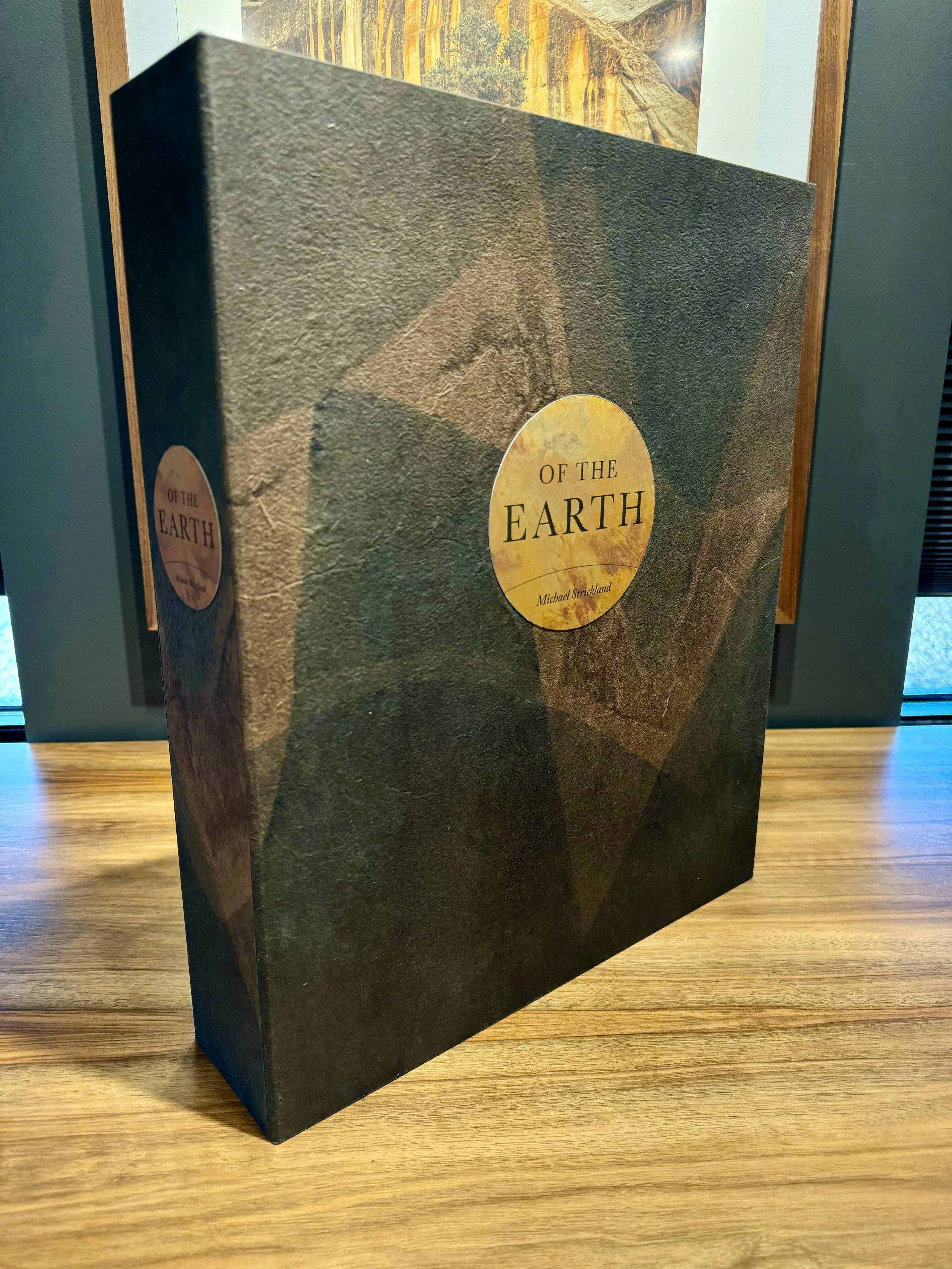
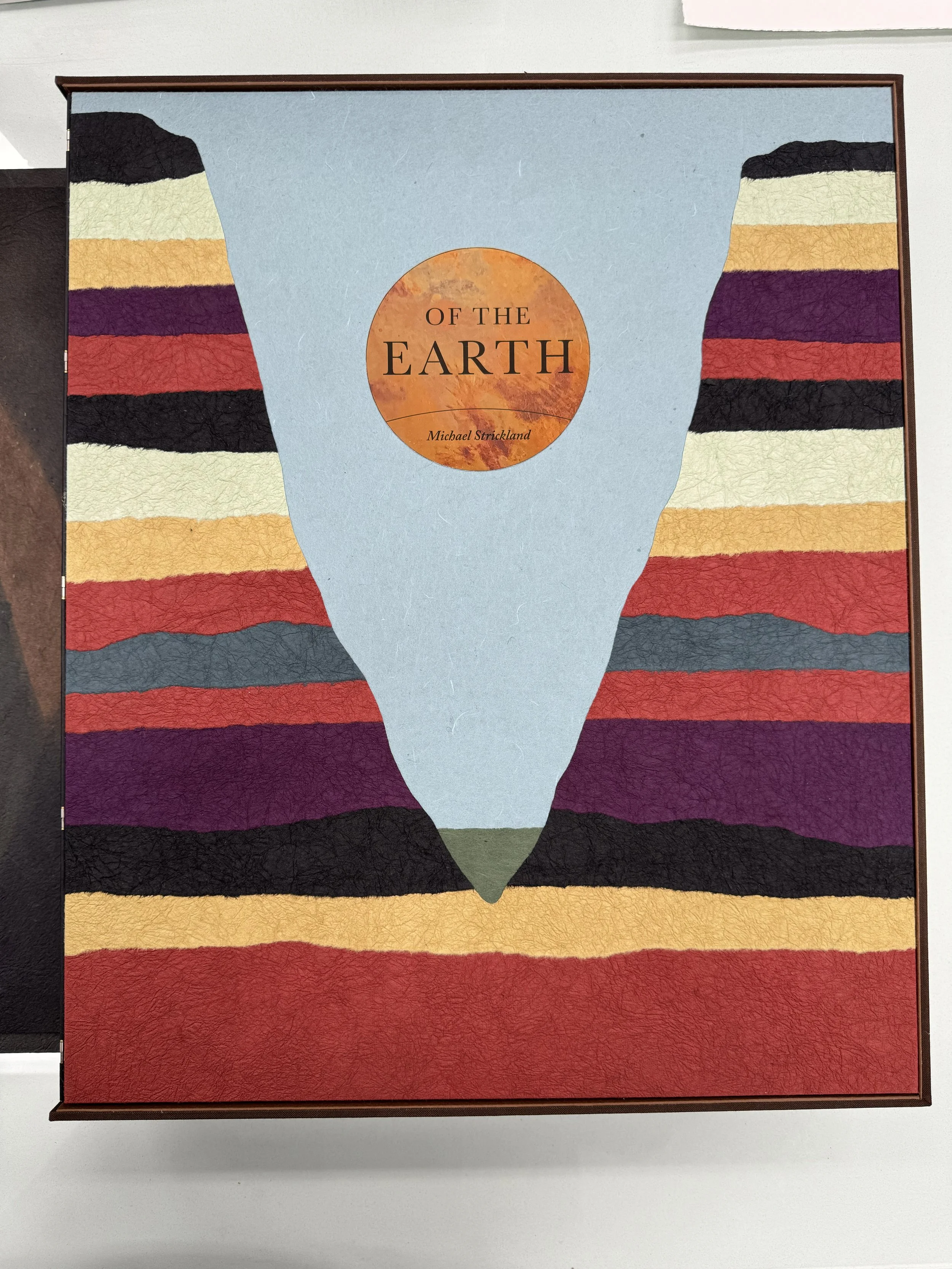
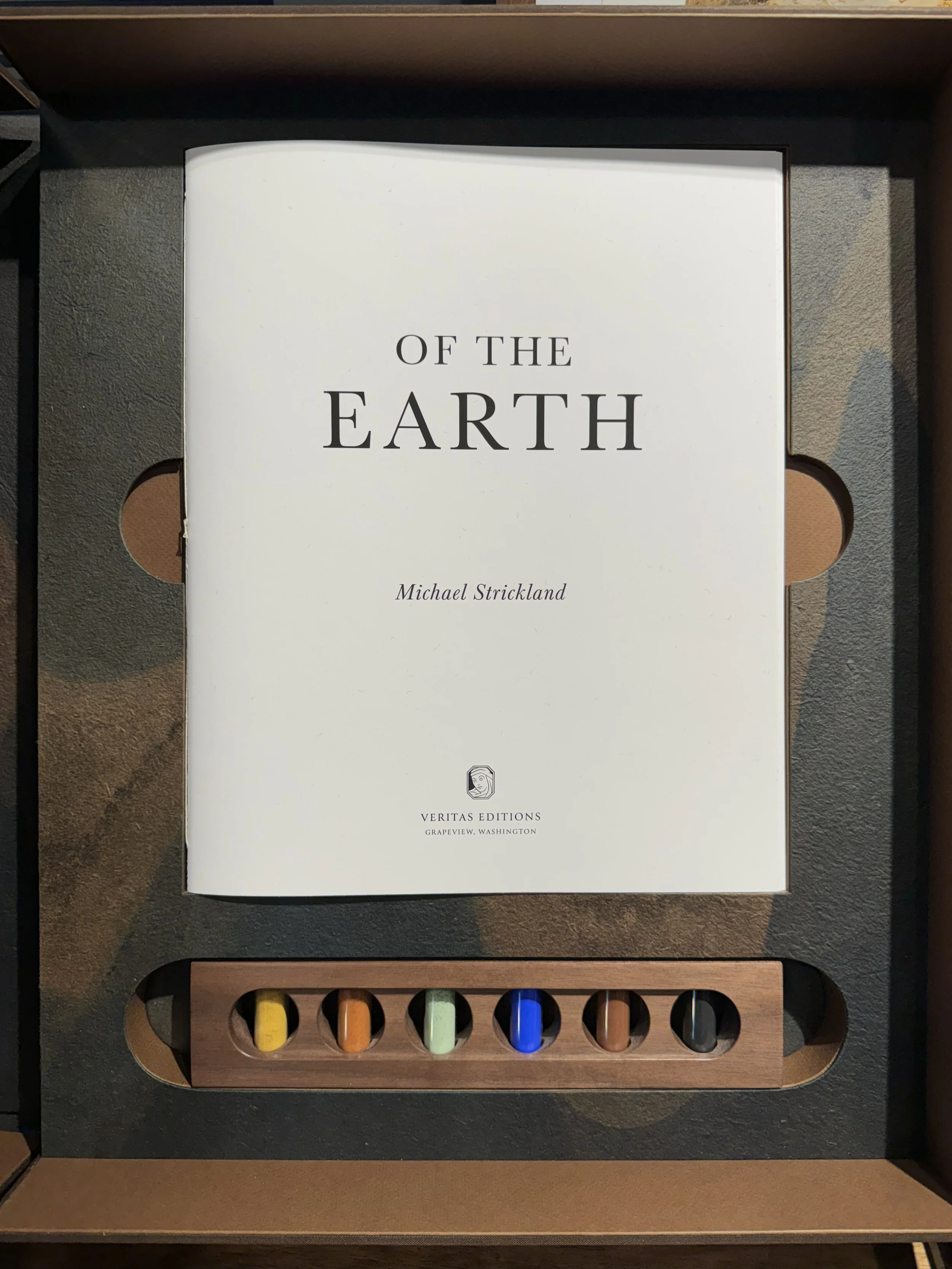
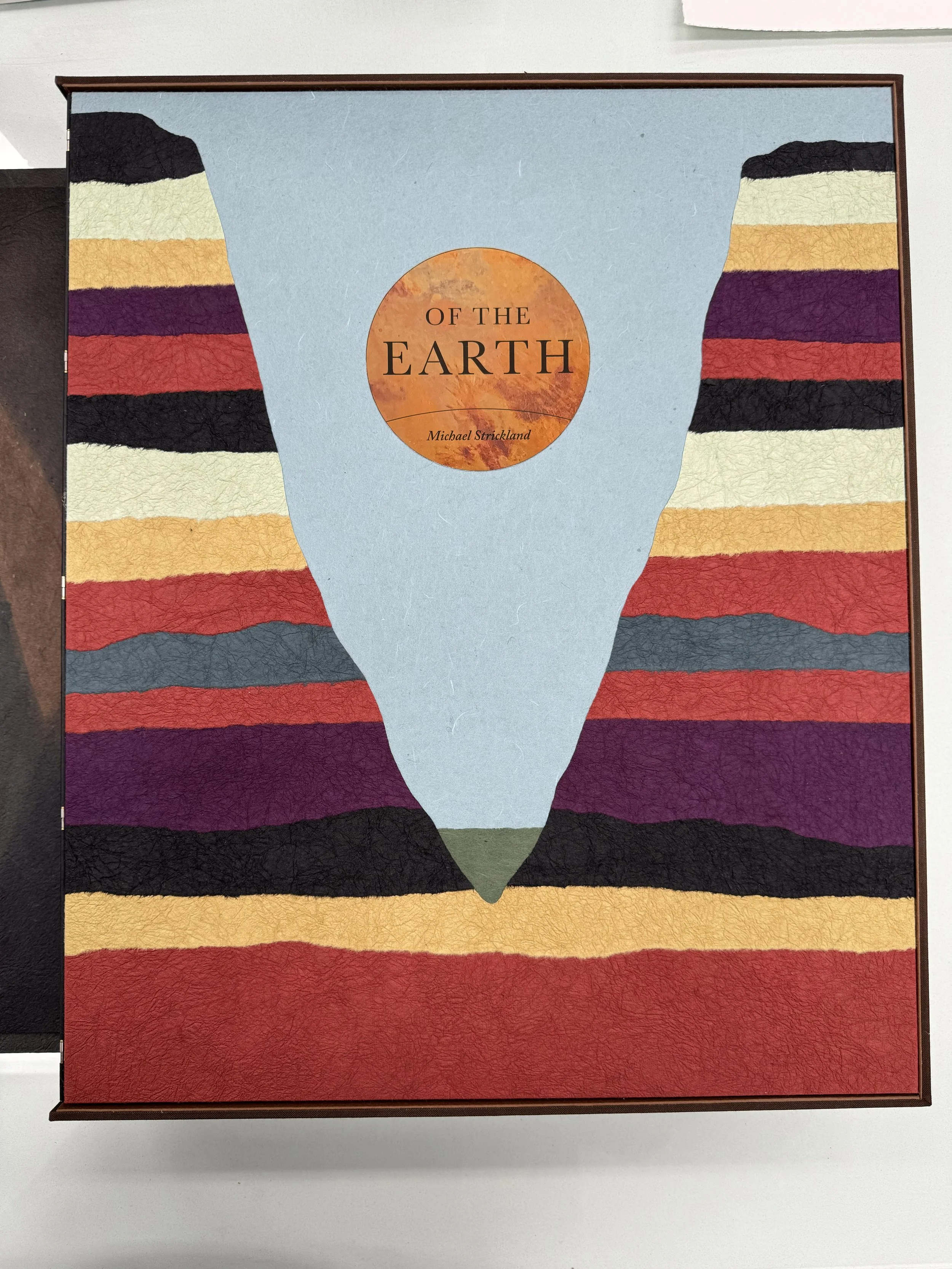
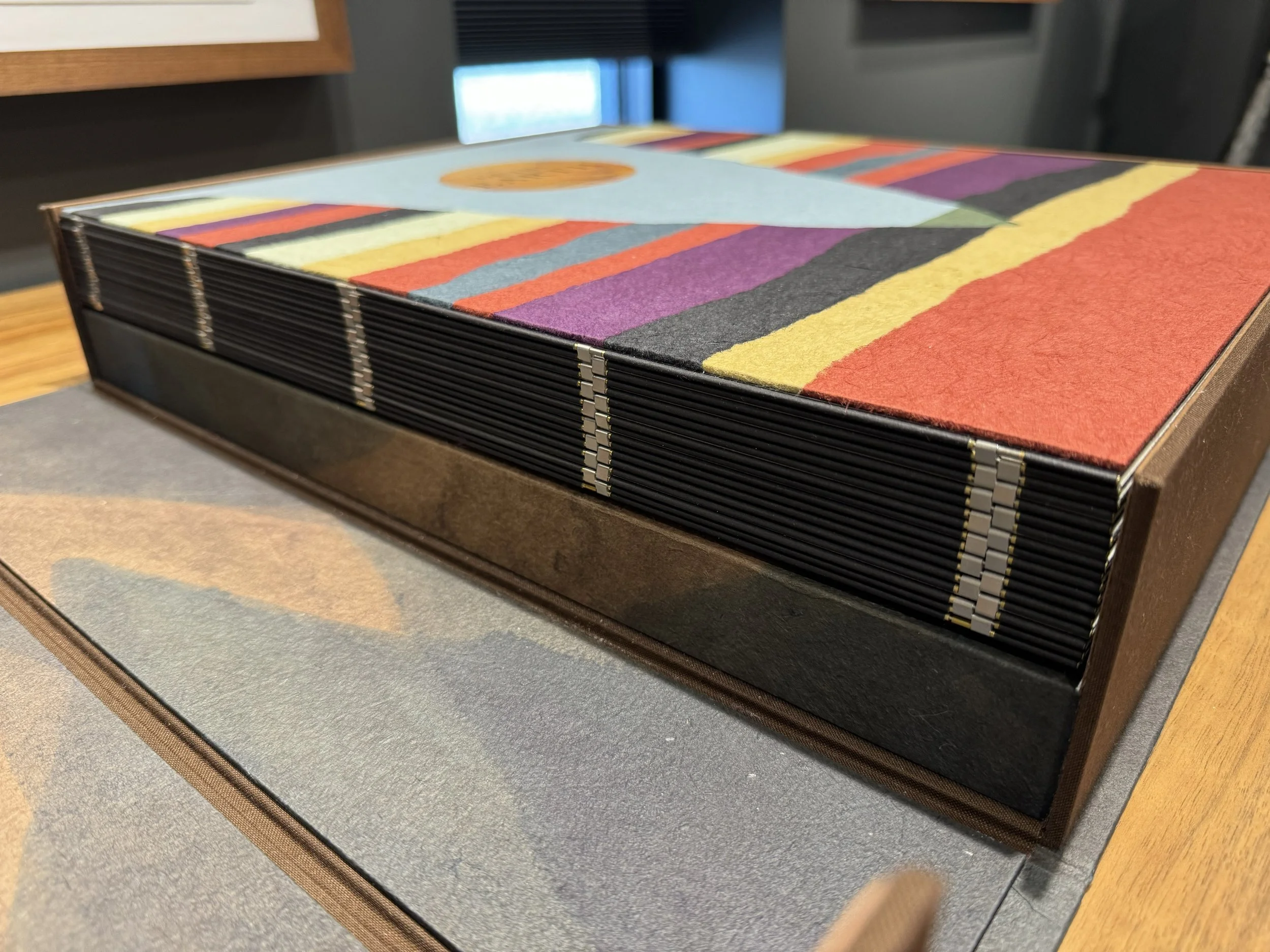
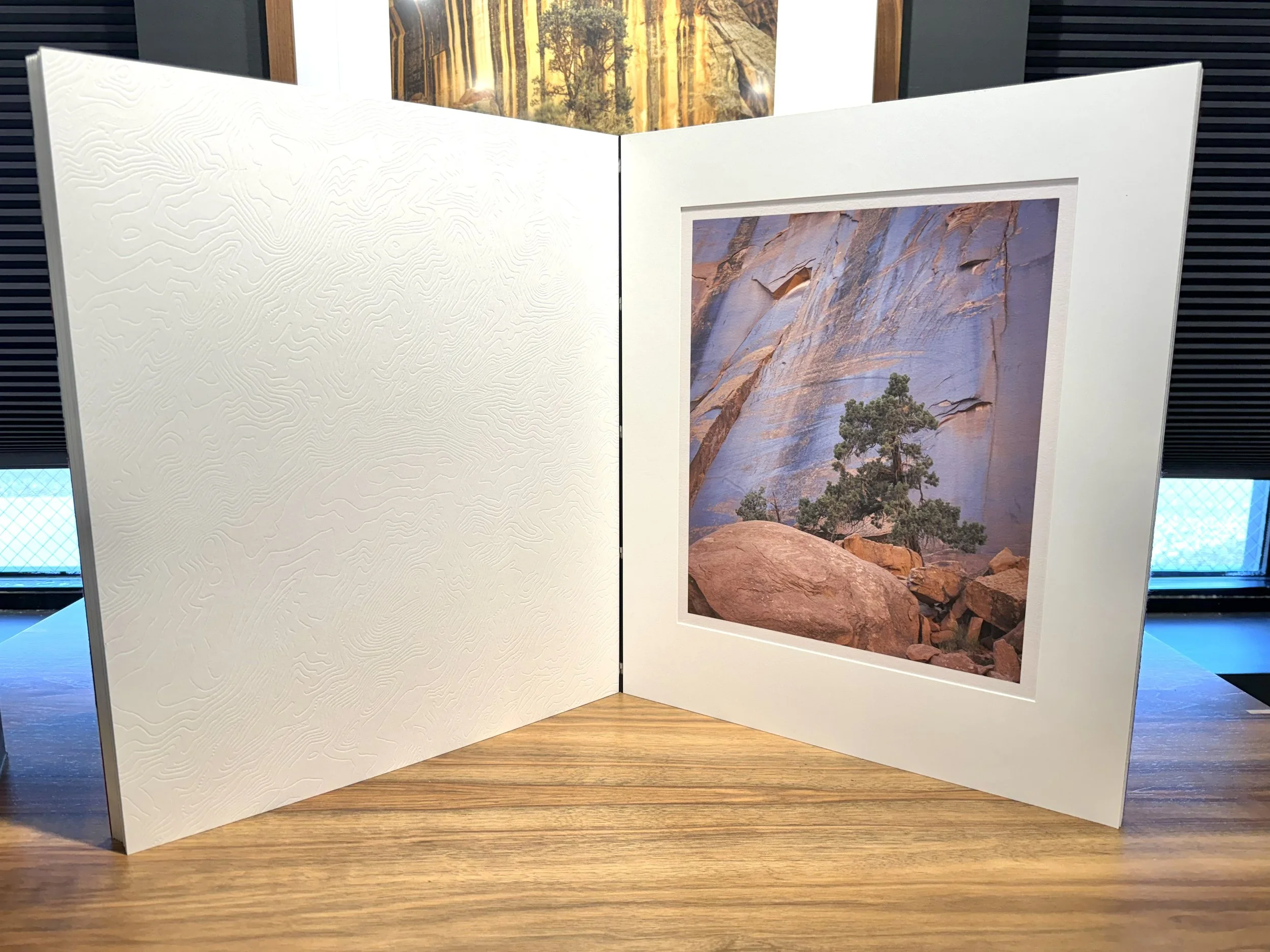
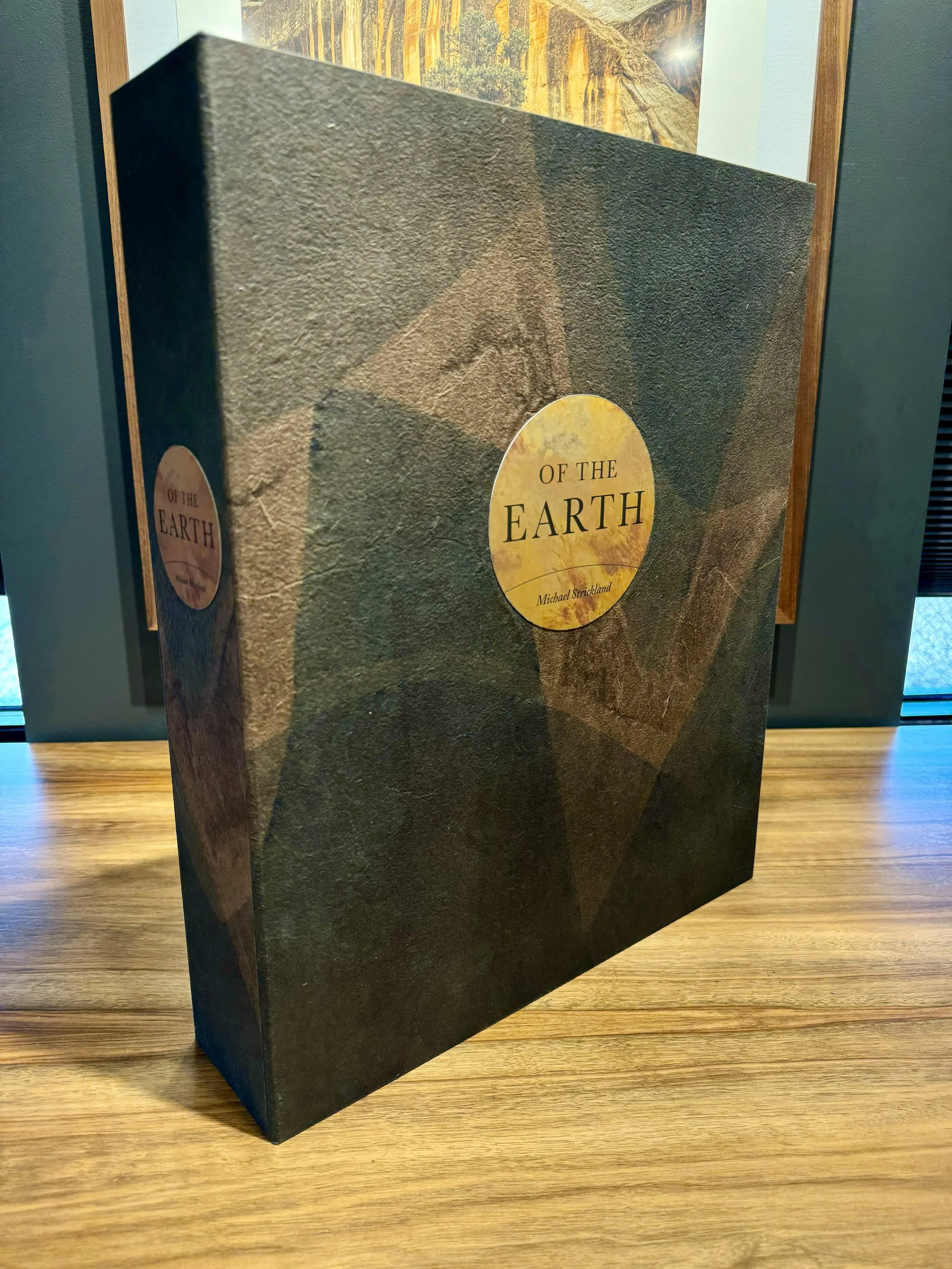
MS: The idea was that it would be a portfolio and a book at the same time, so it could either be distributed as a collection of images to be hung or shown as a portfolio. It used wire edge binding by Daniel Kelm. Dan had produced a book at a very large scale that you could essentially unbind, and then hang all of the pieces around a room, and that's how ours was produced and sold. The prints come out, they can be framed, and they go back in. It's the same philosophy as everything else I do: the book isn't a reproduction of the work; the book is the work, an heirloom object carrying the actual carbon prints, made with the actual pigments from the actual places. I would love to continue producing them. I still have connections with all of the binders and everyone involved. I can produce the prints, I know all the people, and at a certain point I'd love to keep this thing going, because an object like that outlives all of us. That's the whole point.
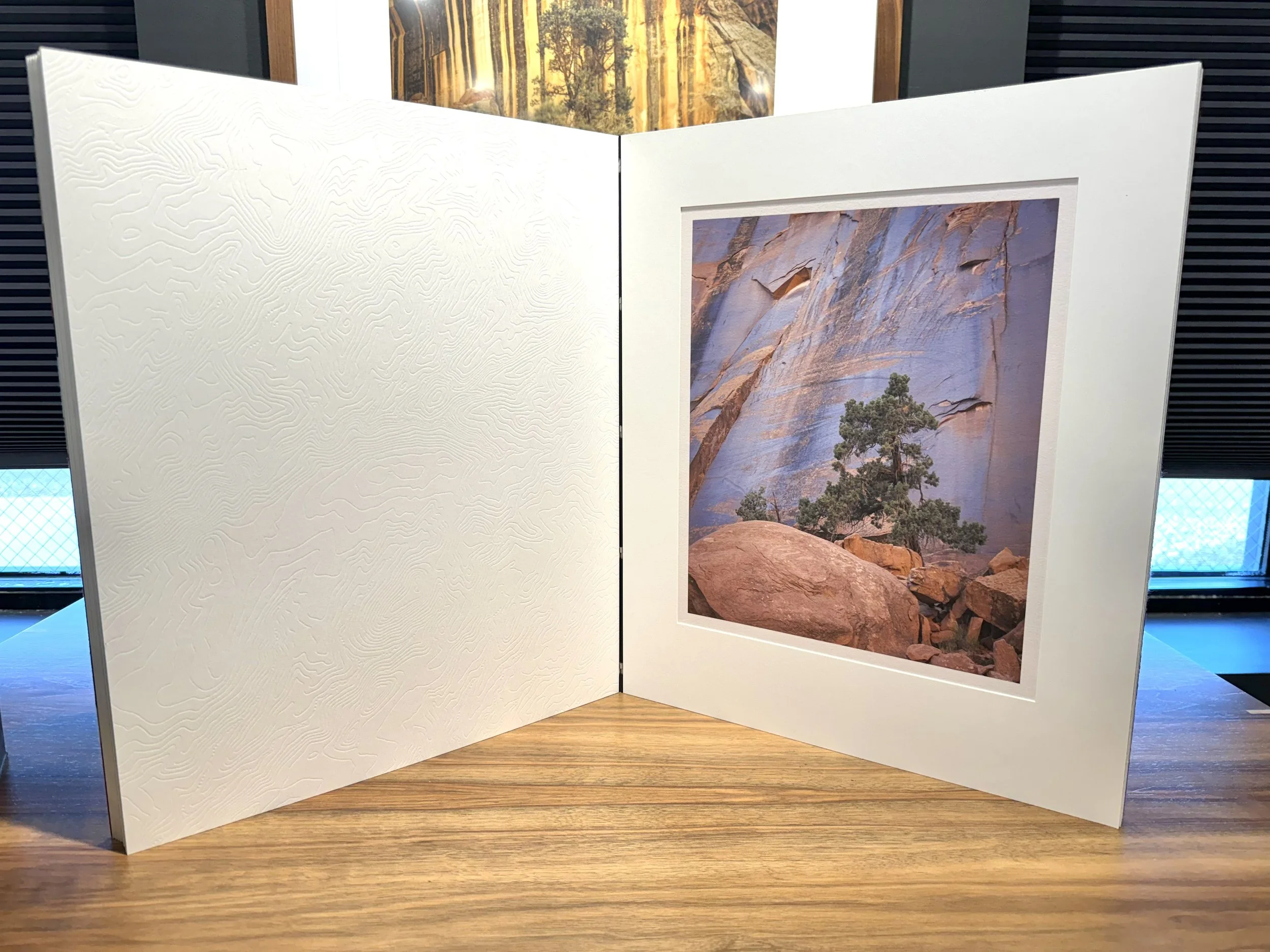
MB: Do you think of your prints as images, objects, or artifacts, and how important is that distinction?
MS: All of the above, I suppose, which is probably the answer you'd expect. My biggest critique of those showing digital work at a show like AIPAD in New York was always that people would hide behind the size of the image. If you can print it 50 by 80, why not print it 50 by 80? It's massive, and it carries a huge emotional impact purely because of how grand the scale is. That's empowering. But I had a conversation with a gallerist once and told her that digital work just doesn't do it for me, because at the end of the day, if I can press a button and make a perfect print every single time, what is the point? It's hard for me to make the image. And the image is truly what makes the photograph; the image is the photograph. But the print is the artifact you carry on to the next generation. And it's what sells.
MB: Over the past two decades, darkrooms have closed and traditional processes have largely disappeared. Why do you think process-based photography is vanishing, and what does the medium lose?
MS: First of all, let's take landscape photography out of it; this applies to all photography. Process-based photography is the root of photography, and at the end of the day, if you cannot hold the print in your hands, it is not photography. This is going to be hard to hear, but I don't have much respect for photographers who don’t actively print their work. Truly, at the end of the day, if you’re not holding it, you’re not seeing your work as its mean to be. If you're never going to see how your work renders on a piece of paper, whatever that medium might be, and it could be instant film; it doesn't have to be a platinum print, then what the hell is the point? You're just another social media photographer, and I don't care about that work. Why is it disappearing? I think it's the easiness. You can go to the biggest fucking lab in LA, and they'll print you an 80 by 120 inch photo of whatever you want, because you shoot a Phase One with a hundred and fifty megapixel back and you don't lose any resolution. But I look at a 35 millimeter negative and see something beautiful: the grain, the structure, the imperfection.
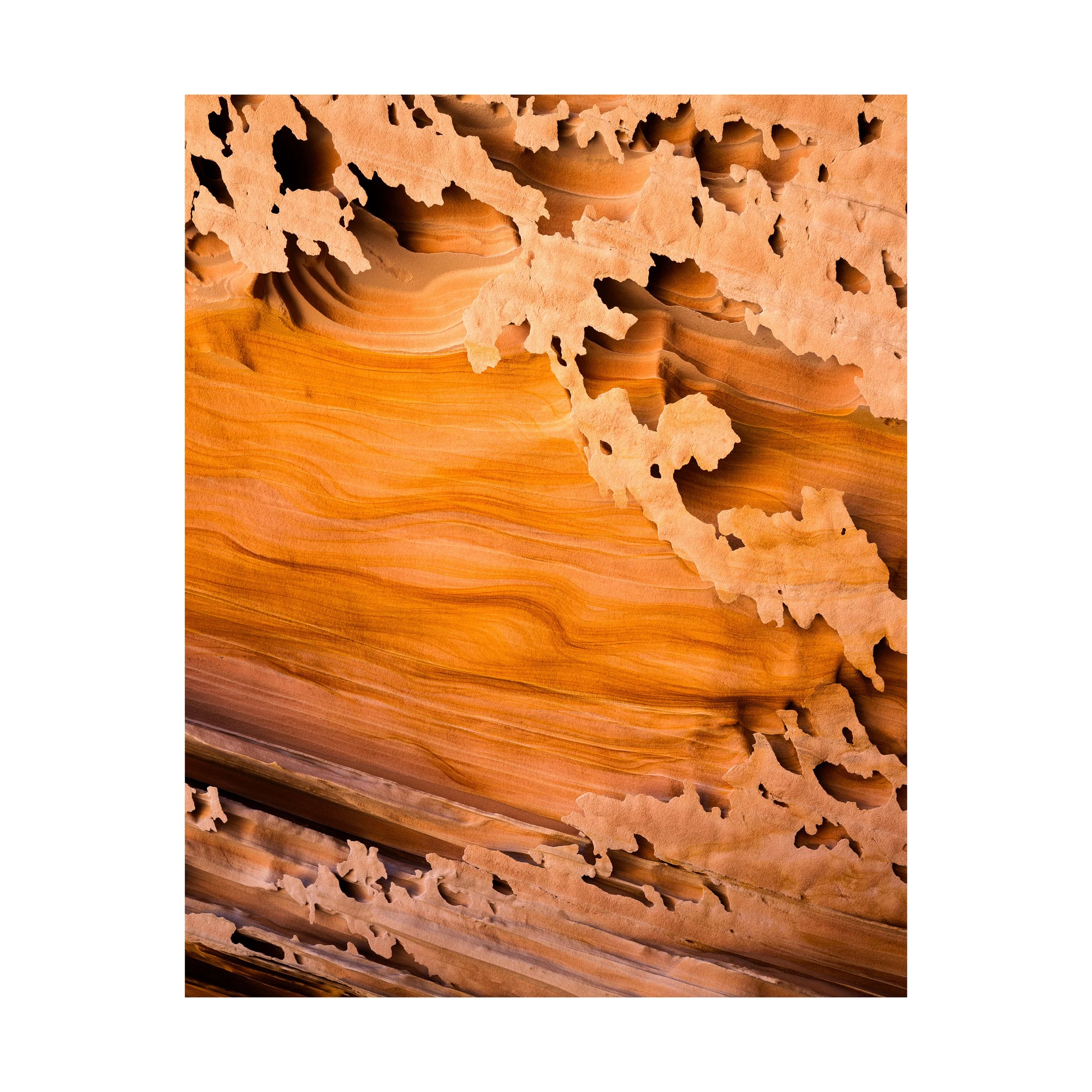
MB: Contemporary photographic art increasingly blends photography with other media, collage, sculpture, installation. Where do you personally draw the line between photography and mixed-media art?
MS: Honestly, I'm probably too uneducated in that world to give you a fully fair response. But I'm a traditionalist, so no, I don't think that's still photography, but definitely mixed media if it includes photographic work. I saw so much of it last year, and I literally wrote it in a journal at the show: there's just so much sculptural shit, so much mixed media, and I don't vibe with it. That's not what a photograph is to me. In some regards I can appreciate it, because we're all creating something and I have seen beautiful weavings that struck me positively. I’ve said it before, but what annoys the shit out of me is when we need a goddamn paragraph to accompany a single photograph. I want to walk up to a scene, see an image, and think: goddamn. I know everything I need to know. It's beautiful, it's perfect, it's everything. That's what modern photography is missing, that confidence in the image itself. Photography has been successful for the past hundred years because it is literal. Why do we have to fucking put words to it? If the photograph needs a sculpture wrapped around it or an essay stapled to it to work, maybe the photograph doesn't work.
MB: In your view, what matters more in photography, the final image or the process used to create it?
MS: When you start degrading the process of what you're doing artistically, on one hand you could argue you're able to channel your creative medium faster into what you want to create, so digital is sort of beautiful in that regard. And I don't want to strip the soul from that work, because there's still an artist creating it, and I respect a lot of digital work. I'd hesitate to call the images bad; the colors and everything look fine. But I can pick out a digital image on social media before anyone even tells me it's digital. I'll throw Charlie Cramer under the bus here, and I say that with love, because he's one of my favorite photographers. He was a dye transfer printer for the longest time, and now he prints digitally, and I can pick out the exact point in his portfolio where he transitioned. Same with William Neill, and I would sell my soul to William Neill. He's a great guy with amazing work. But I can pick out his digital work against his 4x5 work every time. Maybe it is the soul in the film itself or the way the photographer is working with the camera. I don't know.
MB: Photography has historically carried an implicit claim of authenticity, a connection between the image and the physical world. There's a difference between using tangible objects, negatives, silver, pigment, and feeding light through an algorithm someone else designed. Do traditional processes restore something digital cannot replicate?
MS: Film is pure - as is traditional printmaking. It's literally silver grains actuating with light, creating the different tonalities we see. That chemistry is fucking gorgeous, and there's nothing else like it in the world. We can build the most perfect sensor and make the most perfect photograph, and there are places in the world for that. I would love to see a perfect photograph of Simone Biles competing at the Olympics; that's a great documentary photograph. Maybe it'd be really fucking cool on 4x5, too. But that's what drives me crazy about digital: you start taking away the imperfections. And you're right that the people designing the algorithm are deciding what's perfect for us. They are, a hundred percent, and it's just getting worse and worse as the technology gets "better and better." I think that's truly where the beauty of photography lies: the imperfection of the photographer creating the image, the imperfection of the medium we create it in, and the imperfection of the moment. We have no control over what we are photographing. Three imperfections make a perfection.
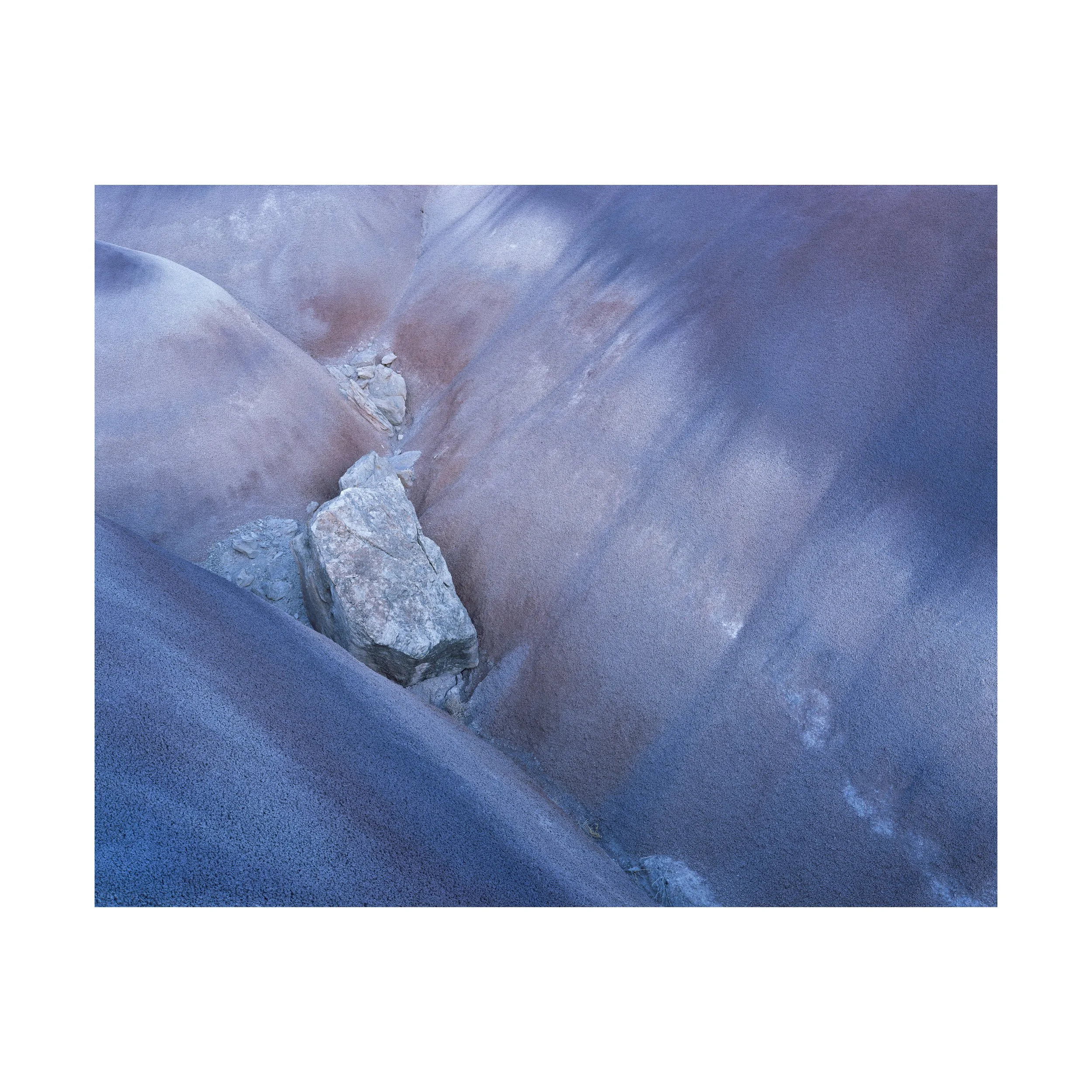
MB: Most photographs today are never printed. What is lost when photography stops existing as a physical object?
MS: There's nothing like seeing a carbon print in person. I'm in the south of Kansas, where nobody knows the difference between a silver gelatin print and a print from Walgreens. And yet I'll have somebody walk in here, look at the work on my walls, which I'm proud to say is all carbon prints now, and tell me: "I don't know what I'm looking at, but it's different." I've literally had that said to me, verbatim. I don't know what I'm looking at, but it is different. I don't understand it, but it's really cool, it's unique, and I want to know more about it. That's the visual connection. A complete layman, with zero experience in photography beyond the shittiest portrait photographer in the Southwest, can walk into the studio and see that something is different. And that's a validation of sorts: okay, cool, I am doing something different. That's what a screen can never give you. Nobody has ever scrolled past an image on a phone and said, "I don't know what I'm looking at, but it's different."
MB: Film availability gets more uncertain every year. What happens to your practice if film disappears? Is film itself the thing that keeps you here?
MS: That's the thing that scares me most about the next twenty years. What if there's no film left? What happens then? But here's the truth: film is not what keeps me in photography. Photography keeps me in photography. If I could never shoot color film again, I'd buy a digital camera, suck it up, and be a big boy about it. Or I’d just make plates. Because in theory, you can create the exact same image on a digital camera. Consumers don't know the difference; we know the difference. But I enjoy the process of using the view camera more, I think, than photography itself at times. So honestly, I don't care if it's a digital back or whatever. I just want to work with the view camera, because of the movements, because of the isolation from the surroundings. There's a comfort in it. The chemistry of film is gorgeous and irreplaceable, but the way of seeing, being under the dark cloth, inside the camera, watching the image pop into existence on the ground glass, that's the part of me that survives no matter what happens to the film supply.
MB: Landscape photography has never been more popular, yet much of it follows familiar conventions. What do you think is missing from contemporary landscape photography?
MS: We're inundated with nature photographers. Workshops seem to be how nature photographers survive right now. It's not conservation work like it was 75 years ago; it's retired doctors and lawyers paying you to take them to places you already know so they can get a trophy shot. It's trophy hunting, truly. It's exactly what happens in Africa: I want a long-haired blue eyed pronghorn, so take me to Namibia, put me in the right place, and get me my shot. And I think it can be horrible for landscape photography. I was part of it. I taught workshops, and that's how I got to where I am today, and I'm thankful for those who respect the environment enough to pay individuals to photograph those places. And I was fortunate enough to work for a company who put nature and the place we photographed first. But I've watched major tourist areas of the West become inundated with photographers, to the point where, one, you're not producing unique work. You're going to sit there and get the exact same fucking shot everybody else gets. Why? And two, why would you take twelve people to a place off the beaten path? It's like saying I'm going to bring 1,700 people into the Sistine Chapel and let them blast the ceiling with ultraviolet light for 17 hours. It's horrible for the environment, purely for a paycheck. And we're doing it to the rest of the world too. I see guides doing it around the world.
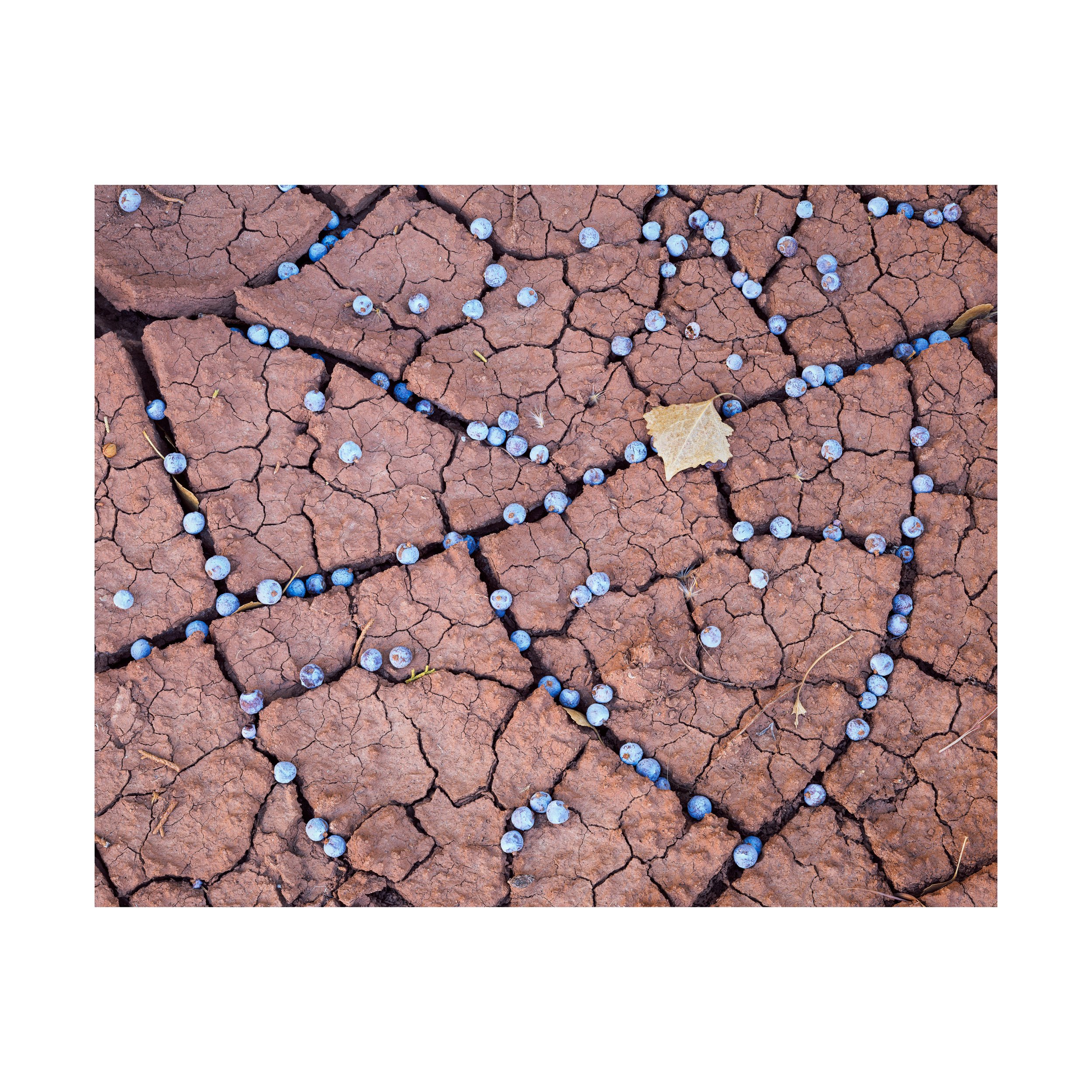
MB: Traditional landscape photographers often spent years returning to the same places, developing an intimate relationship with the land. How important is that connection between photographer and place to making meaningful work?
MS: I was fortunate enough to go to Antarctica four times. The very first time, in 2016-17, I never saw another ship. Besides seeing the Grand Canyon for the first time, Antarctica was probably the most surreal experience and the deepest connection I've ever had to the Earth. I can't even fully describe it. You have no real concept of what solitude is until you're at the bottom of the earth, experiencing wildlife that has never seen humans before. You just stand there thinking: holy shit. It's very, very primal. And then, year after year, there were more and more tourists. Then bird flu hit, and you started seeing penguin rookeries dying, all of these cascading problems arriving with human tourism. There's a multi-nation treaty looking after the continent, but at the end of the day, we're doing this purely for the sake of tourism. That's what intimacy with a place gives you: you don't just photograph the landscape, you witness what happens to it. You can't see the change if you only visit once for the trophy shot.
MB: The title "Of the Earth" implies a physical relationship with the land, and you live that relationship daily, working in rural Kansas on top of one of the country's most important aquifers. Do you see the work as environmental? Is the change reaching you out there?
MS: Out here, we're pretty isolated from everything. We're in the little armpit of the United States. Nobody is out here; it's literally nothing. And yet data centers are starting to buy up farmland, private equity firms are buying farmland, because we have the aquifer, one of the largest areas of fresh water in the United States that everyone is going to need. They're already talking about pipelines. So the life we're living out here is changing slightly, which is weird, because you never expect it in a place like this. People are starting to sell out a little bit, and it's going to get interesting to see how the next twenty or thirty years unfold. I was talking about this with my dad, who spent forty years at IBM. His take is that things just work themselves out: companies came together and built smaller, more efficient processors before, and AI will move forward and it will be fine. Maybe he's right. But when the ground under your feet is the thing everyone wants, and the ground is literally what I put in my prints, you pay attention. You can't grind a place into pigment without caring what happens to it.
MB: You've spoken candidly about stepping back from the gallery circuit, the group shows, the portfolio reviews, the whole trajectory artists are supposed to follow. What does success actually look like for you now?
MS: At this point in my career, my attitude is almost: fuck you to the industry when it comes to my own work. I'm going to do whatever I want to do and stop chasing the almighty representation. I’ve done a number of organized portfolio reviews and most of my takeaway has been that my work is a hard sell, it’s not unique, and what’s the narrative - what’s the point? The entire time I spent at the reviews, I just felt like I was paying for my friends and it still didn’t feel like they were my friends, despite the paycheck they were getting. So, cool, whatever. I have this amazing facility in the middle of goddamn nowhere, Kansas, and I can produce some of the best goddamn carbon prints in the world. If you’re an artist and want to come print with me, come print with me. If you don't, you don't. It's working here for now, and I'm happy for the most part. Honestly, if I walked into AIPAD tomorrow and six galleries said, "Michael, I want to represent your work," I don't think I'd be any happier - maybe just a bit more justified in what I’m doing. I don't know that I want to be the guy who has to come up with the next existential avant garde blah blah blah to sell work through nine galleries - I just want to be me. There are days where I'd much rather be the printmaker who works with the artists at the face of all the galleries and I can go home at night and do my own thing. But at the end of the day, my dream is to produce my own work, sell my own work, and be a self-sustainable artist. For now, I’m more than content watching, waiting, and being who I am.
GALLERY
ABOUT THE ARTIST
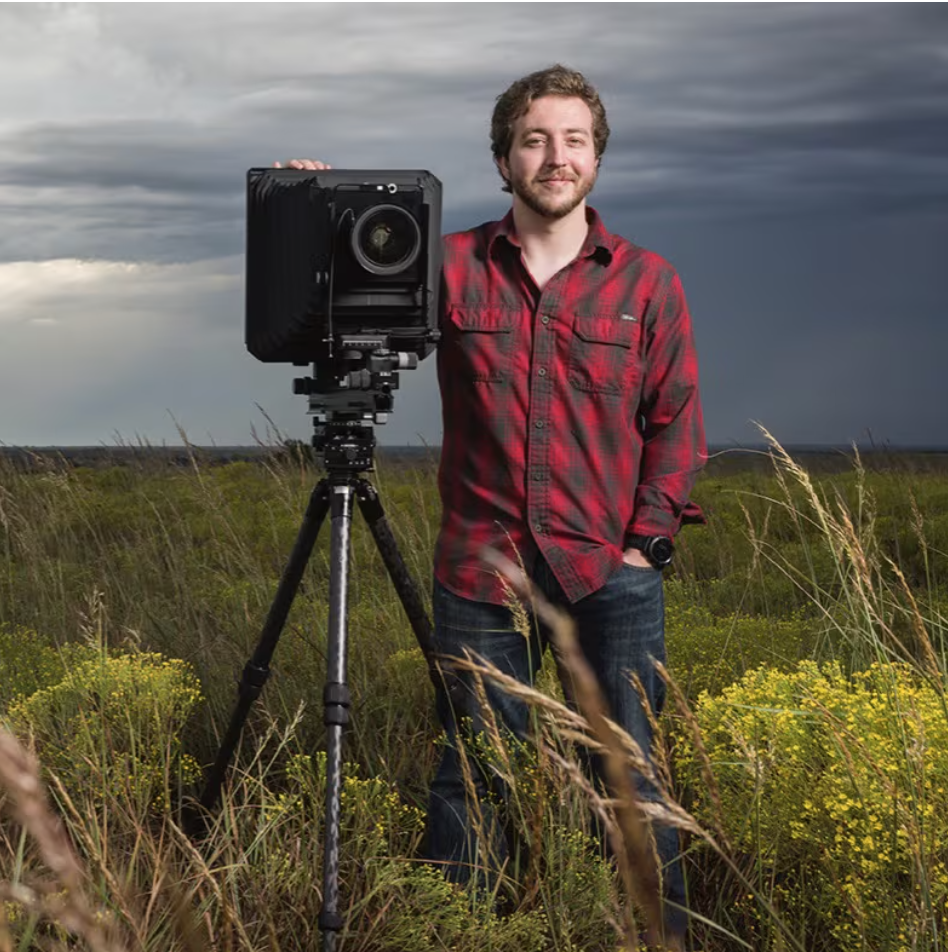
Michael Strickland is a large-format film photographer and printmaker whose work embodies a deep commitment to craft, patience, and place.
Rooted in analog tradition, he creates each photograph through a slow, deliberate process—composing on the ground glass, exposing sheet film, and printing by hand using historic techniques like platinum-palladium and carbon transfer. Every step is carried out in a state-of-the-art Kansas studio, where modern tools support traditional processes executed with precision and care.
From developing film to producing finished prints, he is among a rare group of alternative process printmakers who manage the entire workflow in-house. This control over each stage ensures that the final print reflects both the original vision and the maker’s hand throughout.
His images are shaped by light—its direction, quality, and transience. Grounded in observation rather than digital manipulation, the work emphasizes timing, tone, and material integrity. The resulting prints are tactile and quietly luminous—images made to last, both visually and physically.
Originally from Kansas, he graduated from Interlochen Arts Academy with a focus in jazz saxophone, then spent a year in New York City performing and studying music. He later earned a degree in mechanical engineering from the University of Kansas, a foundation that supports the technical and process-driven nature of his photographic practice. This blend of artistic and analytical training informs a body of work that values both intuitive response and meticulous execution.
Connect with Michael on his website, studio website, and Instagram!
ABOUT THE AUTHOR
Michael Behlen is a photographer, curator, and publisher whose practice is grounded in metaphysical and mystical inquiry, exploring perception, temporality, and presence. He approaches photography as a contemplative discipline rather than a documentary act, treating the medium as a phenomenological instrument capable of registering stillness, uncertainty, and internal awareness. Drawing from transcendentalist, existential, and mystical traditions, Behlen situates image-making as a slow, ritualized engagement where meaning emerges through attention, surrender, and patience rather than spectacle or immediacy. In this sense, his work resists the acceleration and disposability of contemporary visual culture.
Behlen’s work is deeply tied to the material and conceptual constraints of Polaroid instant film. Its finite frames, volatile chemistry, and unrepeatable prints resonate with his engagement with impermanence and the passage of time. Rather than overcoming these limitations, he embraces them as essential to the work itself: chemical drift, streaking, and unplanned marks become expressive devices that emphasize ephemerality and unpredictability. Each print functions as a contemplative object, transforming photography into a ritualized engagement with both the world and the self.
Behlen’s Polaroid photography has appeared in publications including Diffusion Magazine, Fraction Magazine, Seities Magazine, and Polaroid Now (Chronicle Books, 2021). He has self-published two Polaroid photobooks — Searching for Stillness, Vol. 1 and I Was a Pioneer. His third book, Searching for Stillness Vol. II, was published in 2020 by Static Age. His forthcoming self-published Polaroid zine, Where the Water Waits, will be released in July 2026.
Connect with Michael Behlen on his Website and on Instagram!
RELATED ARTICLES


In rural Kansas, large-format photographer and master printer Michael Strickland is pushing traditional printmaking to extraordinary lengths. For his Of the Earth series, Strickland grinds soil, clay, and charred wood gathered from the landscapes he photographs into pigments for his color carbon prints, physically embedding the land within the finished work. We spoke with Strickland about process, place, the disappearing craft of photographic printmaking, and why the physical print still matters.