
Featured Photographer: Marni Myers - “Where the Sun Leaves its Mark”
There are photographers who document the world as it appears, and then there are artists like Marni Myers who seem more interested in transforming it altogether. Through cyanotype, mixed media, textiles, embroidery, and layered experimentation, Myers has built a practice that is both tactile and wonderfully unpredictable. Her work criss-crosses between photography, painting, and sculpture, embracing the accidents and imperfections that historical process photography welcomes so naturally.
Originally from Niles, Illinois, Myers’ creative instincts began early. By the age of sixteen, she was spending nearly every spare moment in her high school art room, eventually continuing her studies through the Evanston Art Center before earning a degree in graphic design from the University of Wisconsin–Madison. It was there, during her first darkroom photography course, that photography truly entered her life in a meaningful way.
“I fell in love with the magic of light streaks, motion blur, and large-scale printing,” she explains.
That fascination with visual experimentation never really left. Even while building a successful career in graphic design, Myers kept a camera close by. Living in downtown Chicago after college exposed her to an urban landscape full of geometry, reflections, asymmetry, and texture. Those influences continue to appear throughout her work today, particularly in the way she notices abstract details hidden in ordinary spaces.
“My background in graphic design deeply influences how I see the world,” Myers says. “It allows me to find hidden beauty in plain sight.”
That perspective becomes immediately clear when viewing her photographs and cyanotypes. Leading lines become rhythmic patterns. Architectural details dissolve into abstraction. Organic forms and urban surfaces coexist in a visual language that feels carefully designed while still remaining emotionally intuitive.
“It was love at first sun print.”
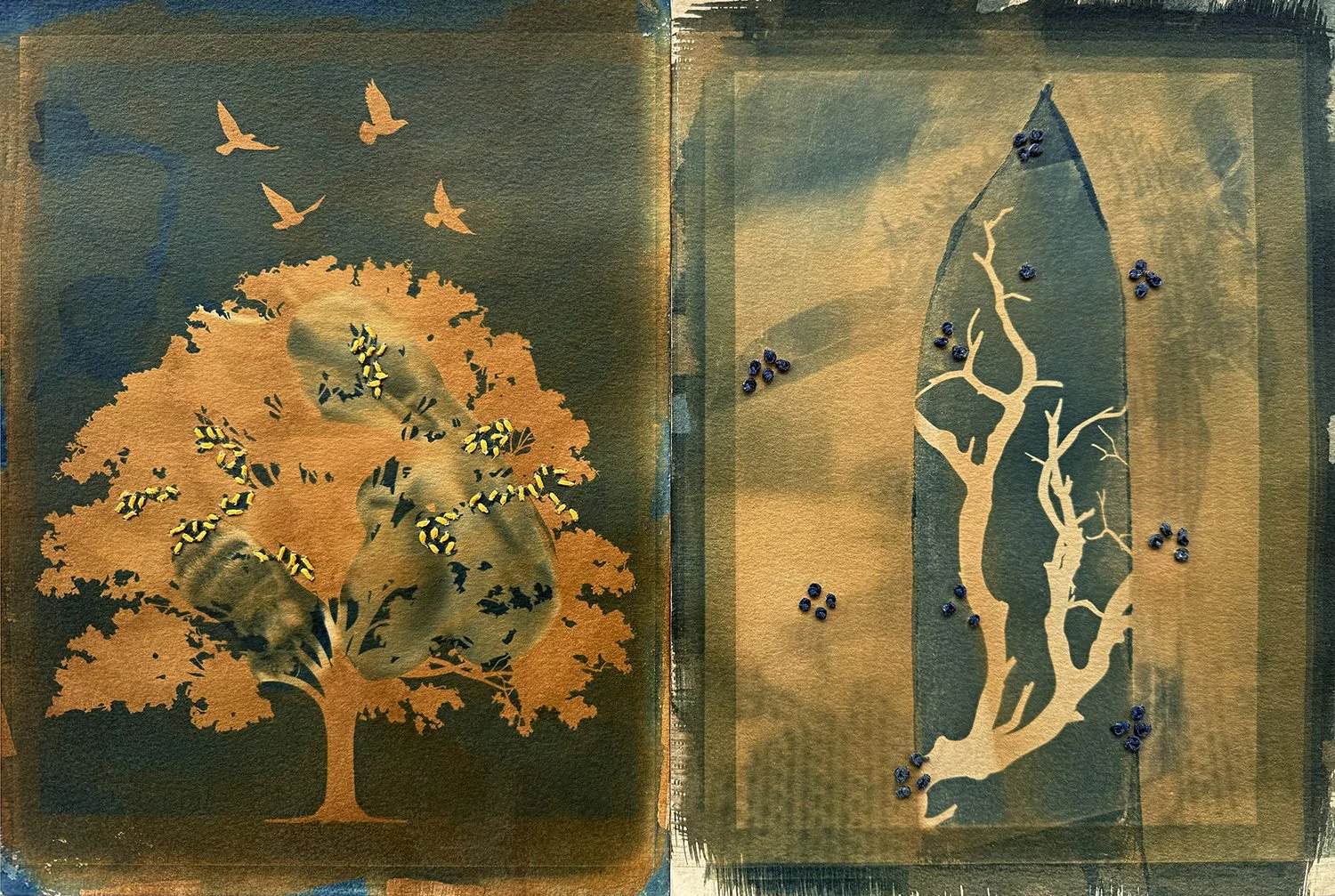
While photography had long been a part of her life, Myers describes the pandemic period as the true turning point in the evolution of her current practice. Like many artists, she found herself seeking distance from screens and digital influence. A cyanotype workshop unexpectedly opened a new creative pathway.
“It was love at first sun print,” she says.
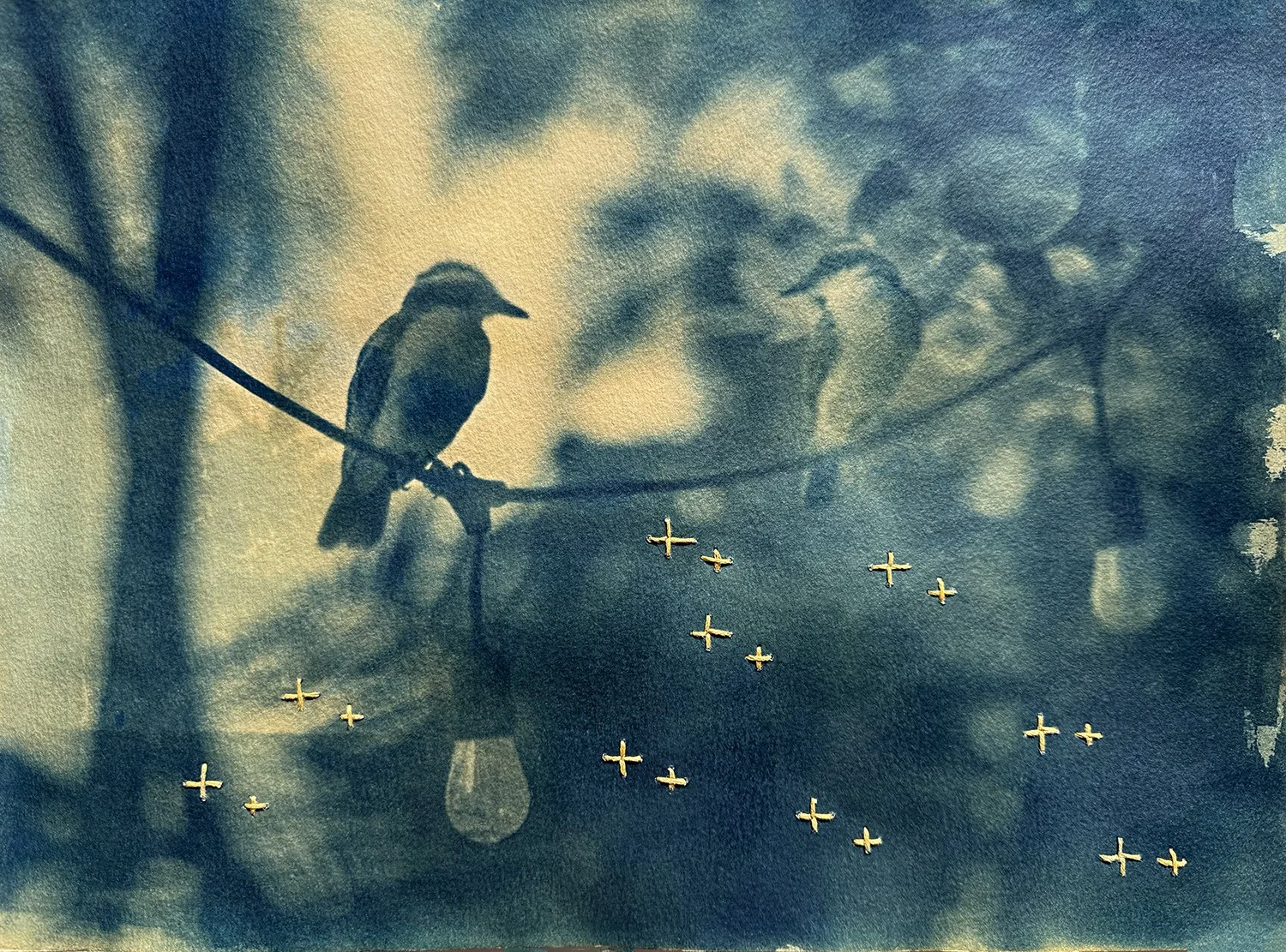
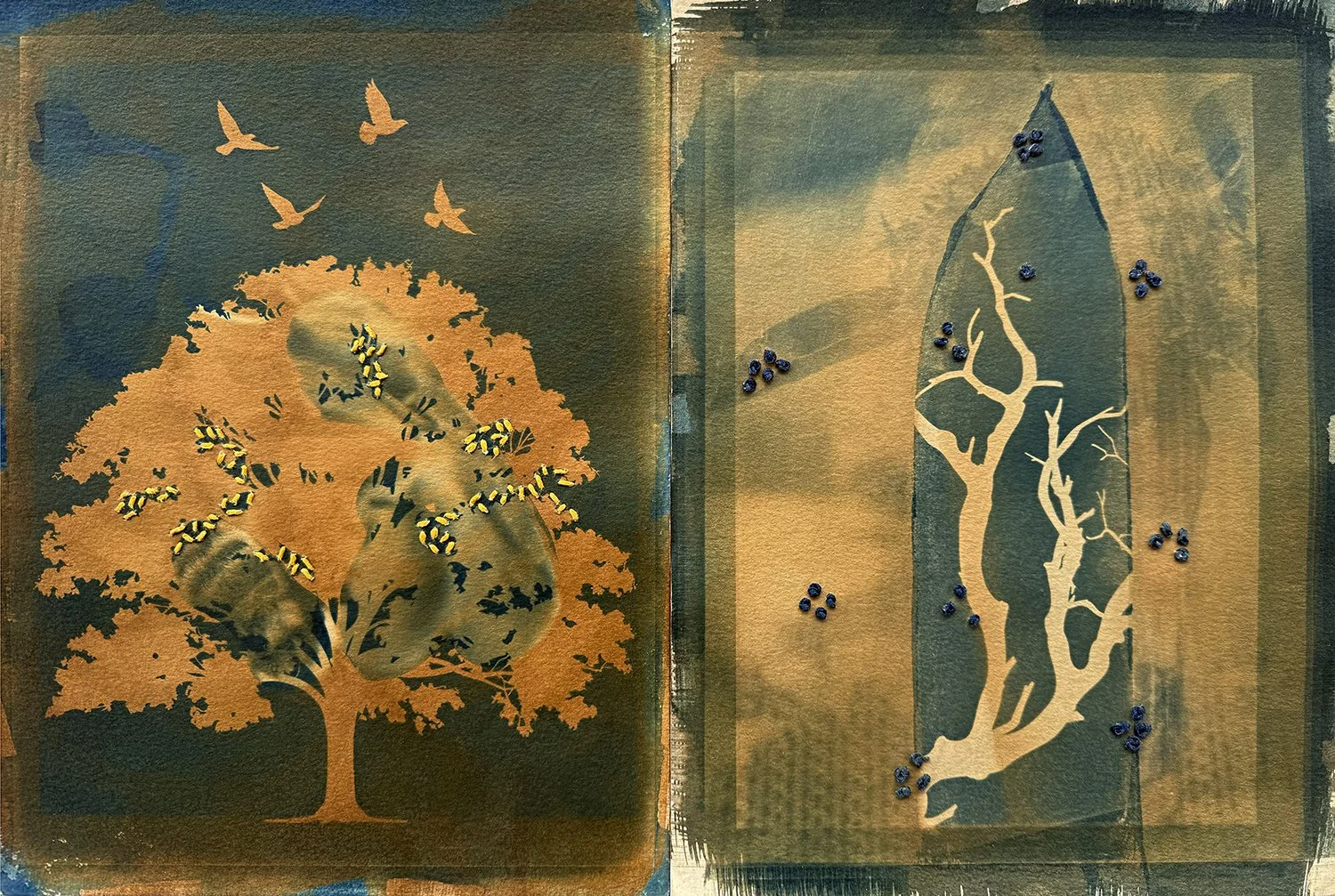
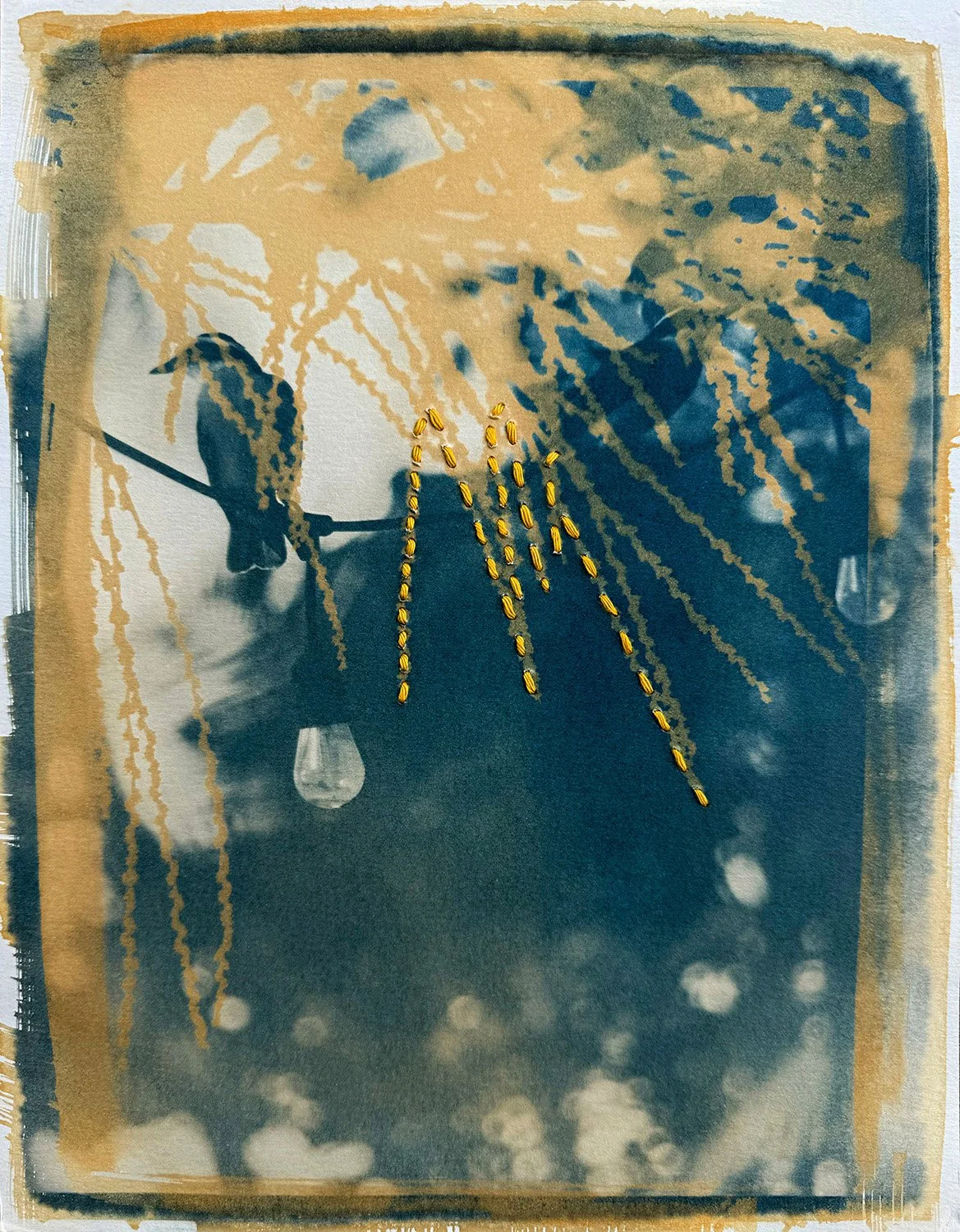
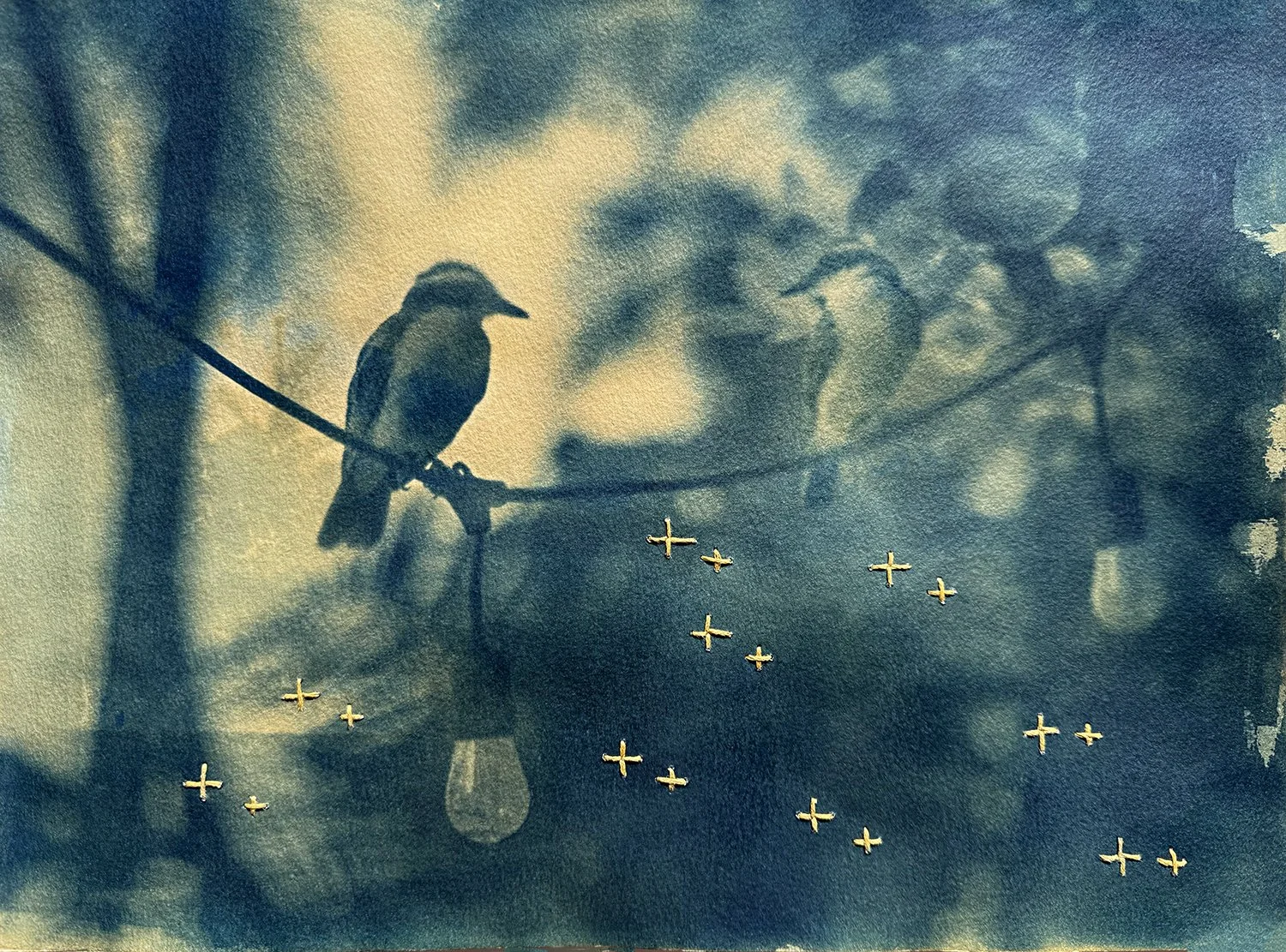
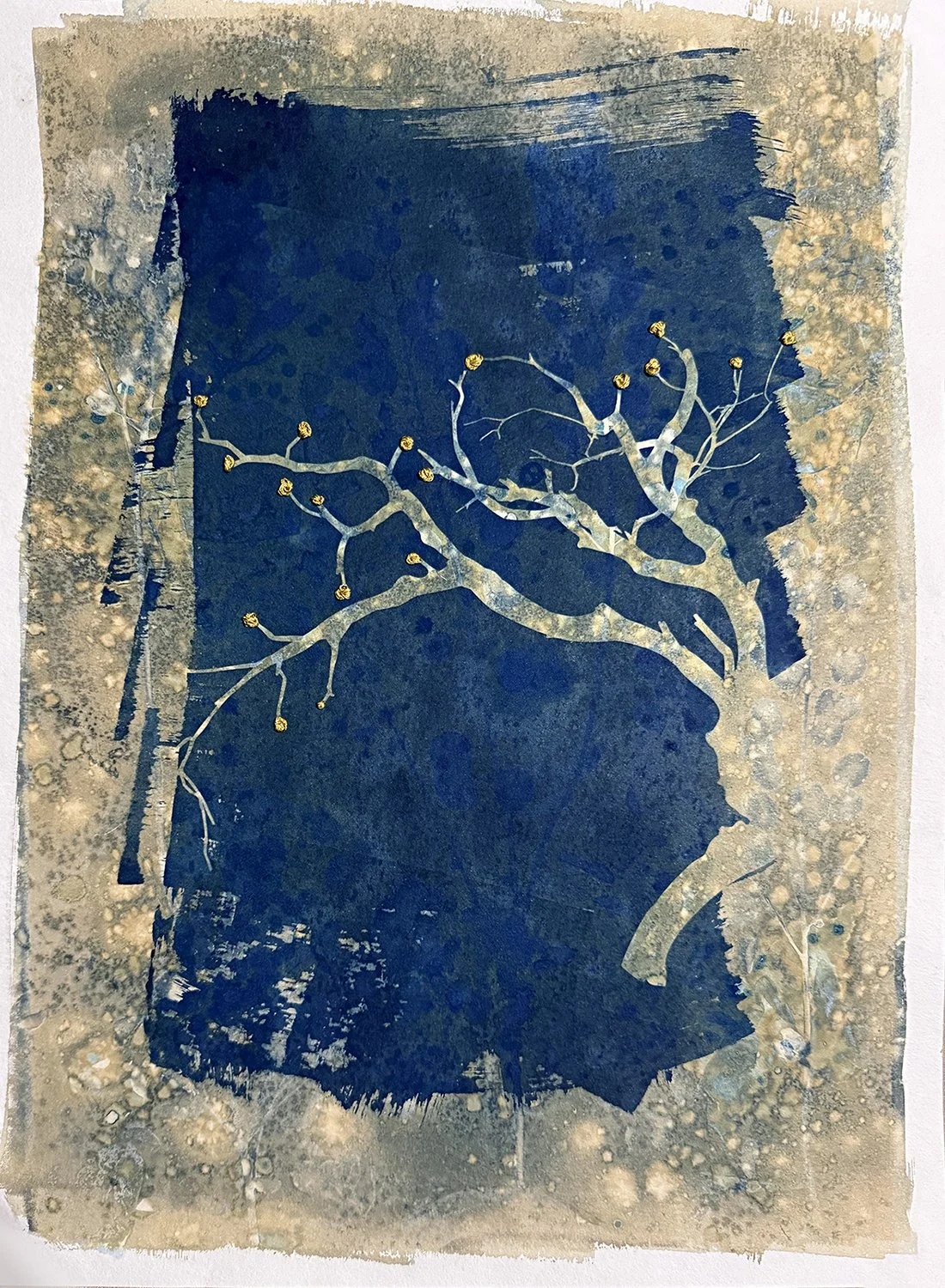
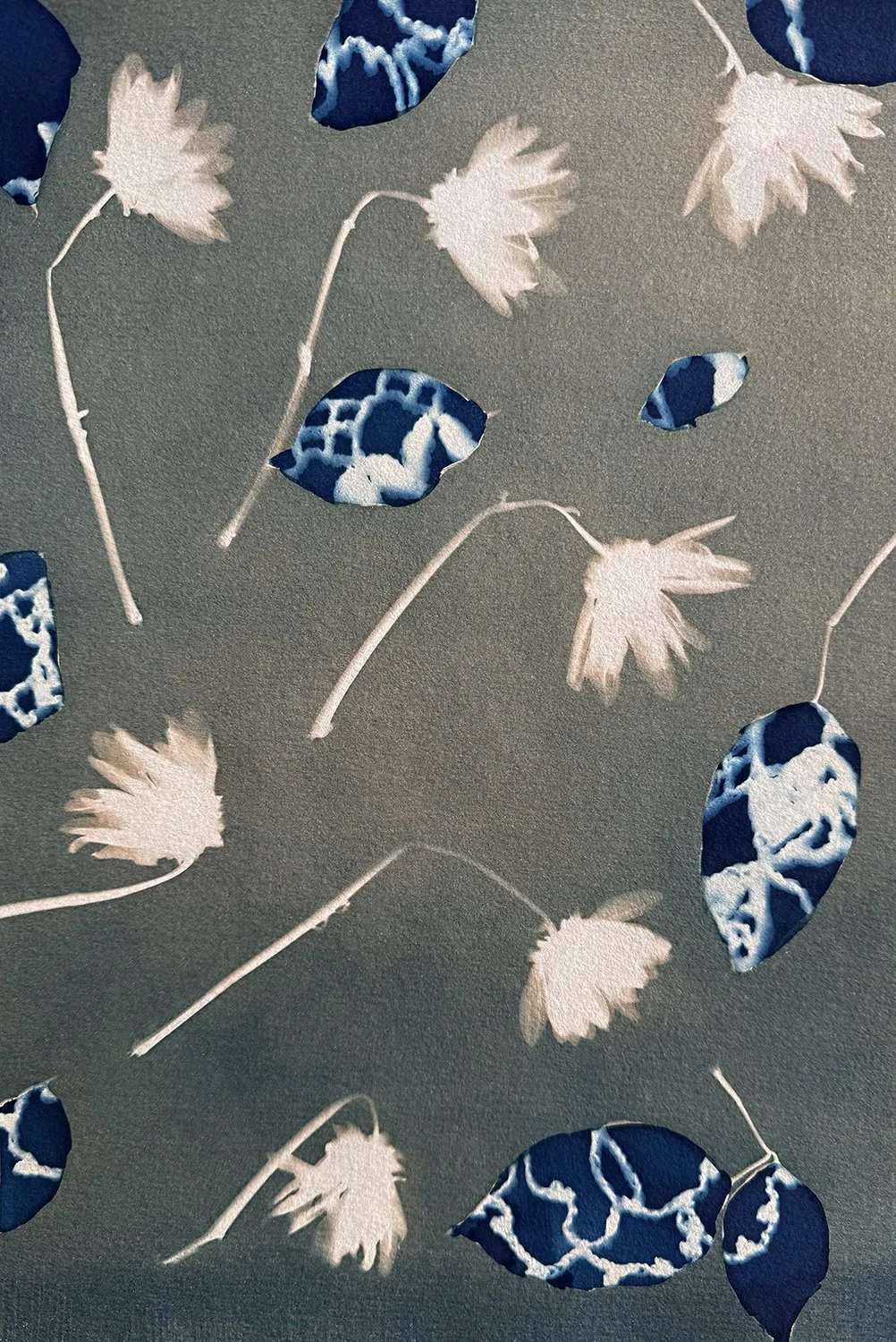
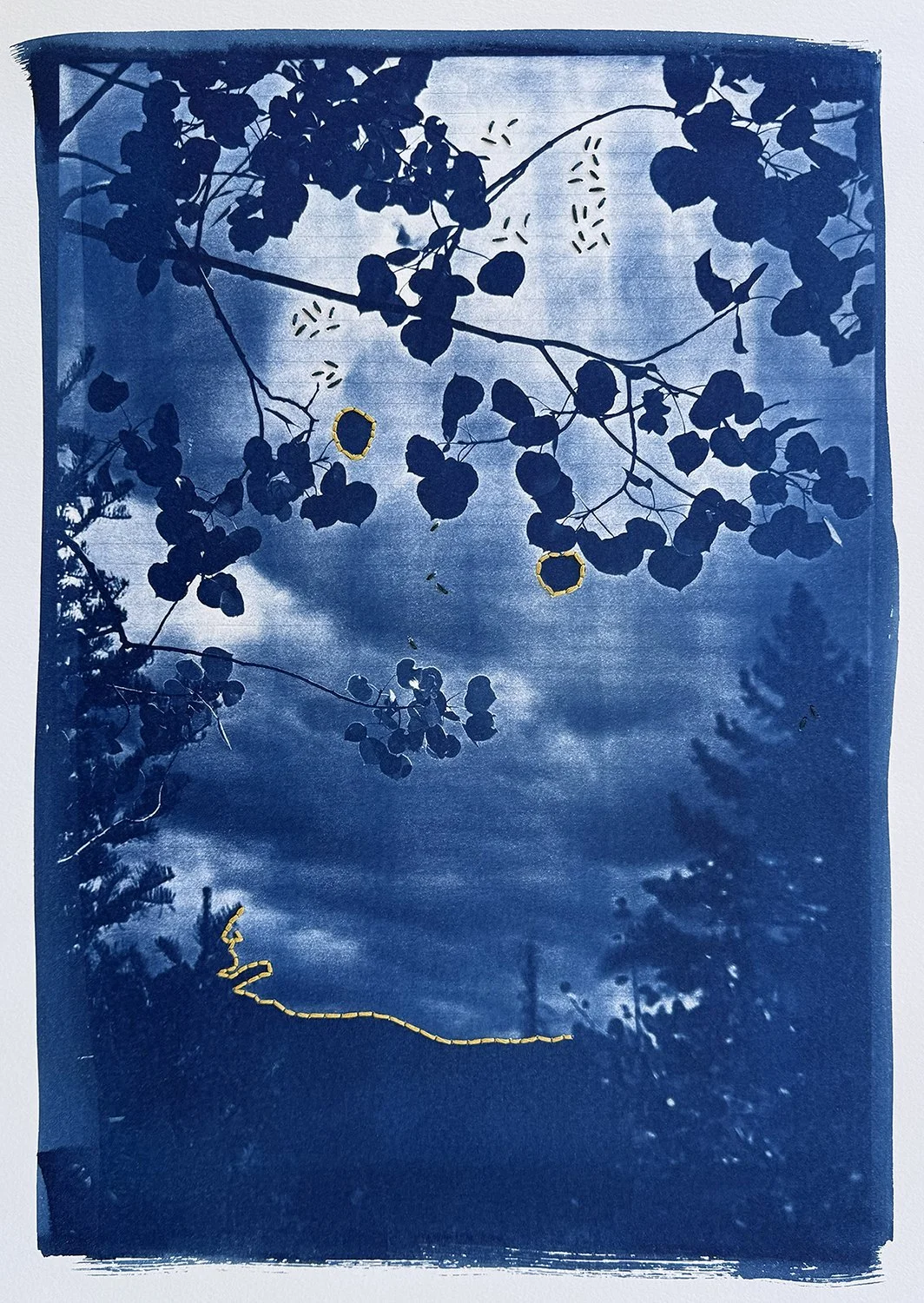
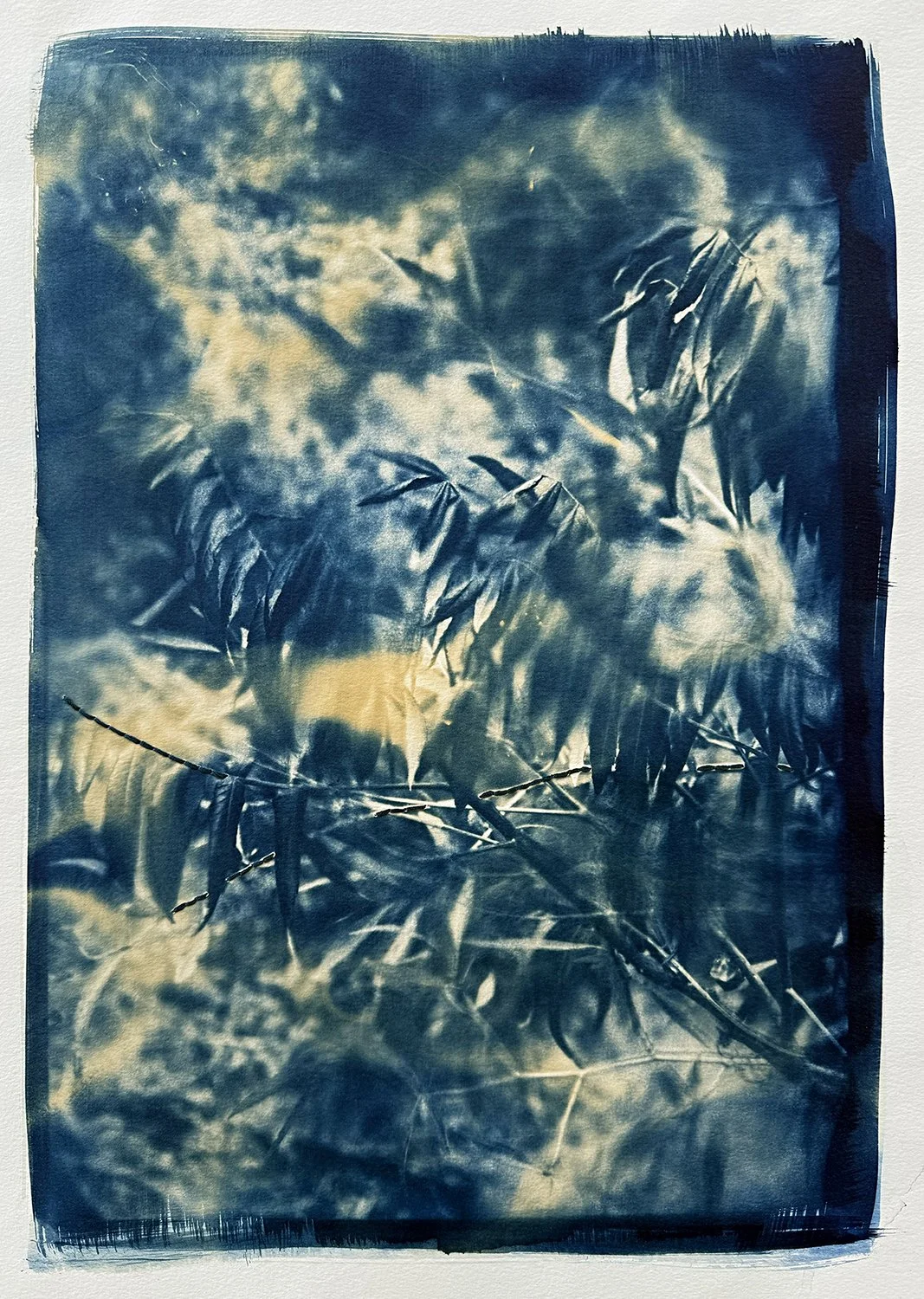
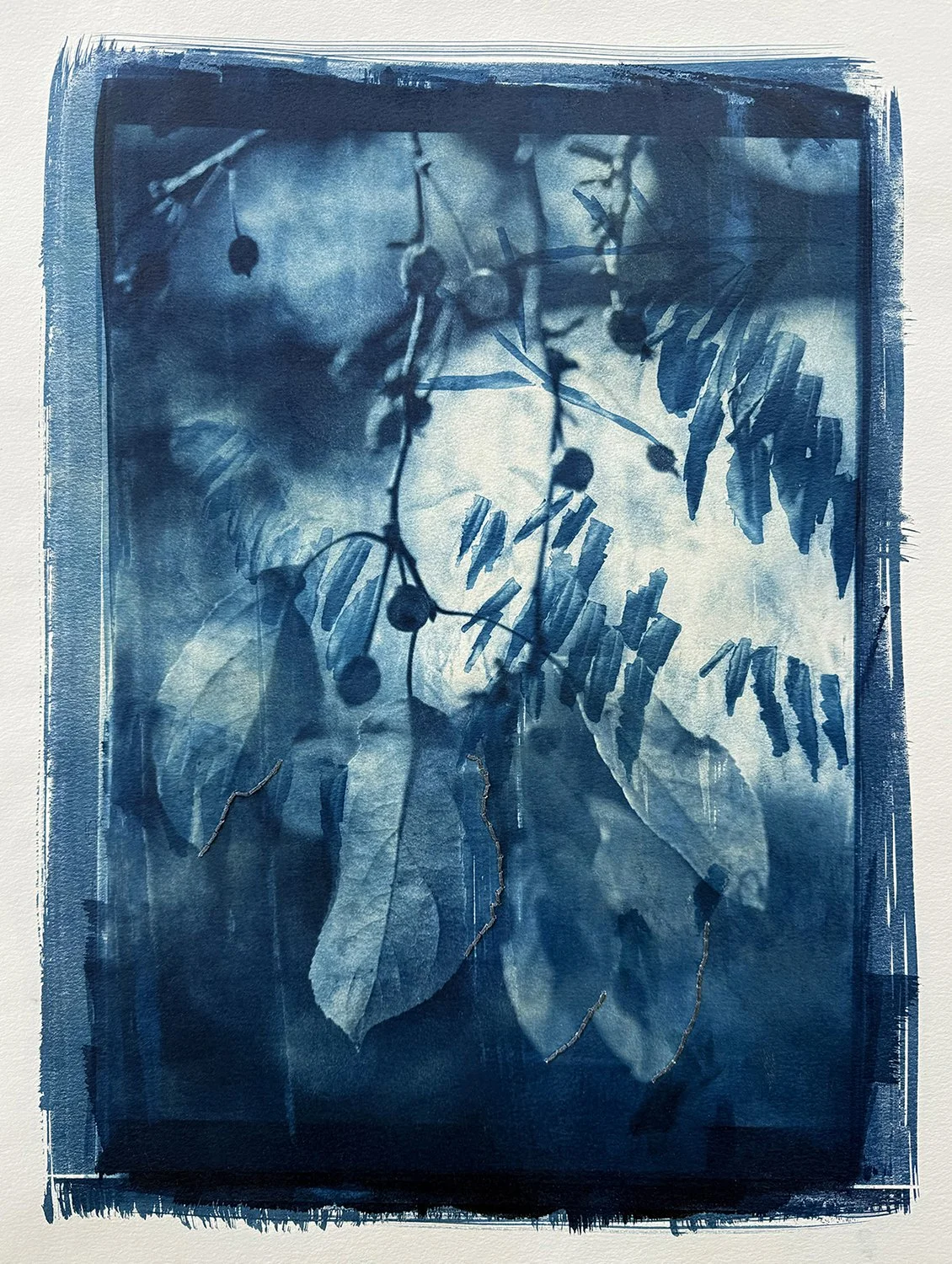
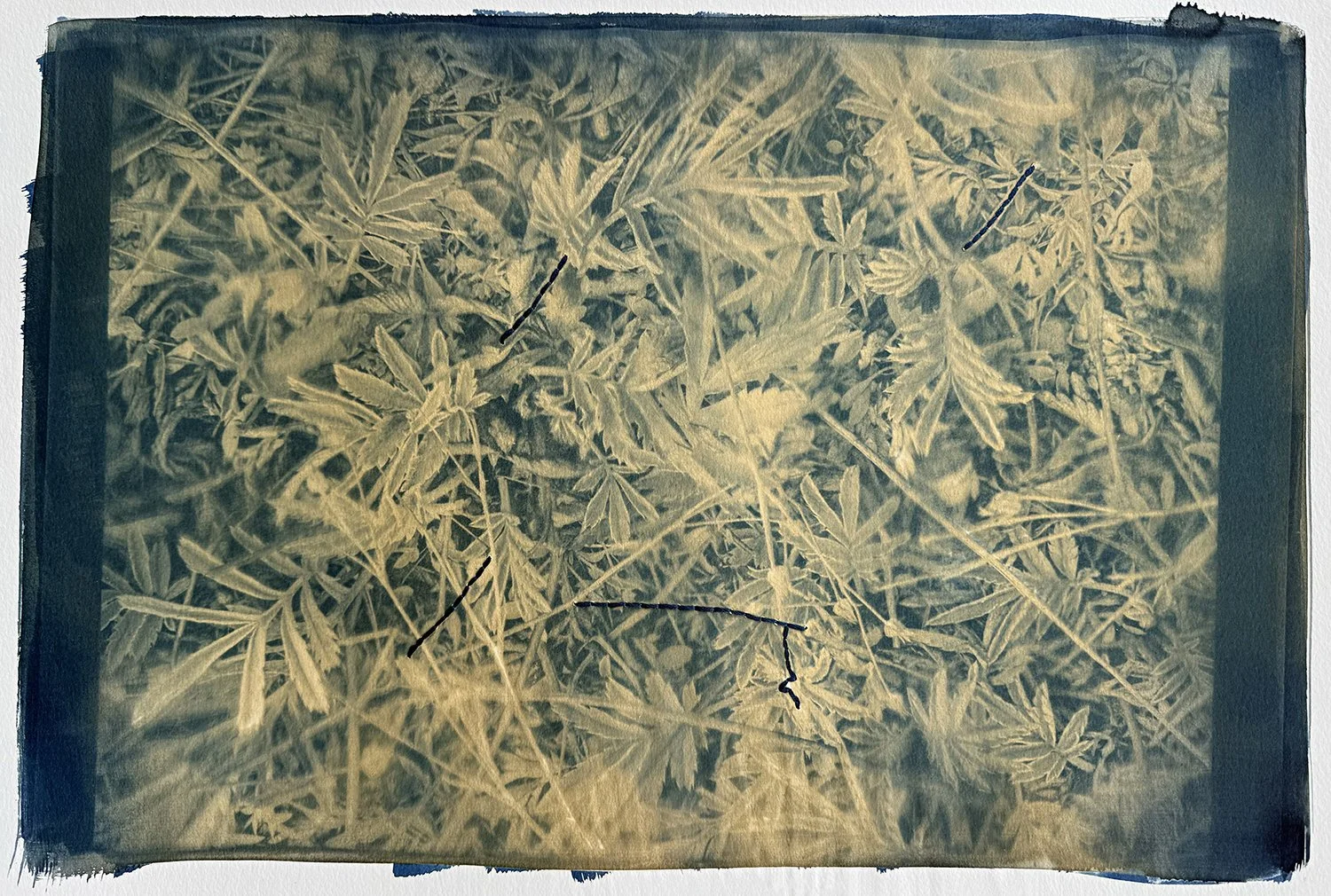
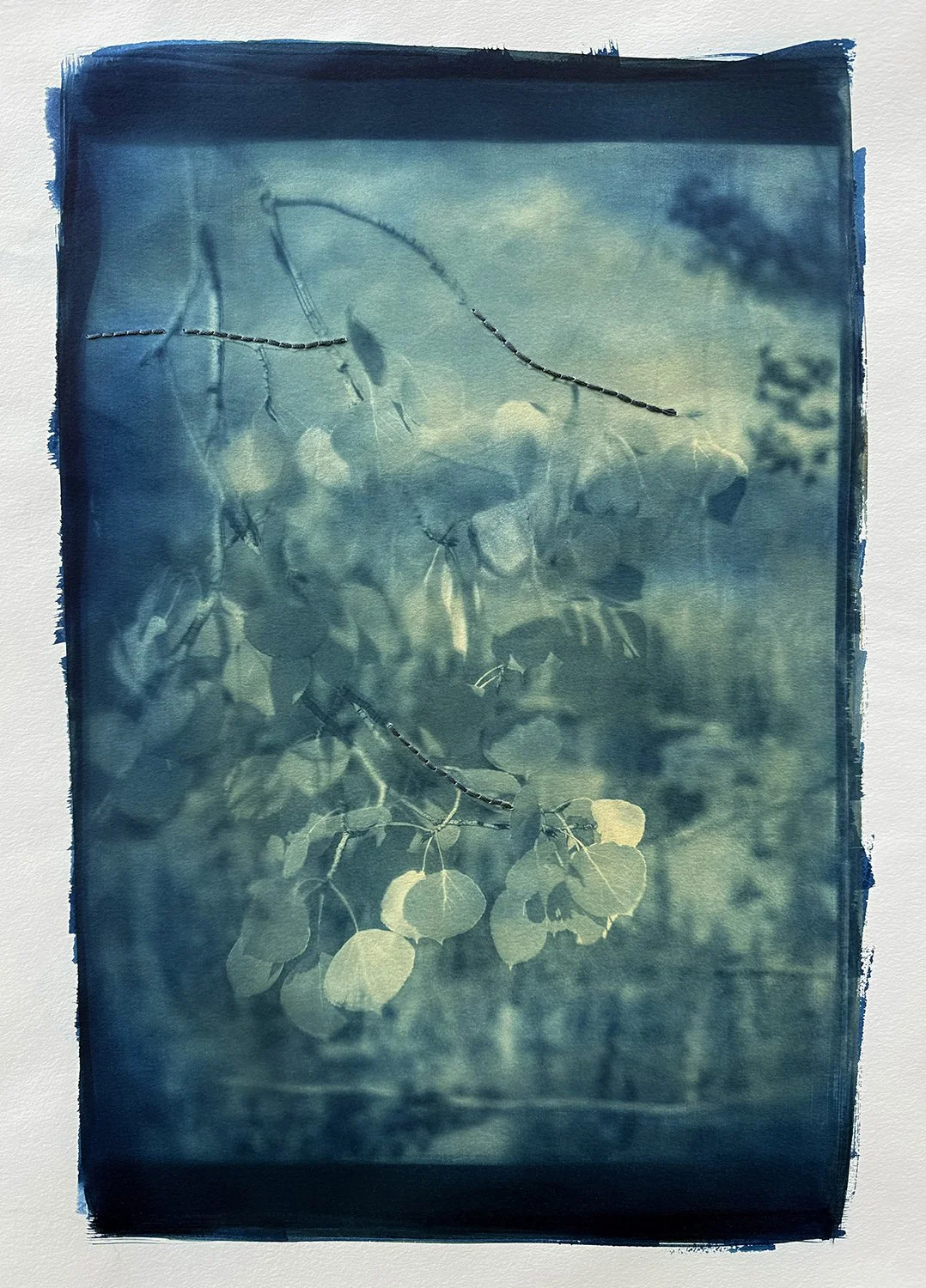
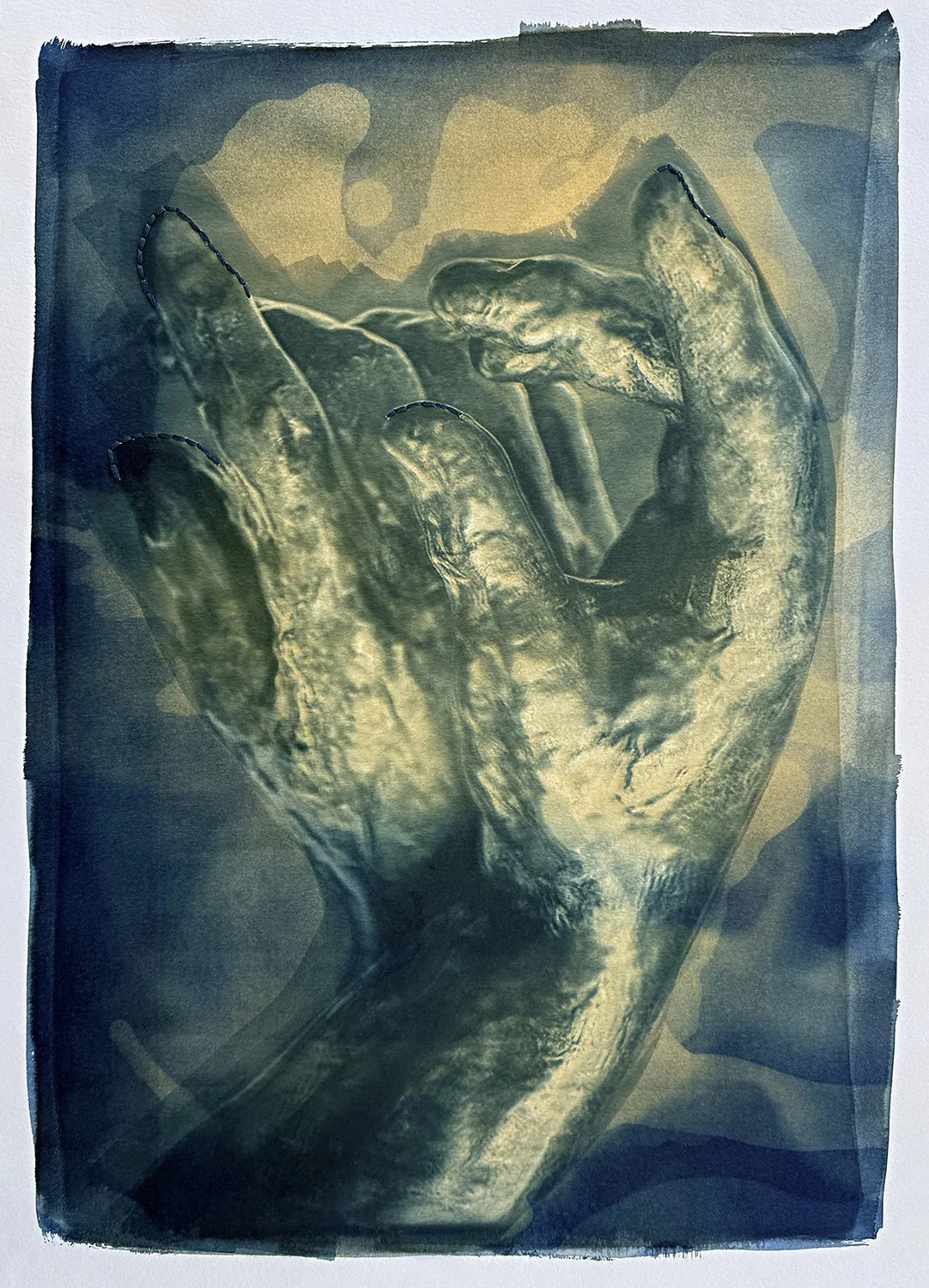
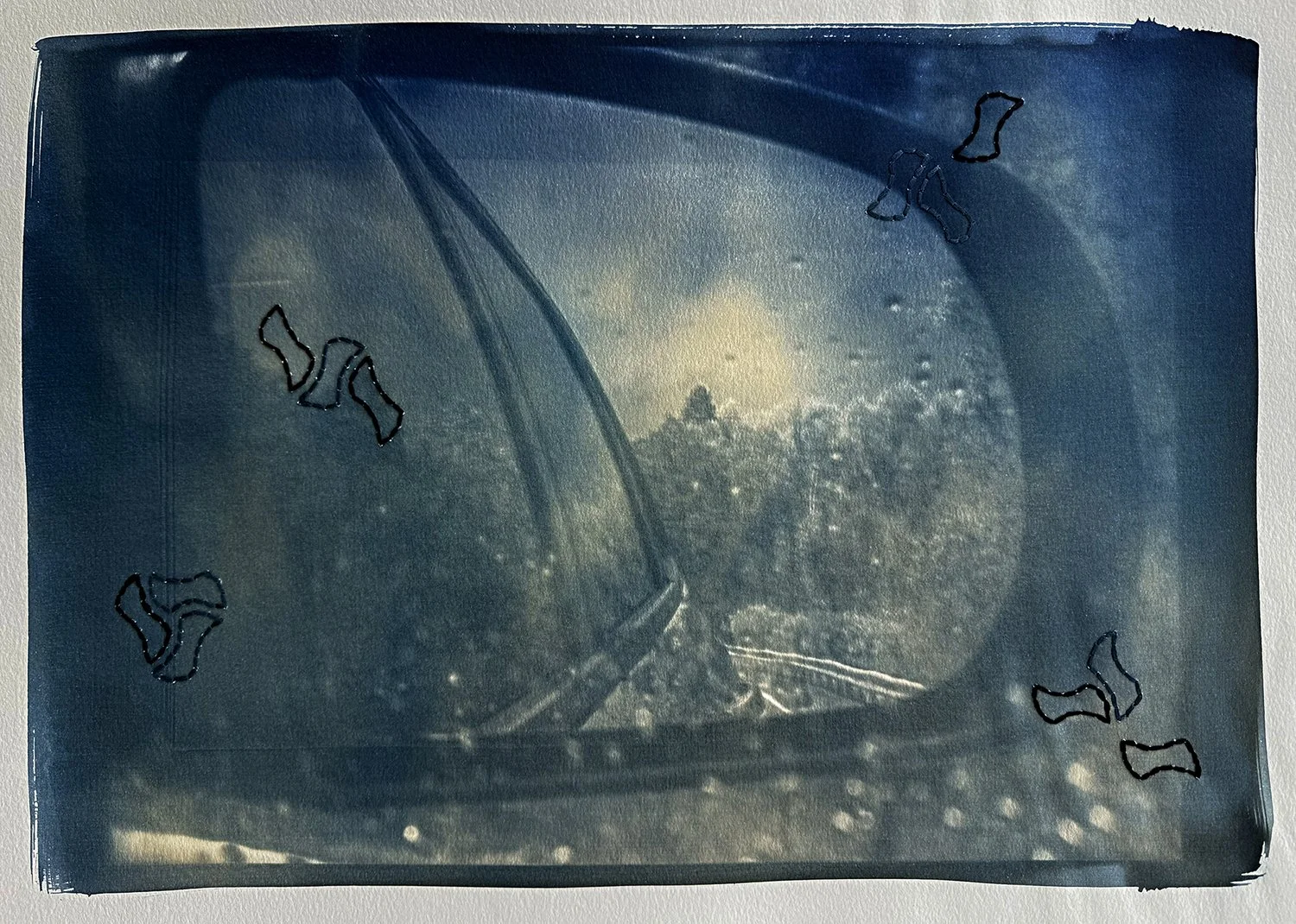
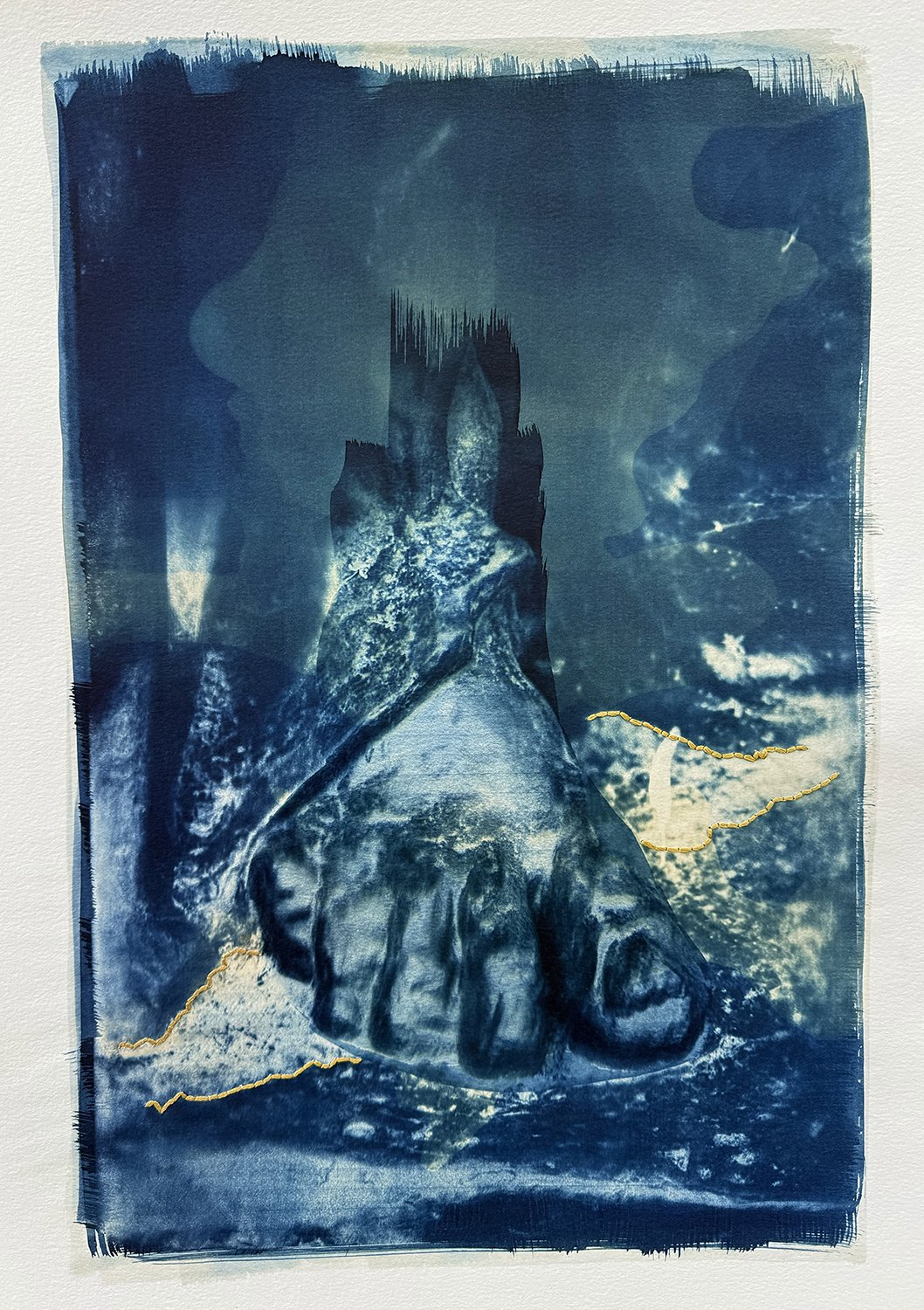
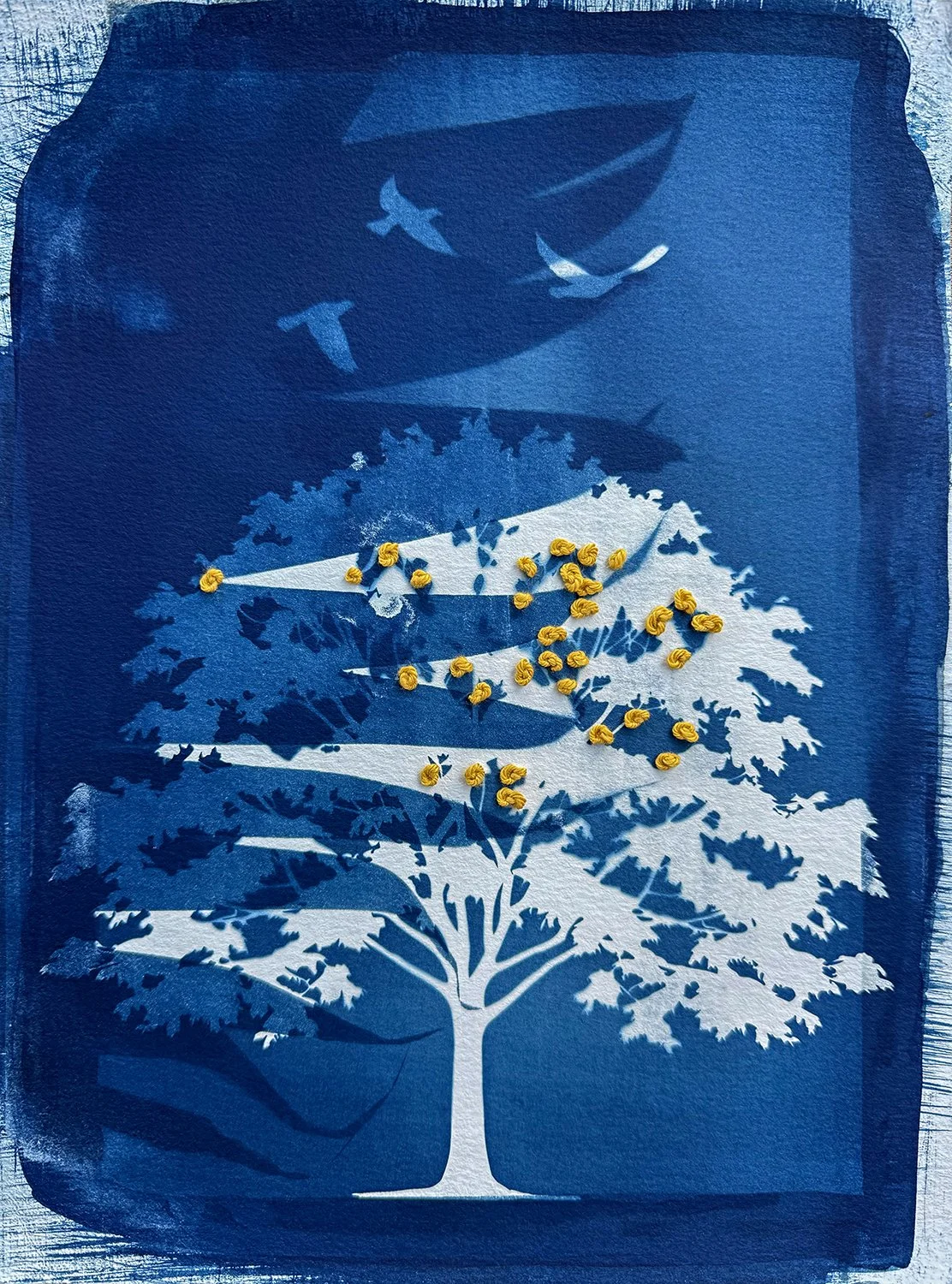
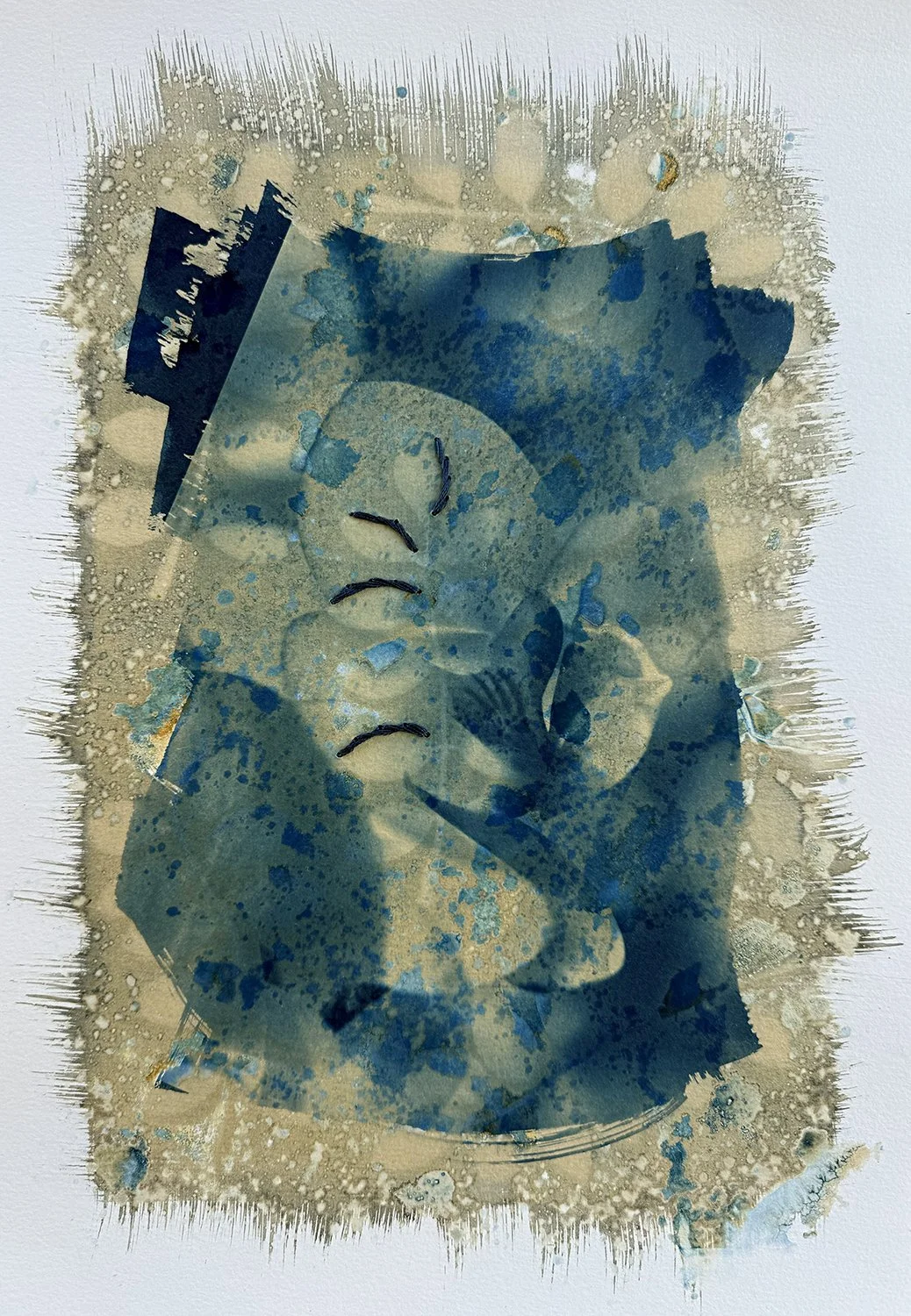
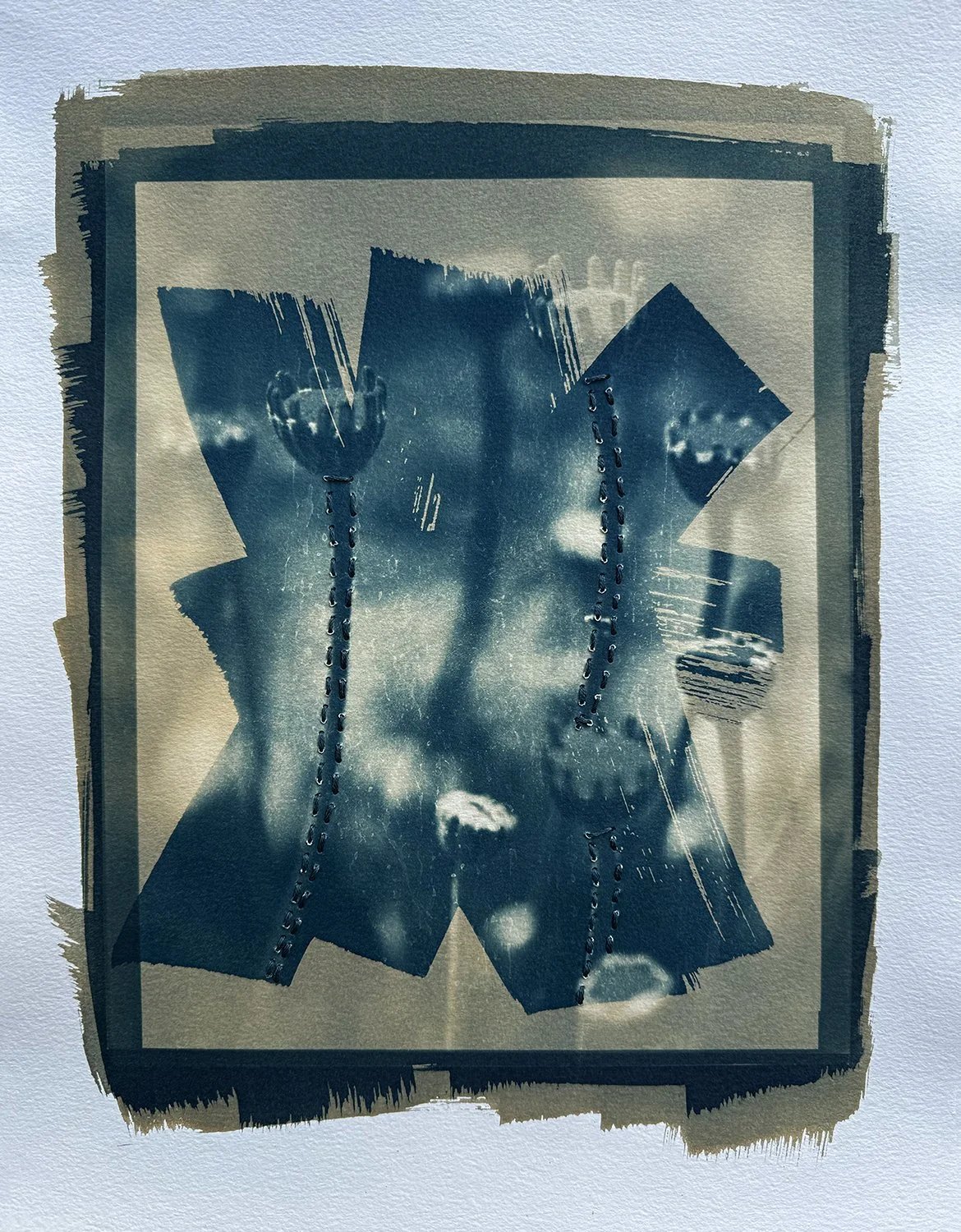
For Myers, cyanotype offered something digital photography could not. The process introduced uncertainty back into image-making. Variations in chemistry, sunlight, paper, fabric, and timing meant that no two prints could ever be exactly alike. Rather than trying to control every outcome, she began leaning into experimentation and allowing the process itself to participate in the creation of the work. That freedom became addictive. She started pushing traditional cyanotype methods further by introducing unconventional materials into the process. Vinegar, soap bubbles, turmeric, plastic wrap, black tea, coffee, matcha, and washing soda all became tools capable of altering the iconic Prussian blue tones associated with cyanotype printing. Instead of treating the process historically or rigidly, Myers approached it with curiosity and openness. The resulting works feel alive because of it. Brush marks remain visible, while her edges become uneven. Tonal shifts seem to emerge organically across the surface, and in many ways, the physical evidence of the artist’s hand becomes just as important as the original photograph itself.
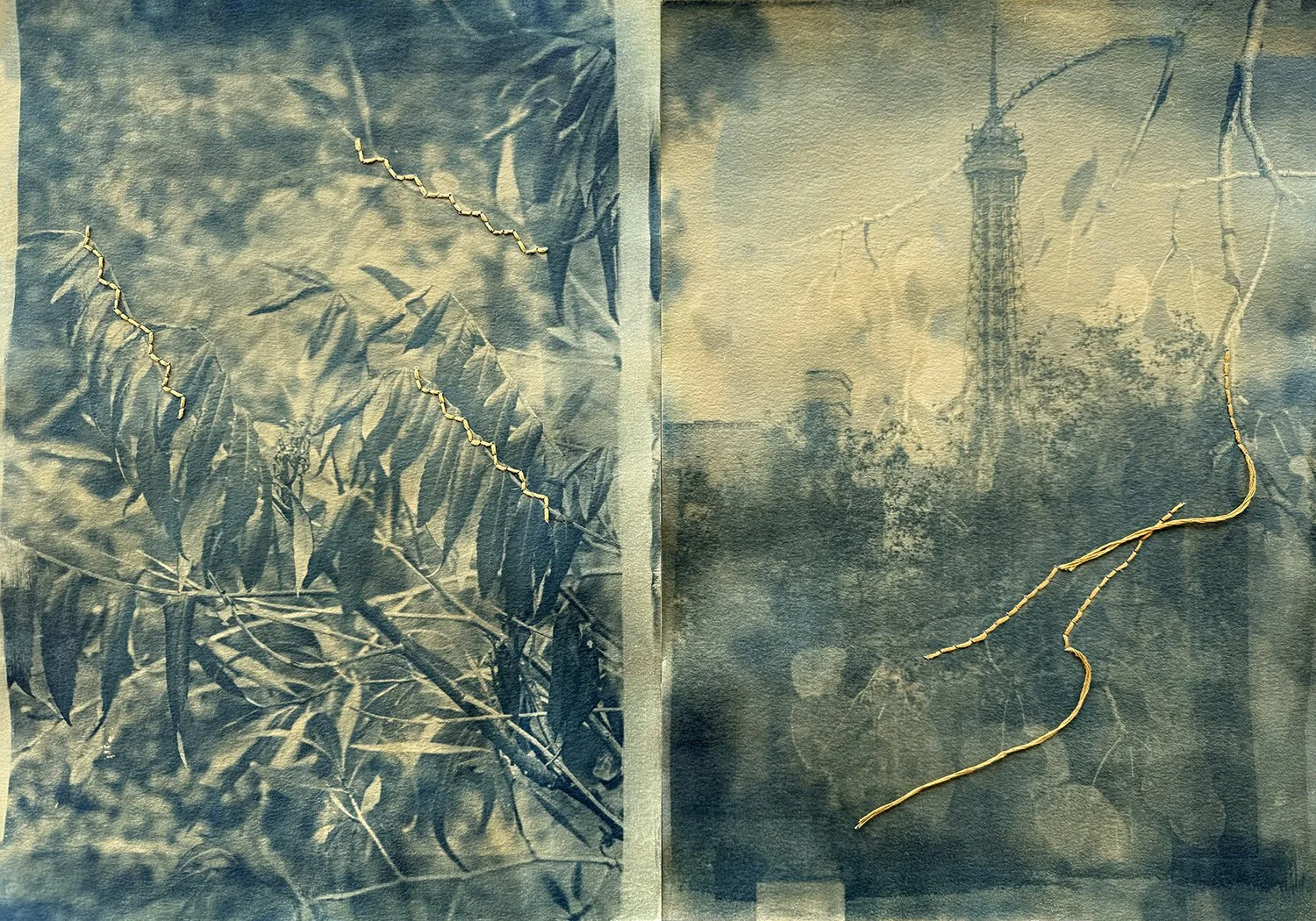
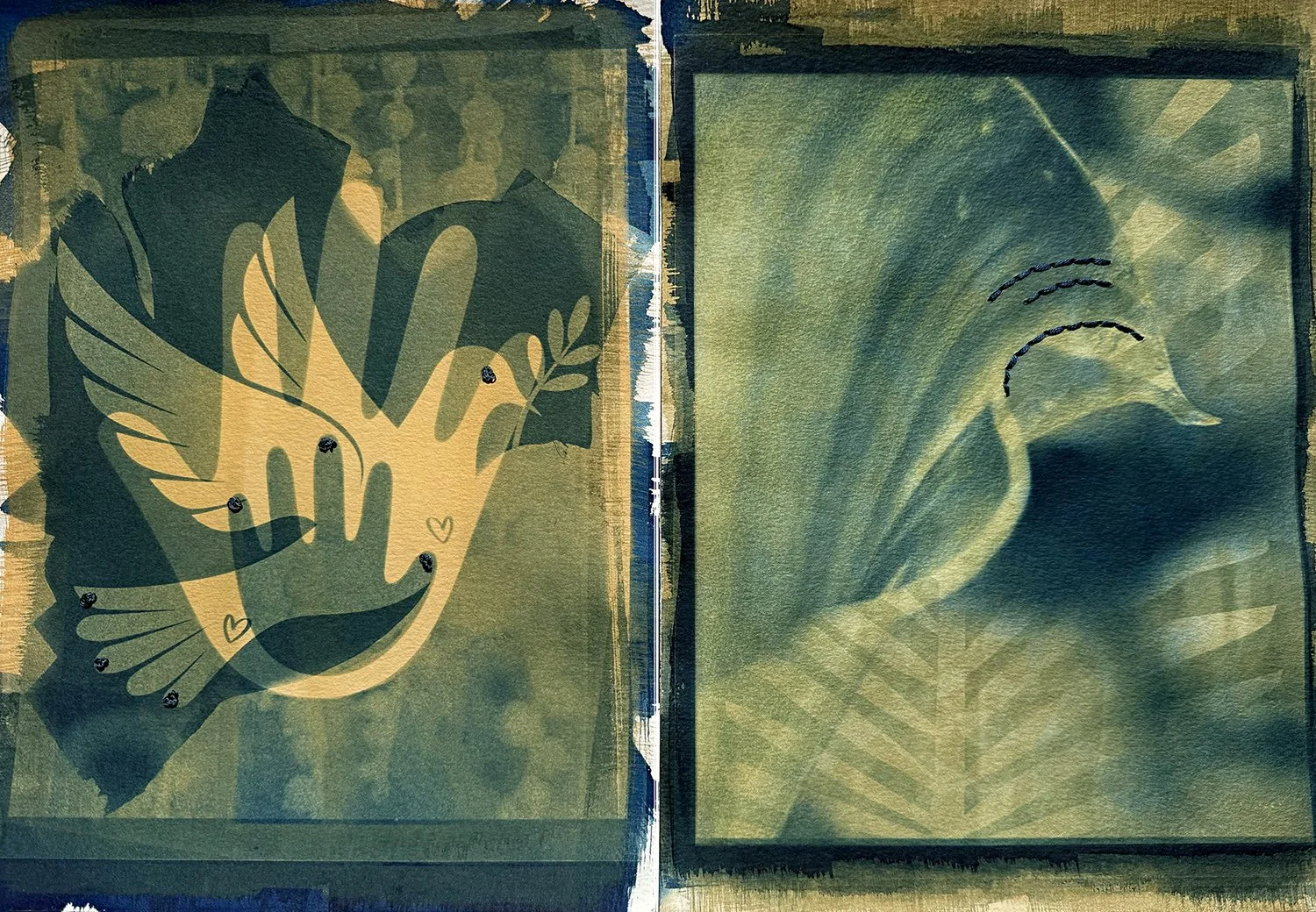
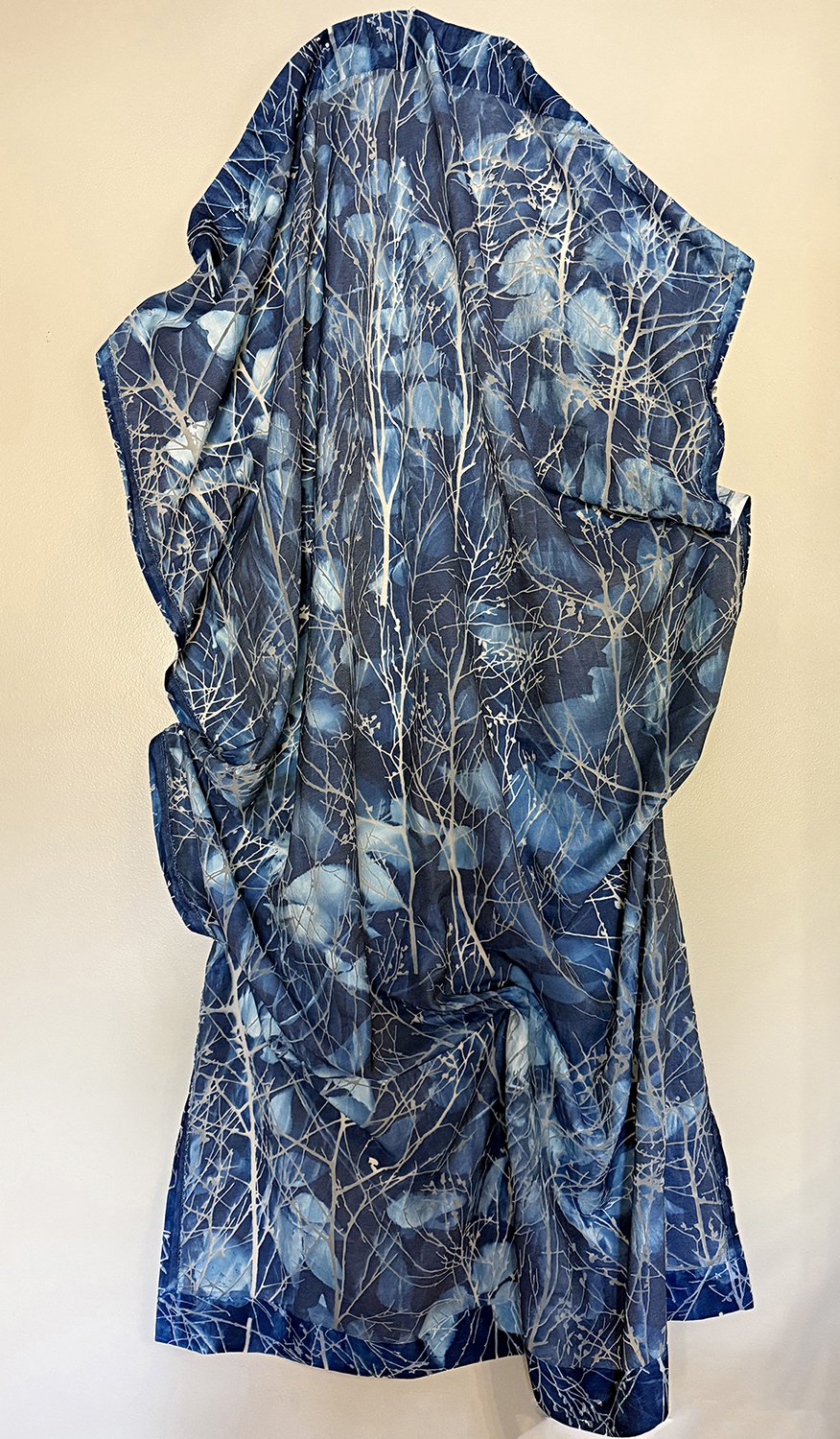
Recently, Myers’ work has expanded even further beyond the flat photographic print. Her practice now incorporates dimensional collage, layered negatives, wood panels, embroidery, and fabric-based installations that physically extend away from the wall. Some pieces begin as photographs but ultimately evolve into textile sculptures or suspended mixed-media constructions that challenge the traditional expectations of what a photograph can be. There is also an undeniable connection between Myers’ process and materiality. Her work simply embodies texture. Fibers, stitching, layered chemistry, and hand-applied emulsions all contribute to objects that ask to be experienced physically and spatially rather than only viewed as images. And it’s exactly that tactile quality that appears to be central to her artistic philosophy.
“When ‘walking my camera,’ I often begin with a specific series in mind, only to let unexpected discoveries guide my lens,” she explains.
That balance between intention and spontaneity runs throughout her practice. While digital photography allows her to move fluidly between macro studies, landscapes, and abstract compositions, she views image capture as only the beginning of the process. The real transformation occurs later in the studio during printing, toning, layering, and experimentation under the Colorado sun. By reapplying emulsions, altering chemistry, and introducing multiple exposures, Myers creates pieces that feel less like reproductions and more like evolving artifacts. The final work becomes a condition not only of the original image, but of time, weather, material interaction, and physical touch.
Over the years, Myers has continued strengthening her artistic practice through coursework and community involvement. She has studied at institutions including the Colorado Photographic Art Center, Maine Media, Anderson Ranch, and the Curtis Center for the Arts. In 2024, she joined D’art Gallery in Denver’s Santa Fe Art District, where the collaborative co-op environment further expanded her understanding of curation, installation, and artistic community.
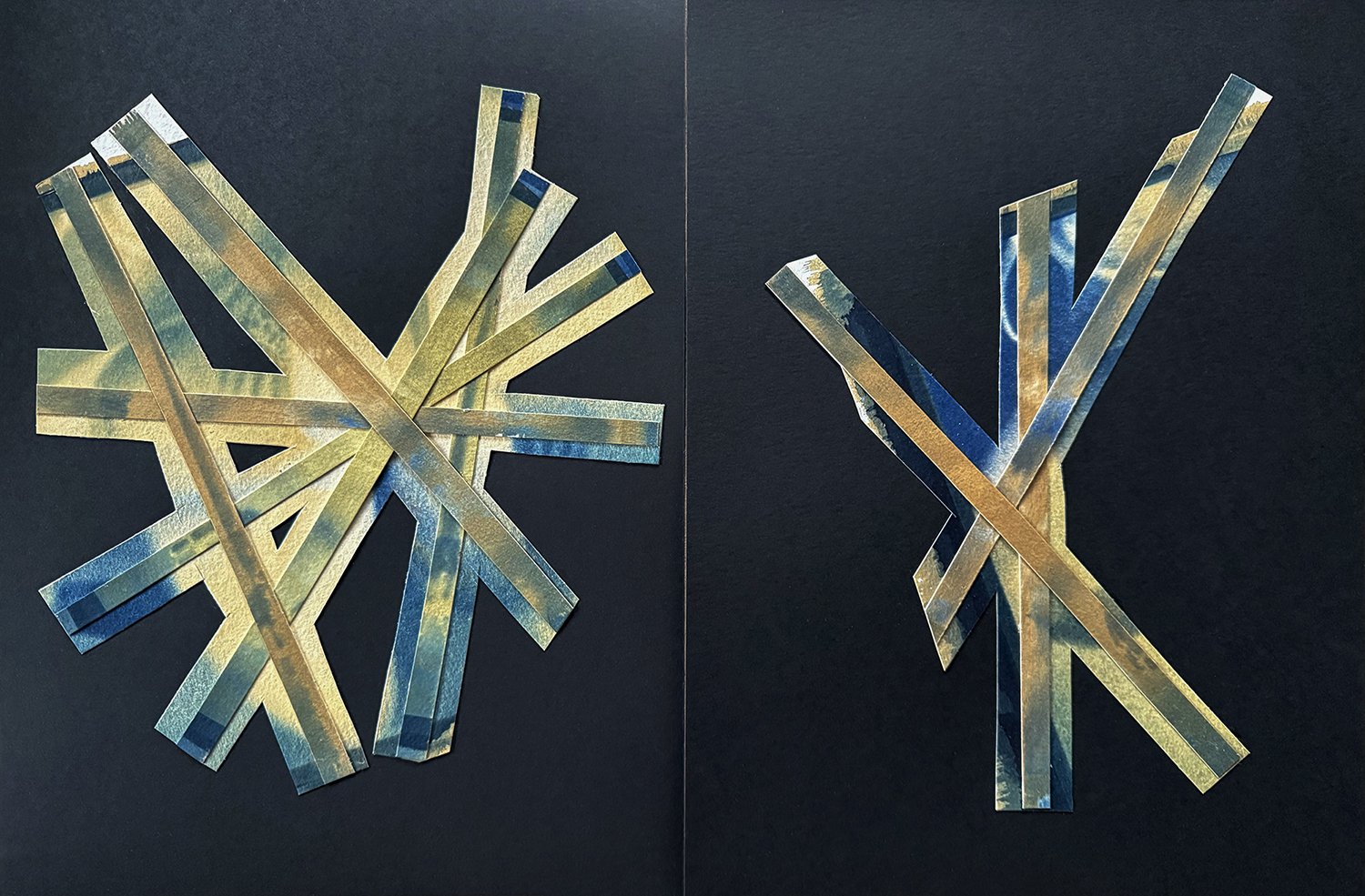
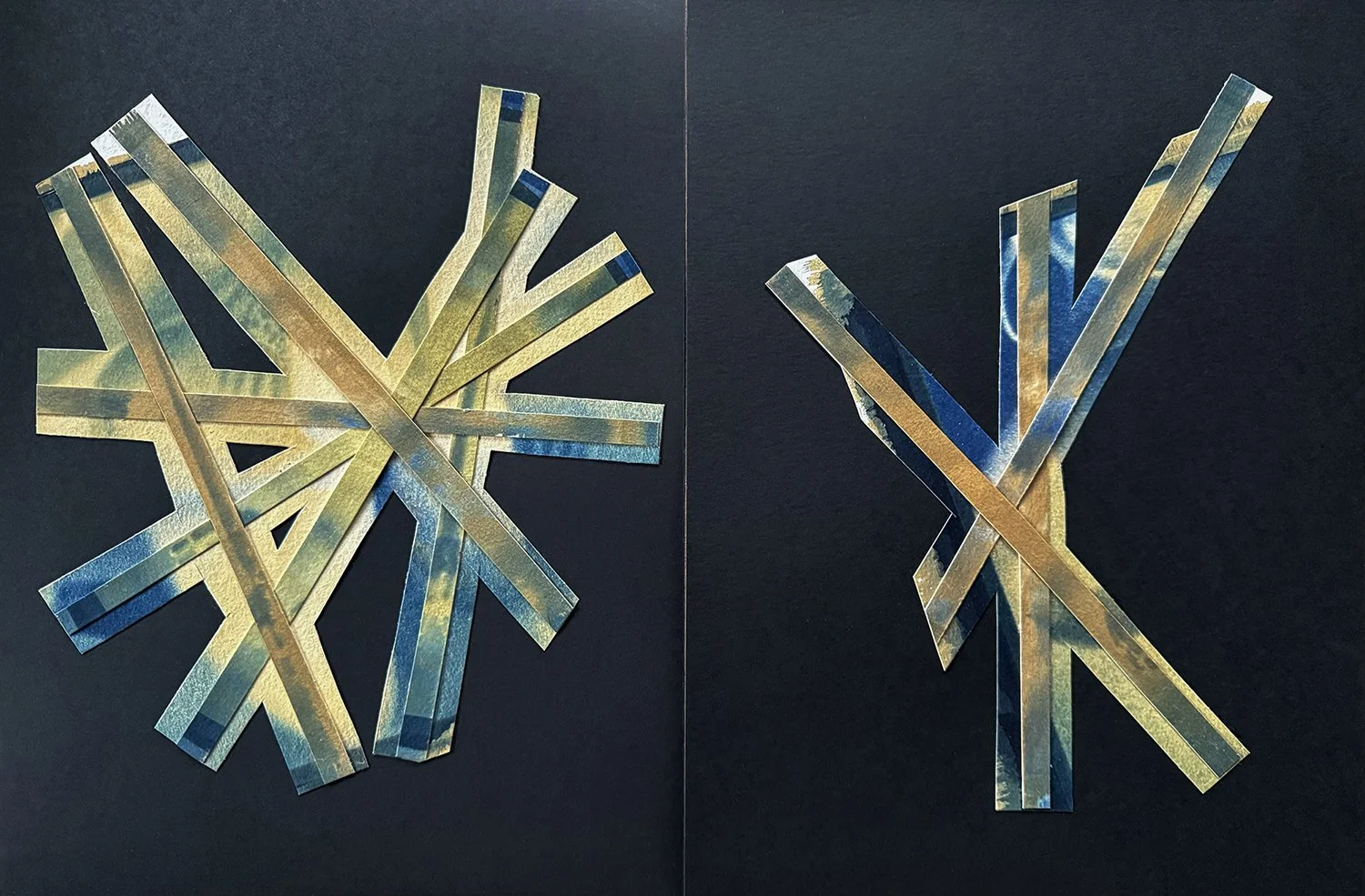
As the recipient of the 2025 Paula Riff Award, Myers will exhibit her cyanotype collage diptychs at the Center for Photographic Art alongside four additional award recipients. Her work is also included in exhibitions at Colorado State University’s SPUR campus, the Colorado Photographic Art Center member’s show, and the 43rd Annual ALL Colorado Art Show at the Curtis Center for the Arts. At the same time, she is already looking ahead toward a 2027 semi-solo exhibition centered around textile tapestries, natural toners, and dimensional installation work. The project aims to further merge fiber, chemistry, and architectural space into immersive environments that blur distinctions between photography, sculpture, and textile art.
What I find makes Myers’ work particularly compelling is that none of this experimentation feels forced or conceptual for the sake of novelty. Instead, it feels rooted in genuine curiosity and a desire to continually rediscover what photography can become when process is allowed to breathe. In an era where images are often endlessly scrolled past and instantly consumed, Myers moves in the opposite direction. Her work slows photography down and asks viewers to notice texture, surface, and material presence. The unpredictability of cyanotype becomes not a limitation, but a reminder that some of the most beautiful moments in art happen when control gives way to discovery.
And perhaps that is what makes her work resonate so strongly. Beneath all of the process and experimentation involved, she is an artist still chasing the same excitement first discovered in the darkroom years ago…the simple magic of watching an image come to life.
GALLERY
ABOUT THE ARTIST
Marni Myers is an interdisciplinary artist and visual alchemist, exploring dream-like states through minimal, imperfect layers. Through the alternative photographic process of cyanotype printing, she uncovers quiet discoveries within the photographic image, revealing her hand with tactile compositions, painterly textures, soft tonal shifts, and edges that resist perfection.
Myers is the recipient of the 2025 Paula Riff Award, presented by the Center for Photographic Art and Lenscratch, honoring innovation in photographic alternative processes. Her work has been featured in national solo and group exhibitions at venues including The Photographer’s Eye Collective + Gallery (Escondido, CA), LightBox Photographic Gallery (Astoria, OR), PhotoPlace (Middlebury, VT), Center for Photographic Art (Carmel, CA), and the Griffin Museum of Photography (Winchester, MA). She is an active member of D’art Gallery, a co-operative organization in Denver’s Santa Fe Art District.
In addition to her artistic practice, Myers works as a Creative Director and Graphic Designer. She holds a bachelor’s degree from the University of Wisconsin – Madison and lives and works in Denver, Colorado.
ABOUT THE AUTHOR
Michael Kirchoff is a commercial and fine art photographer and the Editor-in-Chief of Analog Forever Magazine, a publication dedicated to supporting contemporary analog photography and the artists who continue to shape the medium through process-driven and conceptually rich work. Through interviews, curated exhibitions, written features, and collaborative projects, he works closely with emerging and mid-career photographic artists from around the world while helping foster a broader appreciation for film-based and handmade photographic practices.
In addition to his work with Analog Forever, Michael is the Founding Editor of Catalyst: Interviews and co-host of The Diffusion Tapes podcast, where conversations center on creativity, artistic intent, and the evolving landscape of photography. His editorial and curatorial work often explores the relationship between process, materiality, and personal vision, with a particular interest in artists whose work demonstrates thoughtful cohesion both visually and thematically.
Michael has served as an independent curator, juror, portfolio reviewer, and educator for organizations, galleries, and non-profits throughout the United States and abroad. He was also a Contributing Editor at One Twelve Publishing from 2020-2024, writing for Poignant Portfolios, as well as his own column, Traverse.
During his tenure on the Board of Directors for the American Photographic Artists Los Angeles chapter from 2006–2016, he helped develop educational programming, artist lectures, and community initiatives supporting both commercial and fine art photographers.
Based in Los Angeles, Michael continues to advocate for the photographic arts through publishing, curation, mentorship, and collaborative projects that encourage deeper engagement with contemporary photography and the artists behind it.
RELATED ARTICLES
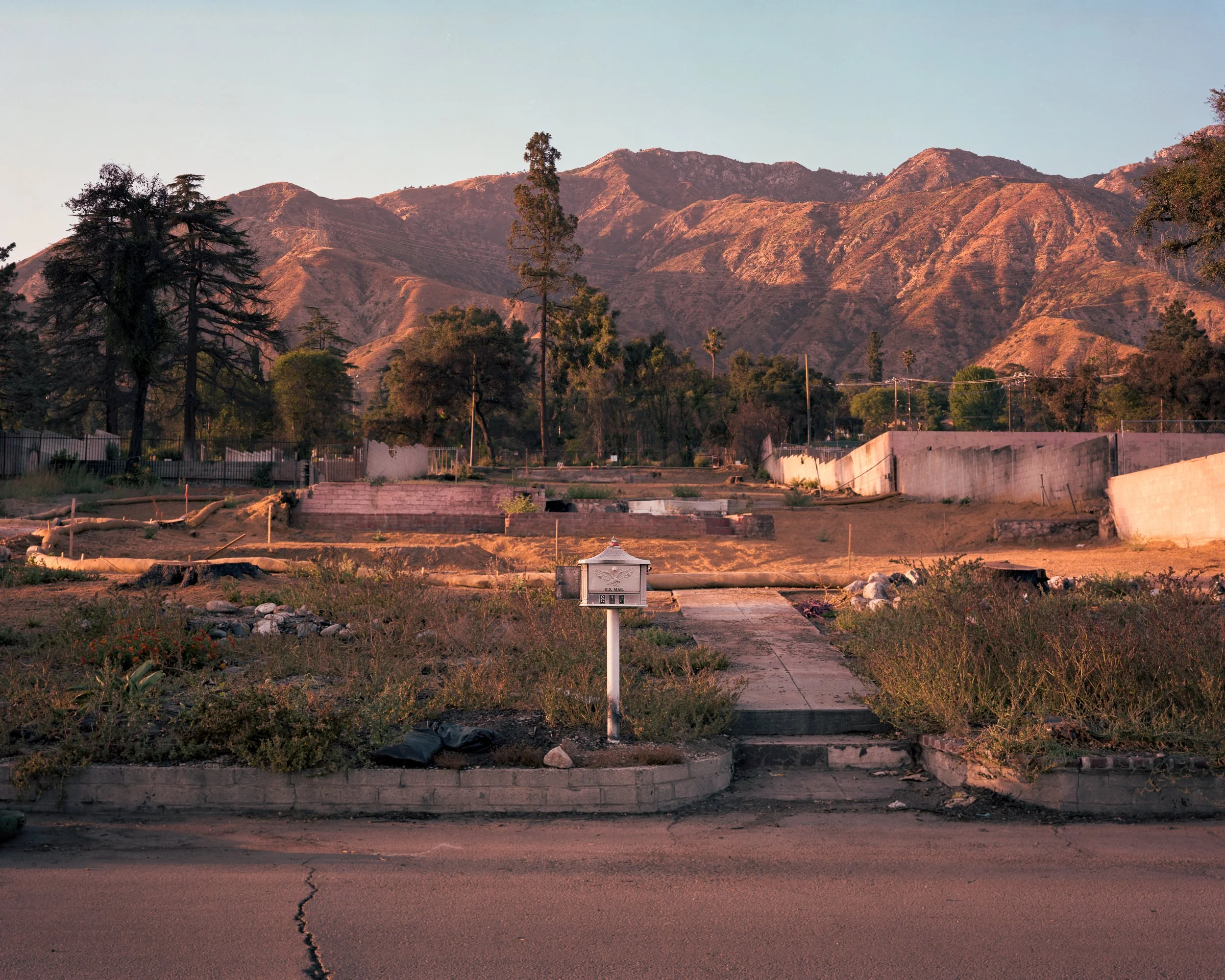




In rural Kansas, large-format photographer and master printer Michael Strickland is pushing traditional printmaking to extraordinary lengths. For his Of the Earth series, Strickland grinds soil, clay, and charred wood gathered from the landscapes he photographs into pigments for his color carbon prints, physically embedding the land within the finished work. We spoke with Strickland about process, place, the disappearing craft of photographic printmaking, and why the physical print still matters.