
Interview: Marcus Ubungen - “Altadena”
Photography often begins as an act of observation, a quiet attempt to understand the world through attention. But sometimes it begins with rupture, the sudden realization that the landscapes we move through every day are far more fragile than we allow ourselves to believe.
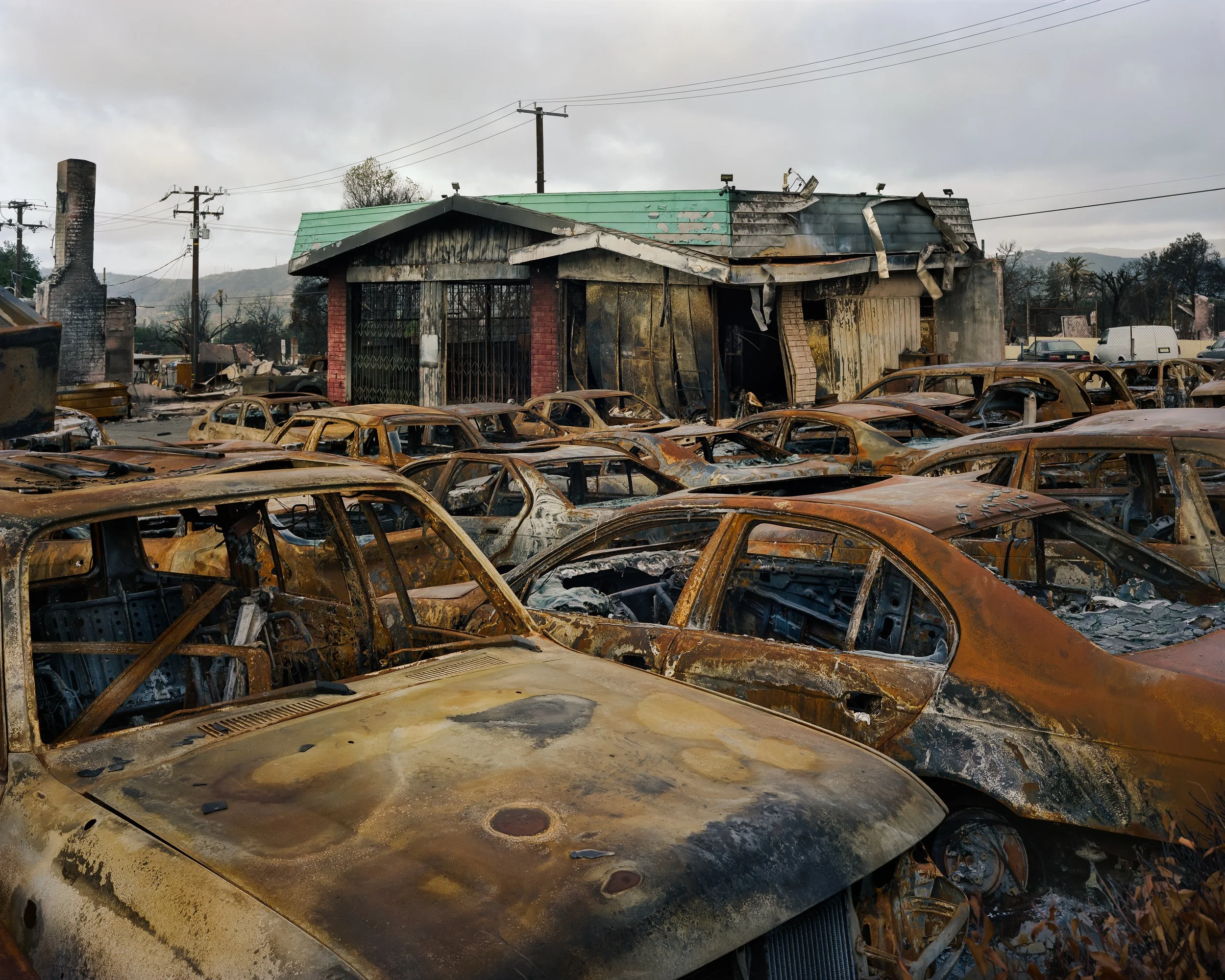
On the night of January 7, 2025, the Eaton Fire ignited in Eaton Canyon in the San Gabriel Mountains above Los Angeles. Fueled by powerful Santa Ana winds and drought-stricken vegetation, the fire rapidly pushed west into the foothill community of Altadena. Within hours, entire blocks were engulfed. Thousands of residents were forced to evacuate in the middle of the night as flames moved through neighborhoods that had stood for generations. By the time containment efforts stabilized the disaster, hundreds of structures had been destroyed, and large portions of Altadena had been reduced to ash.
Among the residents forced to evacuate that night was photographer Marcus Ubungen. Like many families in Altadena, he left believing the evacuation would likely be temporary. The car was packed with a few carry-on bags, important documents, and the cameras he had taken to work earlier that day. The sky had turned an unnatural orange, and the wind howled through the neighborhood with a force he had never heard before. As they drove away, flames were already visible in Eaton Canyon. Hours later, the wind shifted.
When Ubungen returned to Altadena, the house was gone. Along with it, nearly all of his cameras, his photographic archive, hard drives containing years of work, and the everyday objects that once structured family life disappeared. The initial response was shock, followed quickly by the practical realities of survival, diapers, food, clothing for the children, and the immediate logistics of starting over. Yet even in that moment, walking through the remains of his neighborhood, there was an instinct to photograph. With a camera in hand, he began photographing the neighborhood as he walked back toward where his house once stood. He later described the instinct as something almost automatic, unsure whether it was a way of creating distance from what he was seeing or simply a photographer’s reflex when confronted with something difficult to comprehend.
By the spring of 2025, the Eaton Fire had already slipped out of the news cycle. The satellite trucks were gone, headlines had shifted elsewhere, and the urgency that once surrounded the disaster had quietly dissolved into the background of the national conversation. What remained in Altadena was something slower and far more complicated: empty lots where homes had once stood, burned structures waiting to be cleared, and neighbors beginning the difficult process of imagining how life might take shape again.
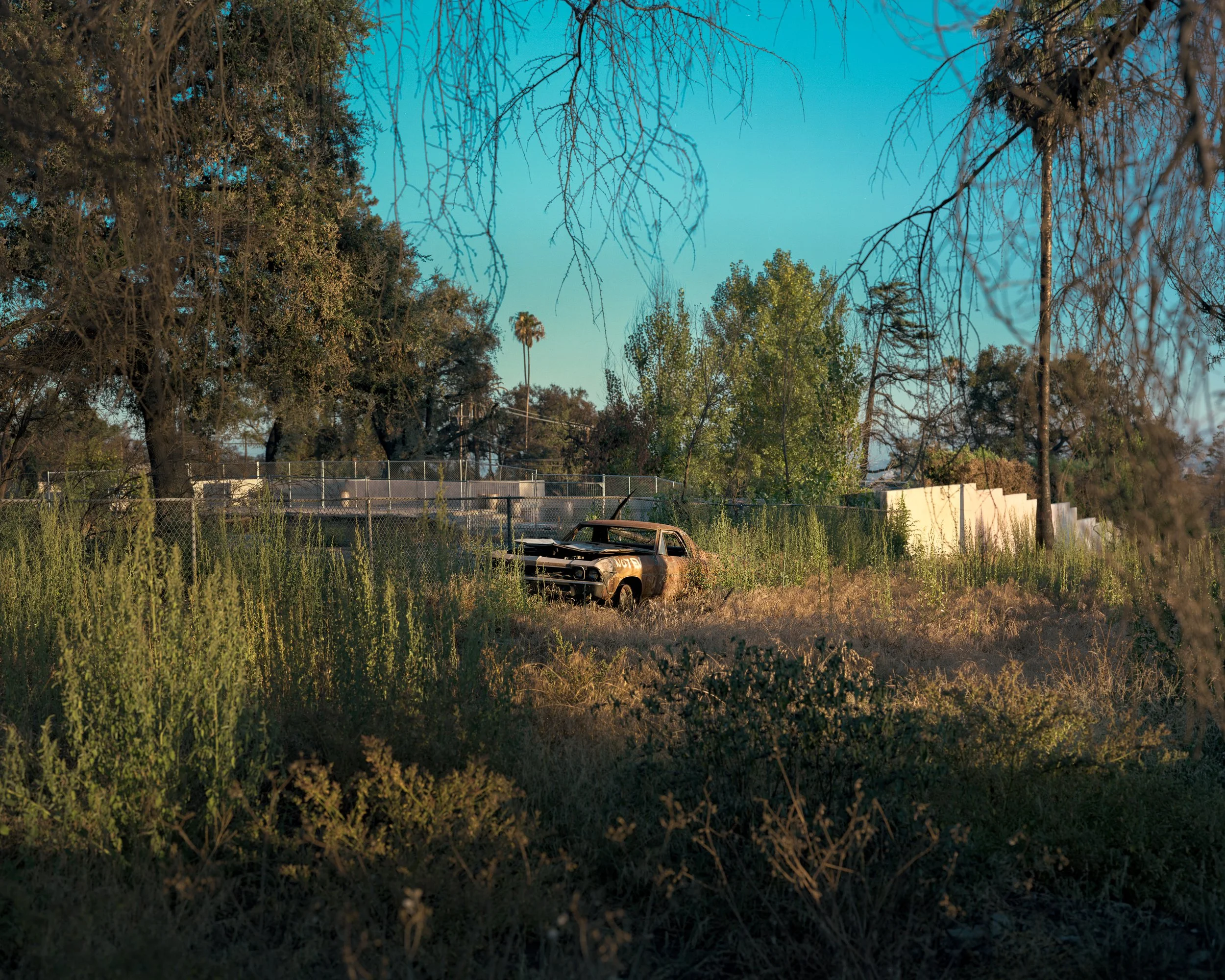
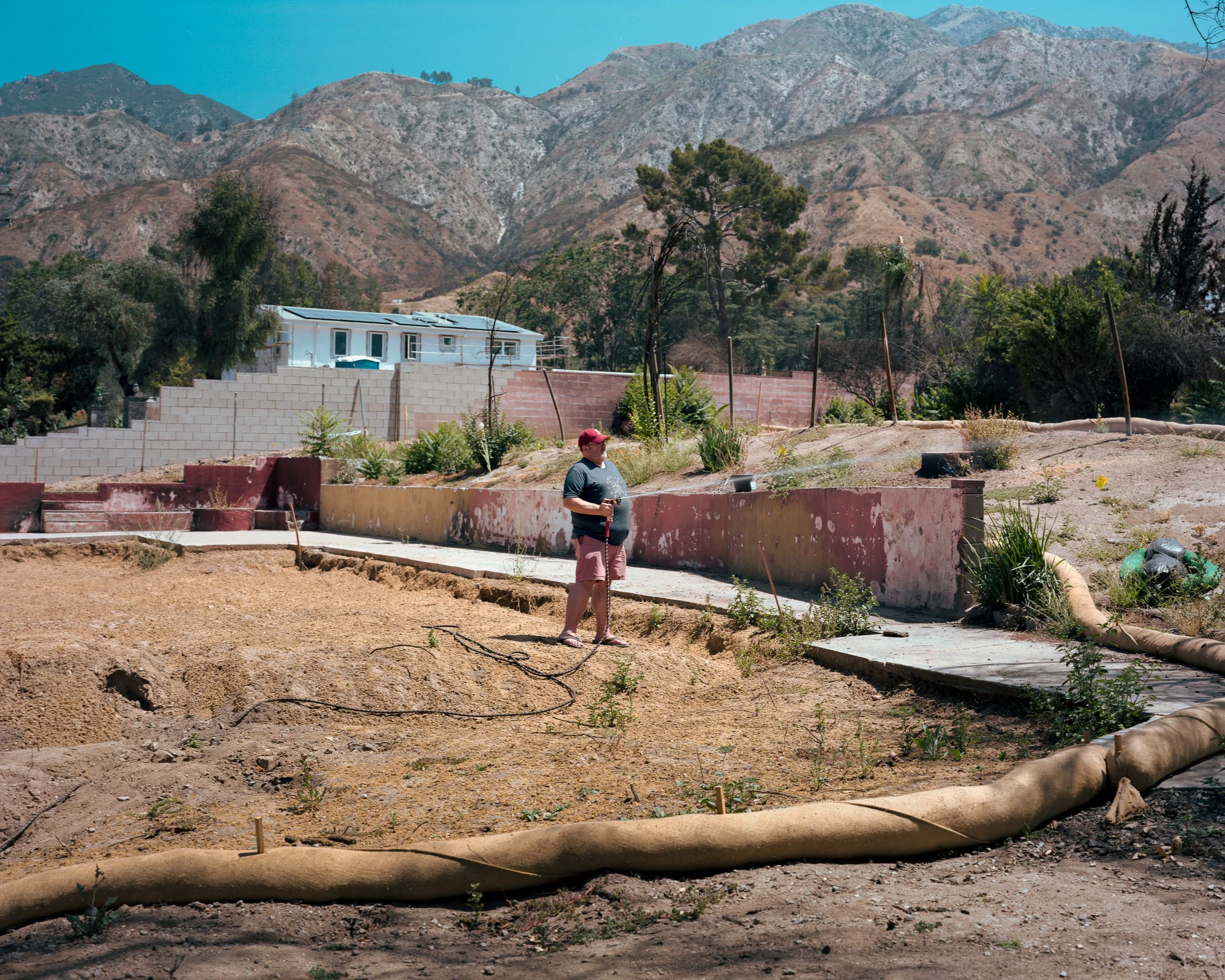
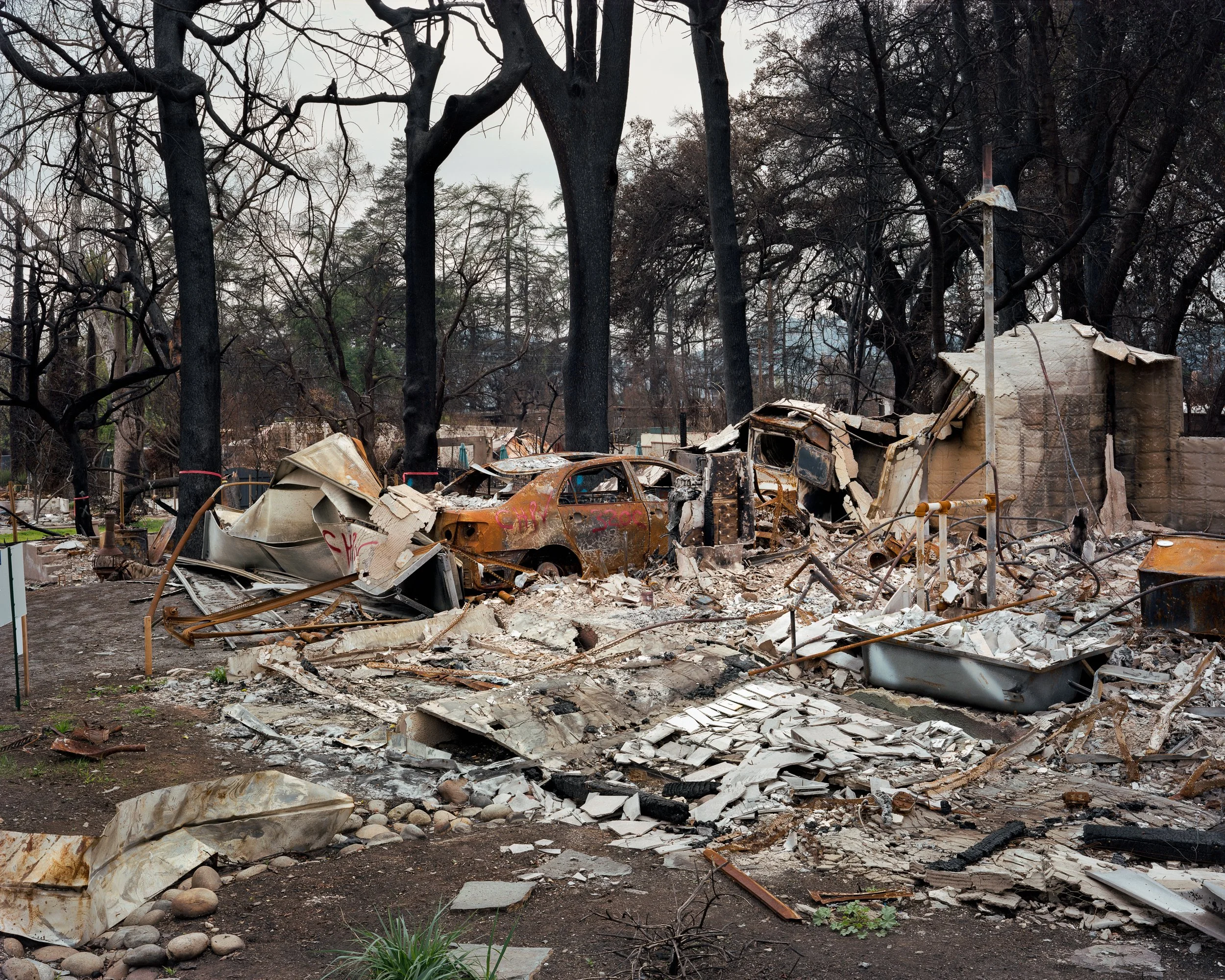
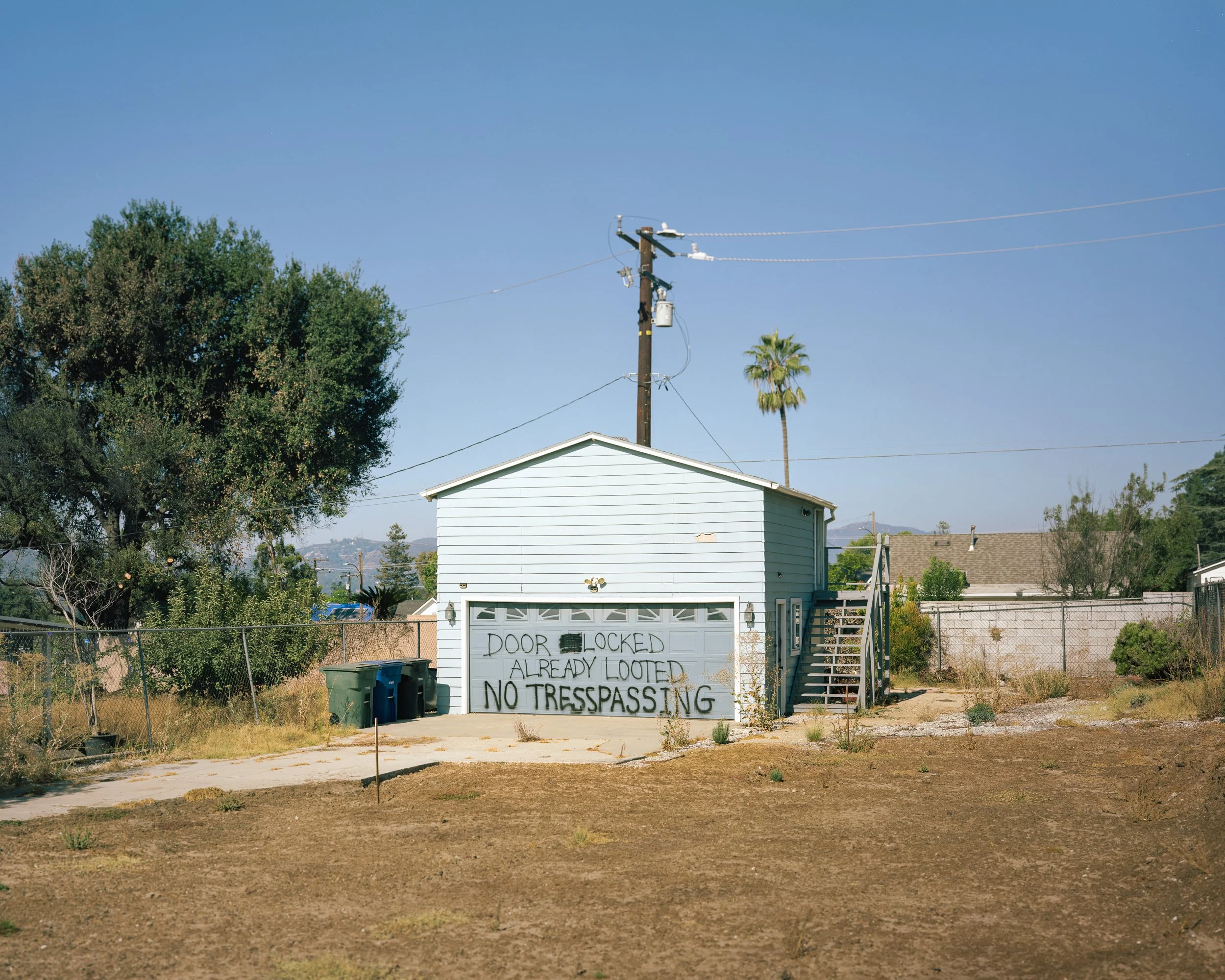
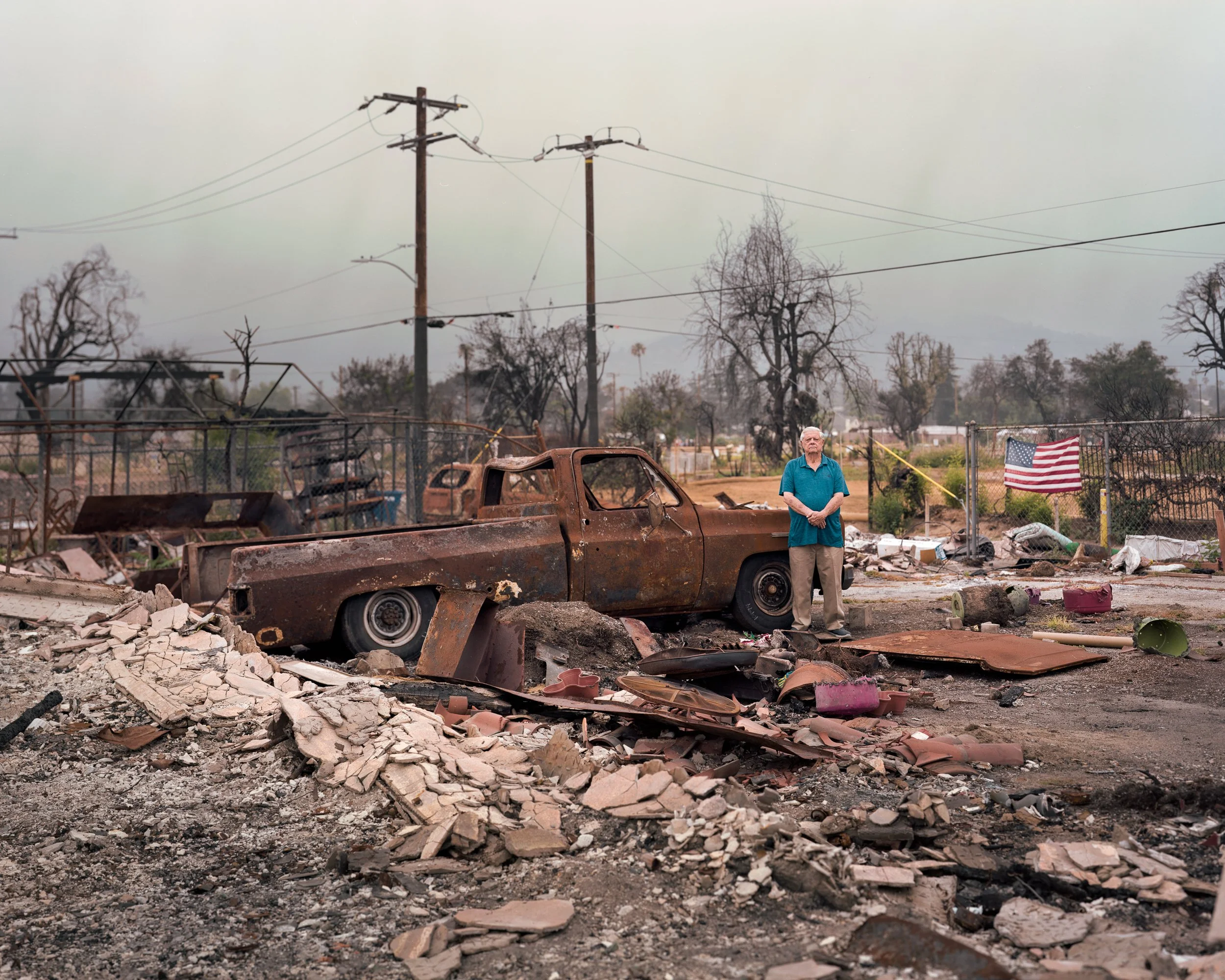
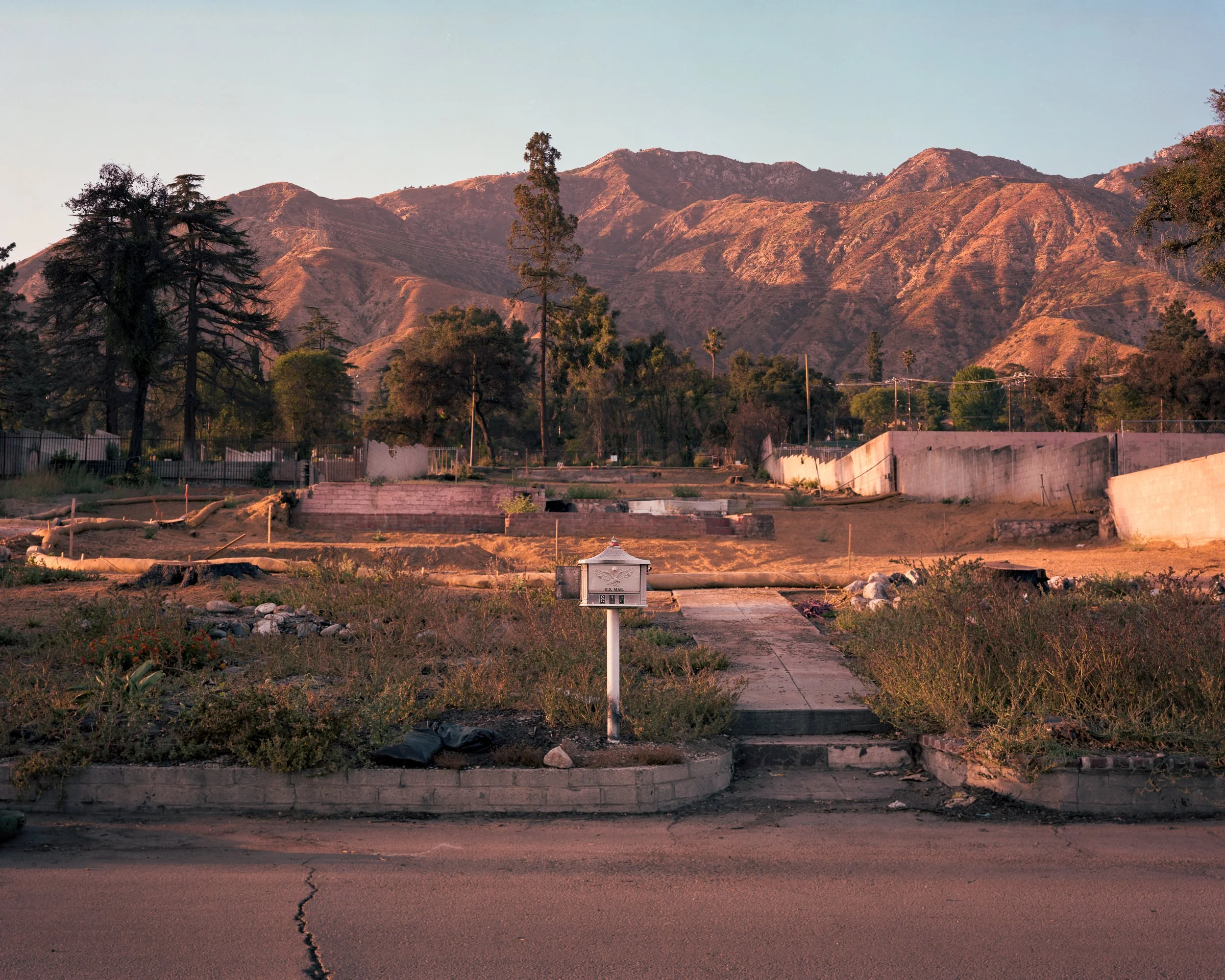
It was during this quiet interval, after the cameras had moved on but before reconstruction began to erase the physical traces of the fire, that Ubungen returned to Altadena with a gifted Arca-Swiss 8×10 camera. The photographs began close to home: portraits of next-door neighbors and the destroyed houses along his own street, spaces that only months earlier had been part of the quiet rhythm of daily life. From there, the work slowly widened, one block at a time, as Ubungen returned again and again to the neighborhood, moving through streets where foundations, chimneys, and scattered remnants still marked the places homes had once stood. It was a brief and fragile window, before debris removal and rebuilding would begin to clear the lots and soften the evidence of what had happened, that the series Altadena gradually began to take shape.
In the following conversation, Marcus Ubungen reflects on the night of evacuation, the shock of returning to find his home gone, and the instinct that led him to photograph Altadena in the months that followed, a reminder that photography’s greatest strength lies in its ability to preserve the fragile space between catastrophe and memory.
INTERVIEW
Michael Behlen: Take us back to the night of the Eaton Fire. What do you remember in those first moments of evacuation, and when did you realize your town and your home might not survive it?
Marcus Ubungen: That night, our biggest concern was the wind. Our power was out most of the day, and the wind had already damaged parts of our yard. So I remember ratcheting the outdoor furniture down so it wouldn’t blow away and moving smaller items into the garage. We knew the fire had started in the canyon, but it was a few miles east of us, and the wind was blowing the fire away from our house. My wife tried to make the best of the evening, with a candle-lit dinner for the family to keep the kids calm. We debated whether to stay or evacuate, but around 9 pm the backup battery powering our wifi was at 5,% and we were worried about putting the kids to bed and having to wake them up if things got worse. We’d have no way to communicate with anyone since the internet would be down, and we had no phone reception that night. So we decided to pack the car and head to a relative’s house. It wasn’t until 3 am the next morning that we got news that the winds had changed and started to blow west toward our house.
MB: Can you walk us through the reality of evacuation, what it felt like to leave, the uncertainty of it, and the thoughts running through your head in those hours?
MU: We probably had the same thoughts as everyone else who evacuated, thinking that we'd be back the next morning and that it would all be behind us. We had a few carry-on luggage bags’ worth of stuff and my backpack with my cameras, which I took to work that day. We took our social security cards and birth certificates just to be safe. I remember packing the car, seeing the night sky completely orange, and the sound of howling wind. I have never heard wind like that before. One of our trees fell and blocked the front entryway, so we had to leave through a back door to get to our car. That’s when worry started to kick in, and the situation felt a lot more serious than we thought. As we drove away, we could see the canyon on fire. The whole thing felt pretty surreal, but I never thought we’d lose the house.
MB: When you returned to Altadena and saw the remains of your house, your archives, and nearly all your photographic tools destroyed, what was that confrontation with loss like emotionally, physically, and creatively?
MU: Initially, it was just shock and disbelief. It was like my body couldn’t process what was happening in front of it. I couldn’t even cry at the time because seeing all the destruction just left me speechless. Seeing the remains of the things you used every day, it leaves you numb, knowing they are gone forever. It turned into survival mode, and what was needed to be done ASAP for the kids - diapers, food, clothing. It wasn’t the time to think about work or photography, but strangely, I had this instinct to document. I brought a camera with me and ended up taking photos of the neighborhood as we walked up to our house. I’m not sure if it was a defense mechanism to put some distance between me and what I was seeing, but there was this urge to shoot. Maybe that’s a default setting inside of me.
MB: In what ways did the fire shift your understanding of permanence: of homes, communities, and landscapes we assume will always be there?
MU: It turned my whole life upside down. You never think something like this could happen to you, and yet it does. So many of the things you hold dear can be taken away instantly, and the rest of the world moves on without missing a beat. But even though shelters and things can be lost, communities will always be there. Altadena was already a special place where people knew each other, but after the fire, that bond has only grown stronger, and we’re more connected with the community as we rebuild. It will be a bond that connects us forever.
MB: You’ve spoken about how this experience forced you to reassess material attachment. How did losing almost everything reshape your relationship to gear, process, and what you actually need to make meaningful work?
MU: I’m trying not to get too attached to material things anymore. I find myself buying the same t-shirts and pants in different colors just to make things easy and comfortable in the morning. I don’t have any fancy dress clothes or shoes right now, and wear the same collared shirt if there’s an event to get a little dressed up for. When it comes to gear, I’ve taken the approach of less gear, but more meaningful gear. So instead of having a shelf full of different types of cameras, I’m going for the dream cameras that I’ve always wanted, since life is short and these are cameras I love to shoot. So even though some of them might be more pricey, I find more joy in shooting them even if I have less on the shelf. It made things a lot simpler. Now I have one camera in each film format, but each one is a dream camera, and I love using all of them. I don’t think the actual gear itself contributes to making meaningful work, I think it’s more importantly it’s about which cameras actually make you want to go out and shoot.
MB: Before the fire, your photography already leaned toward slowness and intentionality. How did this event deepen that instinct? Or did it fundamentally redirect it, especially in relation to balancing commercial work and personal film-based practice?
MU: After the fire, my personal work definitely slowed down even more. Maybe it was due to feeling numb or depression, but I felt like I needed to sit alone with my thoughts more often. In the immediate aftermath, I didn’t feel like shooting anything, and it took a while to climb out of that hole mentally. I’ve always taken commercial work to pay the bills and fund the personal creative work. That balance is so much more relevant now that I’ve started documenting Altadena after the fire.
MB: At what point did you decide to begin documenting Altadena in the wake of the fire, and when did it shift from a way of processing grief into a conscious, long-term photographic series?
MU: I started in the Spring of 2025 when I replaced my 8x10 camera. It originally started with photos and portraits of my next door neighbors and destroyed homes close to ours. But it slowly expanded to the next block and then the next, and soon it became something I couldn’t stop doing. I kept thinking about it all the time, about when I could get back to Altadena to take more photos. There was also a little bit of time pressure, knowing that the landscape would change forever once the debris would be cleared. So that was a big motivating factor to keep shooting as much as possible.
MB: Large-format 8×10 film is an uncommon choice for post-disaster documentation. Why was it important for you to approach this story with such a slow, tactile, and deliberate medium, and how did the community’s support and shared gear make that possible?
MU: I thought about doing this project on digital or medium format film, but something about the slow process of 8x10 just felt right for the project. There’s so much to absorb and I wanted maximum detail, but I also wanted to make sure I didn’t get lazy. I wanted every shot to be intentional and calculated, and that slow process also allowed me to sit with the landscape for long periods of time and wait for the light to be right. In the Spring of 2025 I was gifted a replacement 8x10 camera from Arca Swiss to replace my old one that was lost in the fire. It was a very generous gift that moved me to tears when they offered it to me. Around the same time, photographers on Instagram had reached out to donate 8x10 film (shout out to Ben Horne, Chris Cummins, and Film Supply Club). I wanted that film to have purpose so I committed all the color film I received to taking photos of Altadena. I’ve since purchased more to continue the project and started selling prints to fund it. I think Portra is the right choice since there’s an immediacy with color. I love black and white but I felt like I wanted people to experience the landscapes the way I saw it that day.
MB: Many of your images feel less like reportage and more like quiet acts of witnessing. Where do you personally draw the line between documentary photography and something more intimate and narrative?
MU: Thank you for pointing out that difference, it’s something I was hoping to achieve when I started the project. To turn something devastating into something beautiful and cared for. To me, documentary photography can be intimate. It comes down to who is taking the photo and their connection to the work. I think it’s obvious when someone wants to honor something versus taking a photo for a story assignment. I’m not downplaying the importance of editorial photography since I also take assignments for publications. I’m highlighting the fact that you can feel it when artists make work that’s very personal to them.
MB: You continued photographing long after news crews left. What do you think disappears when coverage ends, and what were you trying to preserve in that silence afterward?
MU: I think this project was a reaction to the news coverage that came and went so quickly. People swarmed the area, got their pictures in a day, and then disappeared. Altadena was the headline of all the news outlets, until it wasn’t. Less than two weeks after the fire, the news had shifted its gaze to something else, and we live in a world where if something is out of sight, it’s out of mind. People forget quickly, and I wanted to do something to honor the area. If you look around the neighborhood now, it’s all empty lots and new construction. It will never look the same as before, and it’s hard to remember the destruction. I want the work to be a time capsule for that brief moment in time after the fire, but in a way that you can immerse yourself in the photo when you stand in front of a big print. I want viewers to know that a town existed there.
MB: When you began making portraits of neighbors amid the ruins of their homes, what kinds of conversations unfolded before the camera ever came out, and how did that shift your relationship to the work itself?
MU: The entire process was therapeutic and we would swap stories about the night we evacuated, if we were rebuilding, and the things we miss the most. A lot of the stories involve the favorite things we loved about Altadena, and getting to learn more about the area from people who lived there for a majority of their lives. It gave me drive and reinforced the idea in me that this work was important, that it needed to continue.
MB: There’s a quietness in your images that contrasts sharply with the violence of what occurred, and within that stillness we often see small signs of life: blooming plants, standing mailboxes, early markers of rebuilding. Do you experience this calm as a form of mourning, a warning, or something closer to hope, and were you consciously seeking those moments of resilience, or did they begin revealing themselves naturally as you worked?
MU: It’s a mix of all those emotions from sadness to hope. I never set out to find a certain type of shot when I would visit the area. I would drive up at the same time in the afternoon just as the debris removal crews would be leaving for the day. I’d have all of Altadena to myself in the most beautiful Summer afternoon light until sunset. I would drive around until I saw something that called out to me. I’d stop and get out of the car and sit with the scene for a while and wonder why I’m having a visceral reaction to what I was seeing. I would go with my gut and if it was something I found compelling, I would take a photo of it. Over time I started to notice that theme of quiet and stillness in the chaos.
MB: Do you see Altadena primarily as a record of loss, a chronicle of resilience, or something that exists in the tension between both?
MU: It feels like there's tension constantly pulling between both. I guess that also could be tied to my emotional state. Some days it feels like crushing loss and other days it feels more hopeful as we make progress to rebuild. I feel like loss and resilience can’t exist without each other. I hope people look at this work and feel both.
MB: Standing inside the ruins of Altadena, did it feel like an isolated tragedy, or like a preview of what many communities may soon face as climate extremes intensify? Do you feel any anger beneath the grief toward systems, policies, or cultural inaction surrounding climate change?
MU: Climate change is a real thing and this was an eye-opener for us. Considering how many times California has had fires, this should not have been that big of a surprise. But where we were was not considered a high fire zone, and it still happened. I have a lot of anger directed toward the power company, SoCal Edison, since evidence points to their electrical towers sparking the fire that started in the canyon. I’m upset because I know this cycle will repeat, communities will burn, and power companies will settle and never admit full blame. They’re allowed to raise their rates on customers after the disaster, and they will be bailed out by the California Wildfire Fund which is paid for by taxpayers. I have a lot of feelings about this, but the way the system is currently designed hurts consumers and taxpayers
MB: Has documenting this disaster changed how you think about the future your children will inherit? What lessons do you hope they come out of this tragedy with?
MU: I’m scared for the future if things don’t change. There’s so much going wrong in the country right now that we can’t even agree on the most common-sense things if it doesn't align with which side of the political aisle we’re on. As it relates to the fire, I hope the next generation embraces finding more sustainable ways to live that can preserve the life of our planet. But for my own kids, I hope they think globally and act locally to help their own communities.
MB: Do you believe projects like Altadena can change how people emotionally understand climate disasters beyond statistics and headlines?
MU: I certainly hope so, but unfortunately, people don’t change easily unless it’s something they experience or feel for themselves. I hope I’m wrong about that. But if this work can spark a conversation or bring awareness to the area, that’s also a win for me.
MB: In what ways has this project reshaped your understanding of photography as a tool for healing, both personally and collectively?
MU: I think this is the first real project that meant so much for me personally as a resident of Altadena and as a fine art photographer. I don’t know how to build or fix things, and I wanted to contribute in some way that I knew I could. Photography was that tool, and it’s brought me closer to the community and introduced me to people I might have never met. It’s been a wonderful experience, given the terrible circumstances.
MB: Looking ahead toward a potential book or exhibition, how do you imagine viewers engaging with these images years from now, once Altadena has physically rebuilt?
MU: Years from now, when Altadena has recovered and rebuilt, there’s a risk of the disaster becoming invisible. The book or exhibition becomes proof that it happened, that someone can stand in front of a print and feel like they were there that day I took the photo, and to feel that the person who took the photo really cared. 19.
MB: Ultimately, what do you hope Altadena preserves, not just of a place, but of a moment in human vulnerability, resilience, and connection?
MU: I hope Altadena preserves its special character as a town, and its power of connection. Because the most powerful part of this experience wasn’t just loss, it was how people responded to loss. The generosity. The checking in. The shared resources. The way a community becomes real when things fall apart.
GALLERY


ABOUT THE ARTIST
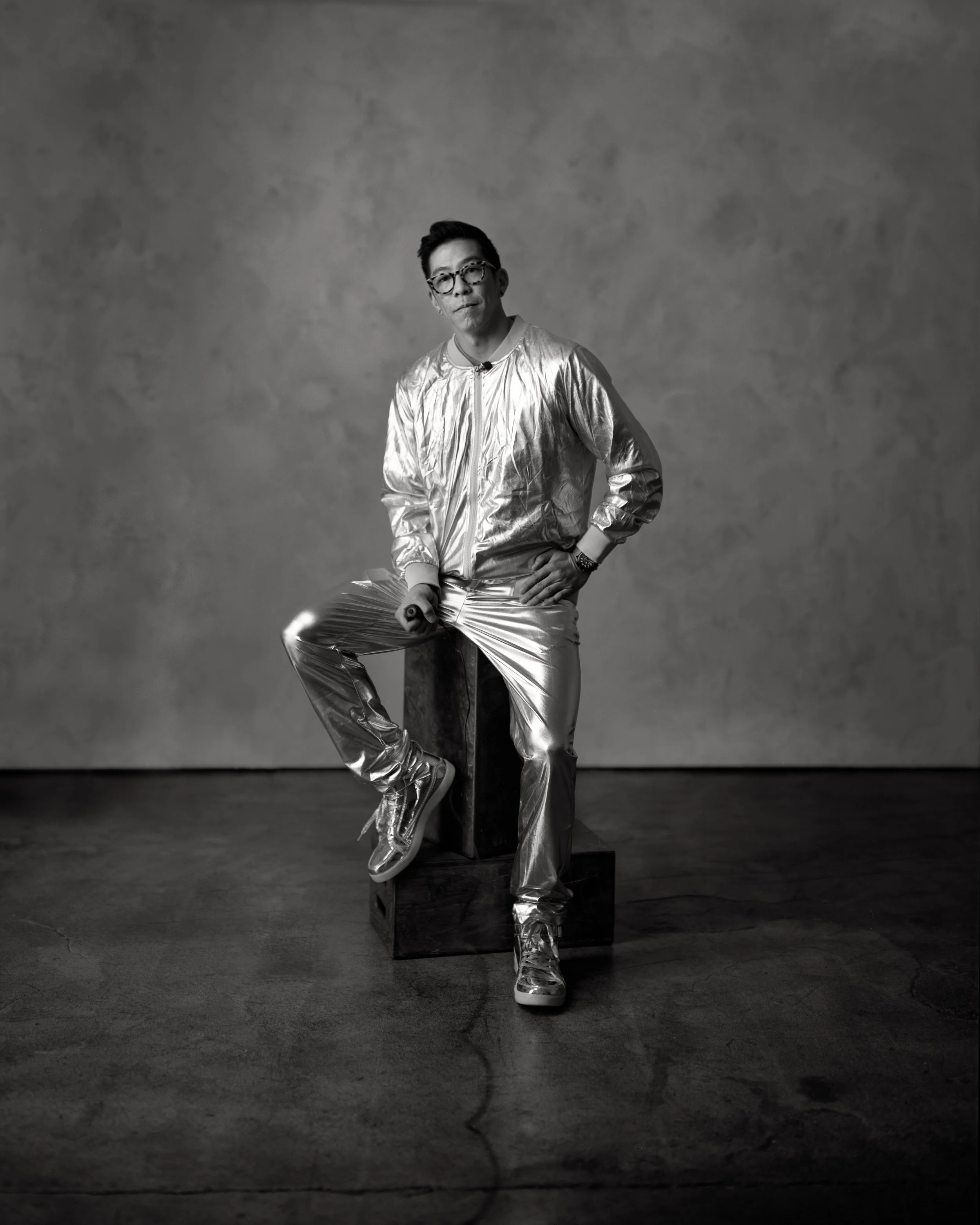
A native of San Francisco, Marcus Ubungen tinkered with cameras at a very early age. He later attended the Academy of Art University where he studied cinematography. After completing school he moved to Los Angeles and built his career as a shooter of both live action and still photography.
In 2011 he joined forces with creative agency Goodby, Silverstein, & Partners to direct content for clients Chevrolet, Motorola, Adobe, Google, and Specialized Bikes.
Following his strong passion for visual storytelling, he turned to full-time directing in 2014 and went on to shoot campaigns for Gatorade, Samsung, Toyota, and Porsche. His last short film Halloween Meets Gasoline was staff picked by Vimeo and screened at SXSW.
Marcus is currently in production on a feature length documentary Beyond The Fields, following child boxers in rural Thailand.
When he's not working, he’s usually roaming LA neighborhoods shooting portraits of strangers.
Connect with Marcus on his website and Instagram!
ABOUT THE AUTHOR
Michael Behlen is an instant film addict and the founder and publisher of Analog Forever Magazine. Behlen is an obsessive community organizer in the film photography world, including previously launching the independent publishing projects PRYME Magazine and PRYME Editions, two enterprises dedicated to the art of instant film. Through these endeavors, he has featured and published 250+ artists from around the globe via his print and online publications.
He has self-published two Polaroid photobooks -“Searching for Stillness, Vol. 1” and “I Was a Pioneer,” literally a boxed set of his instant film work. His latest book, Searching for Stillness Vol II was published in 2020 by Static Age.
Behlen’s Polaroid photography can be found in various publications including Diffusion Magazine, Fraction Magazine, Seities Magazine, and Polaroid Now (Chronicle Books, 2021). He loves the magic sensuality of instant film: its saturated, surreal colors; the unpredictability of the medium; its addictive qualities as you watch it develop. He spends his time shooting instant film and backpacking in the California wilderness, usually a combination of the two. Connect with Michael Behlen on his Website and on Instagram!
RELATED ARTICLES


In rural Kansas, large-format photographer and master printer Michael Strickland is pushing traditional printmaking to extraordinary lengths. For his Of the Earth series, Strickland grinds soil, clay, and charred wood gathered from the landscapes he photographs into pigments for his color carbon prints, physically embedding the land within the finished work. We spoke with Strickland about process, place, the disappearing craft of photographic printmaking, and why the physical print still matters.