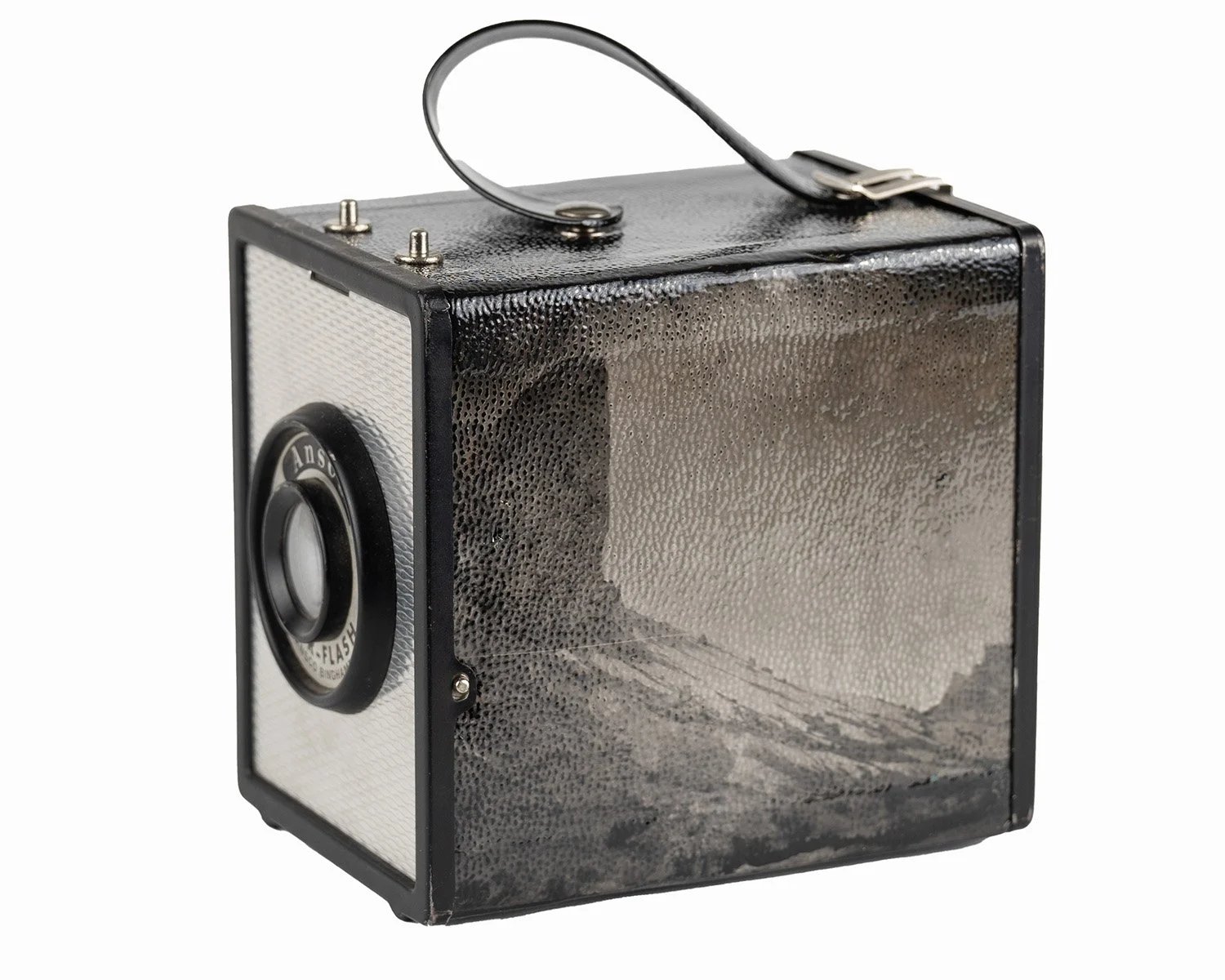
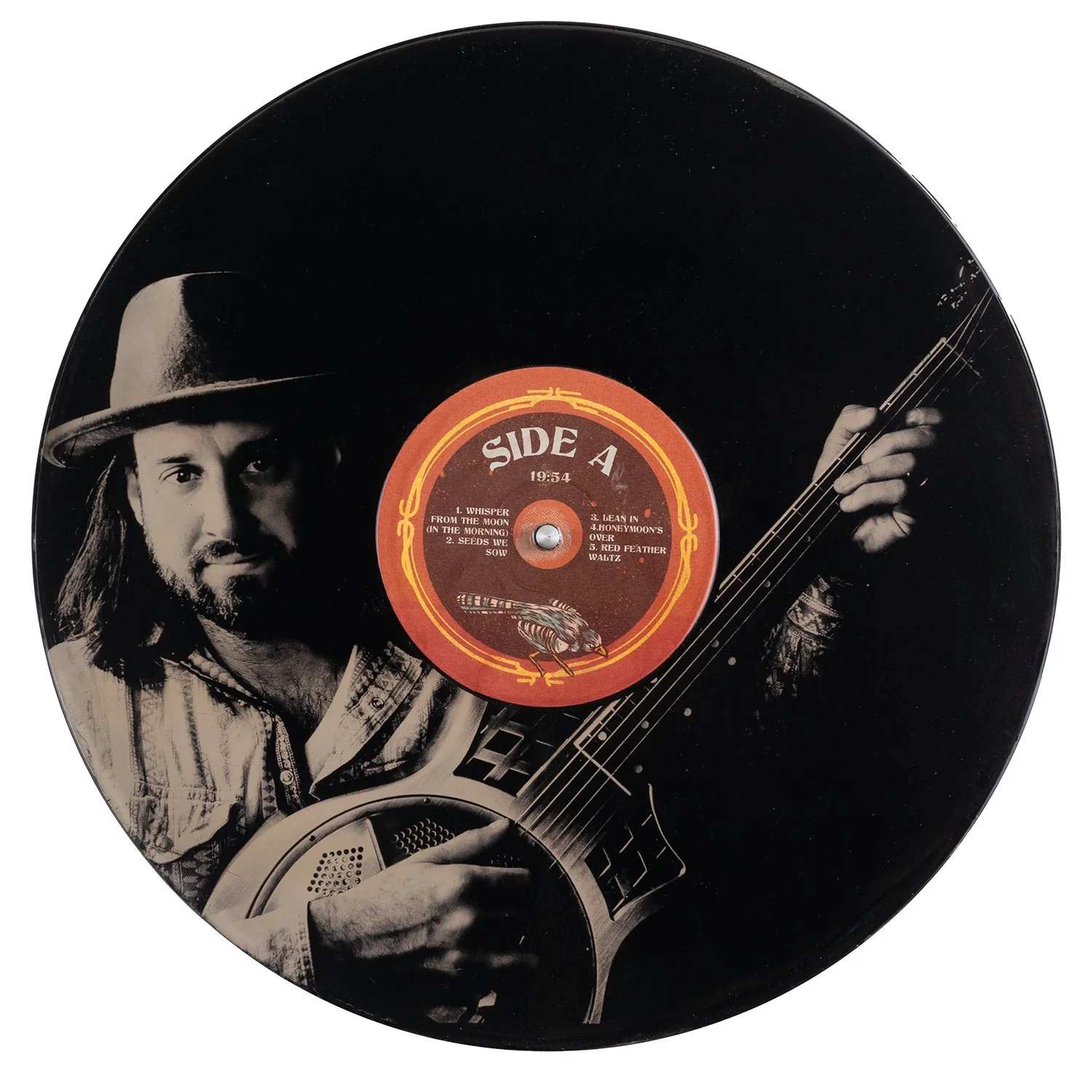
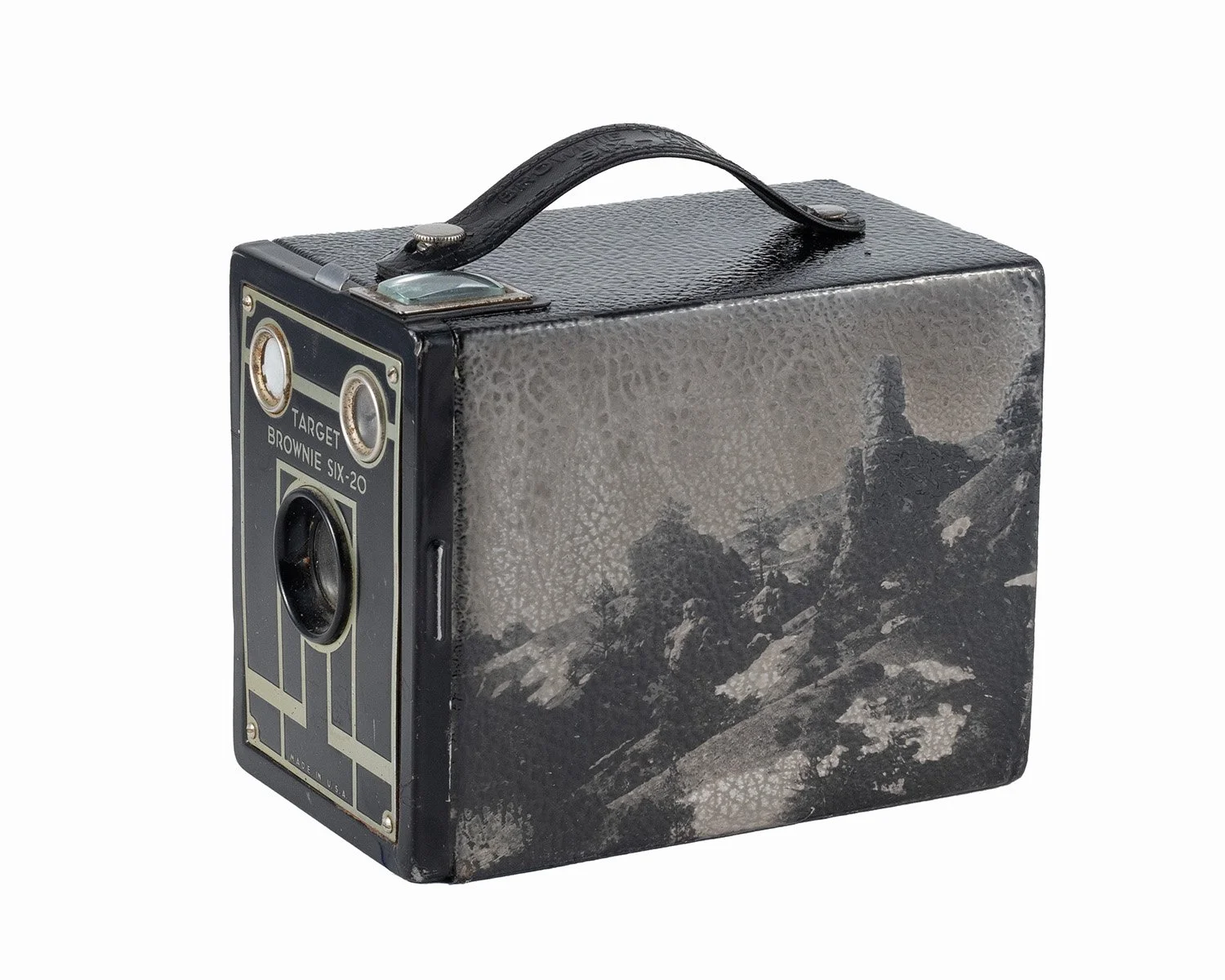
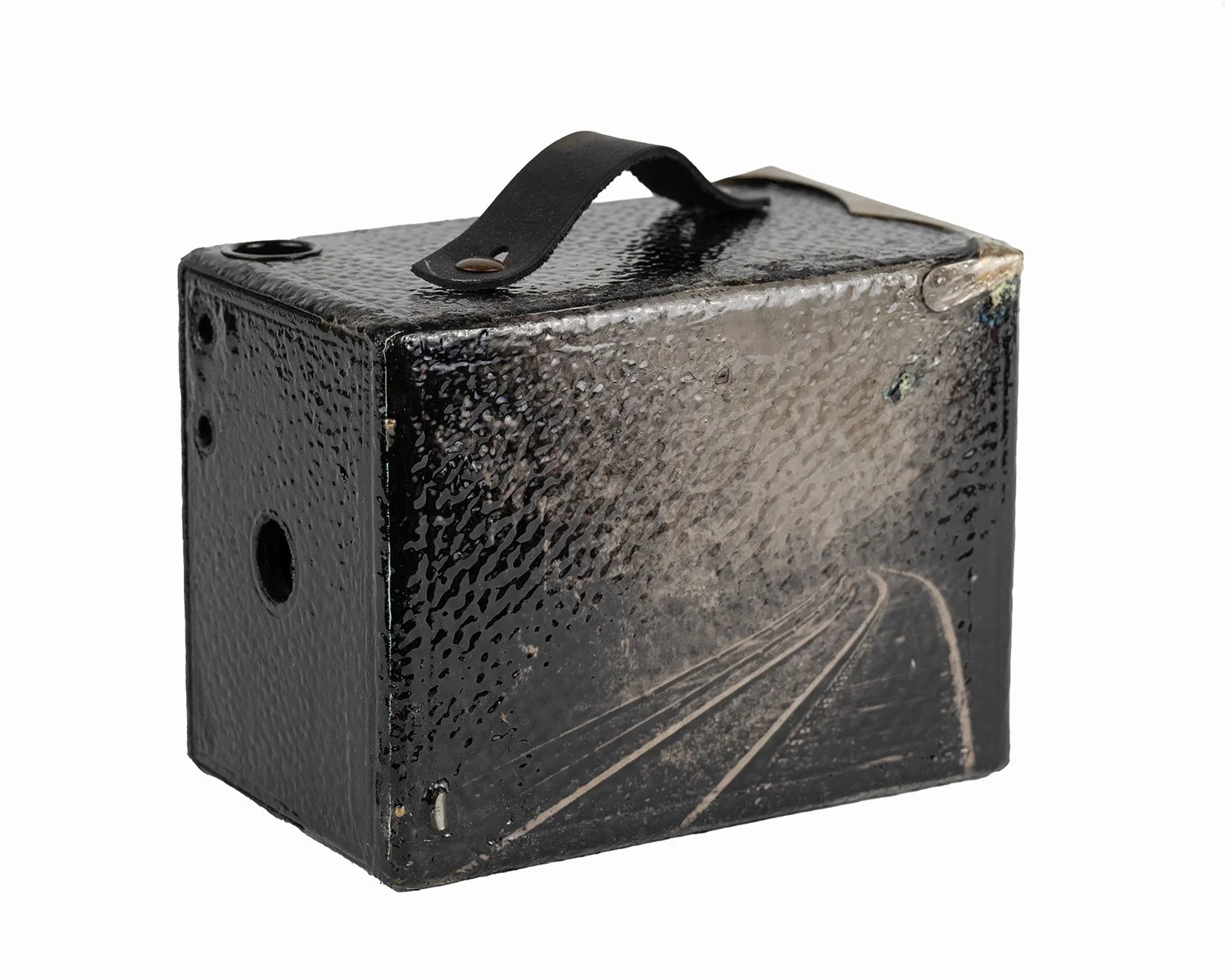
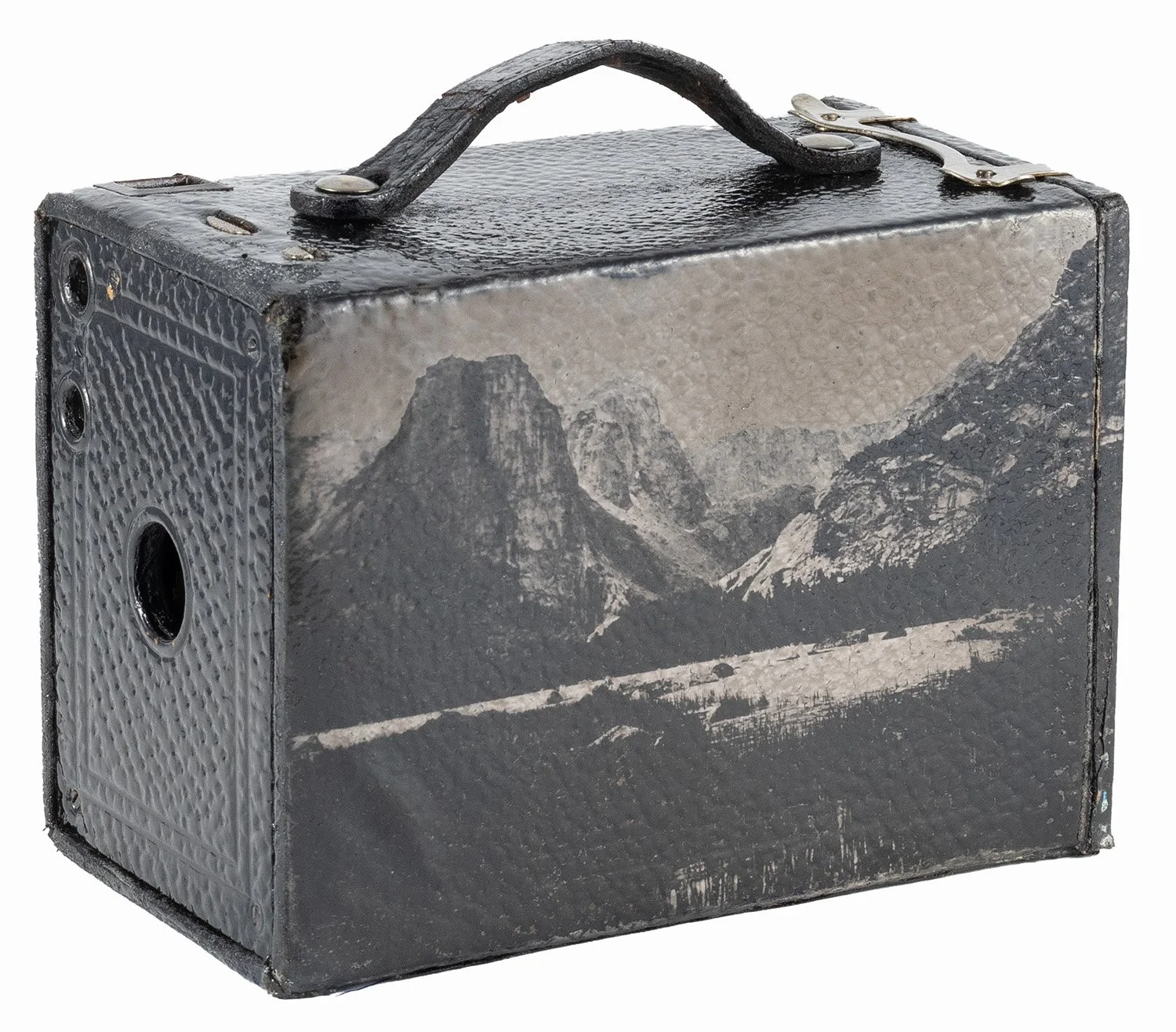
An old camera usually carries its photographs somewhere inside. It can be a roll of film with the possibility of one more exposure, or it may be the memories of its varied, distant past. Andrew Hanenberg takes that relationship a step further. He loads a box camera, makes photographs with it, and selects an image from the roll to print directly onto the camera itself. The tool becomes the finished piece, carrying a view of the world it once helped see.
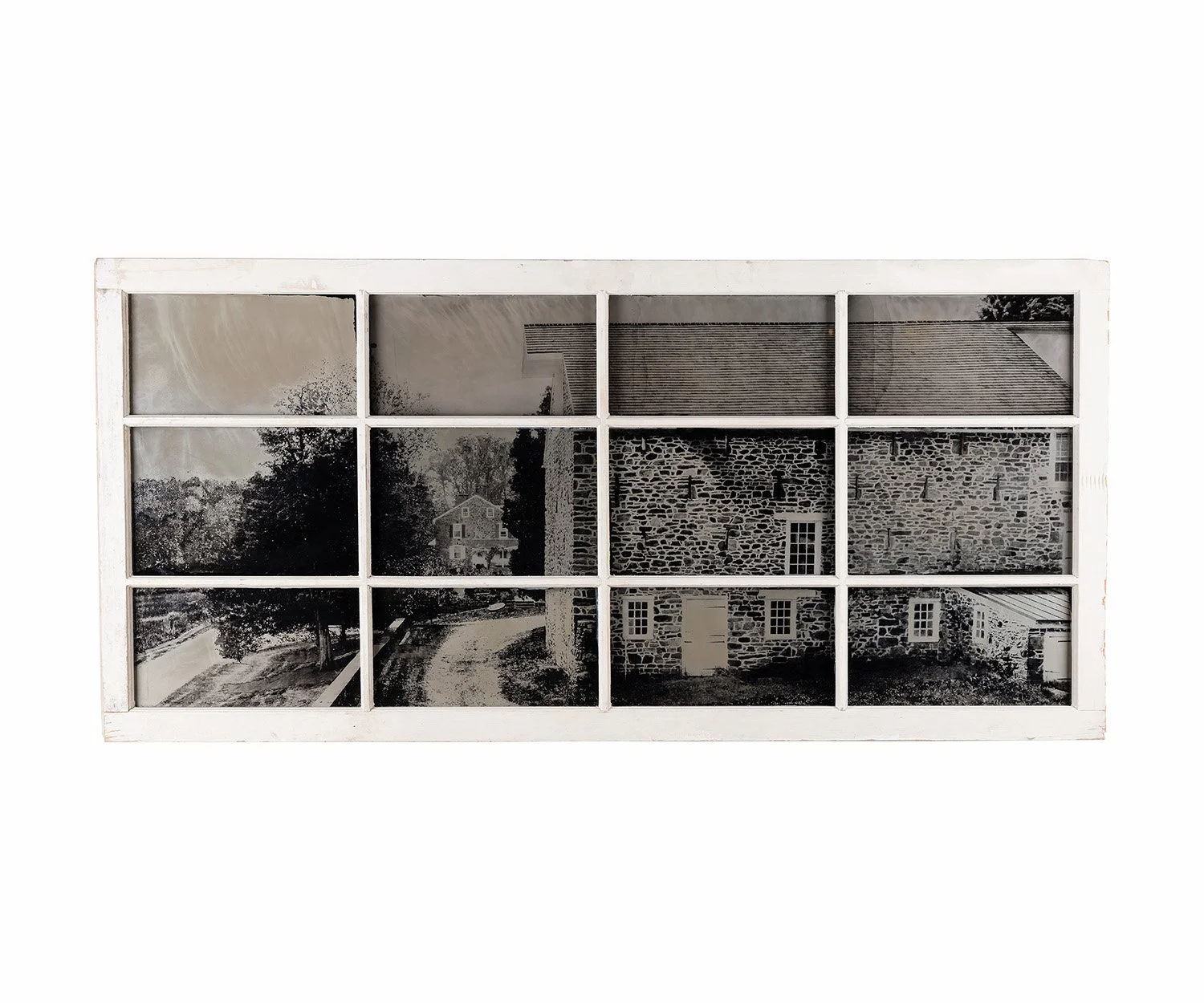
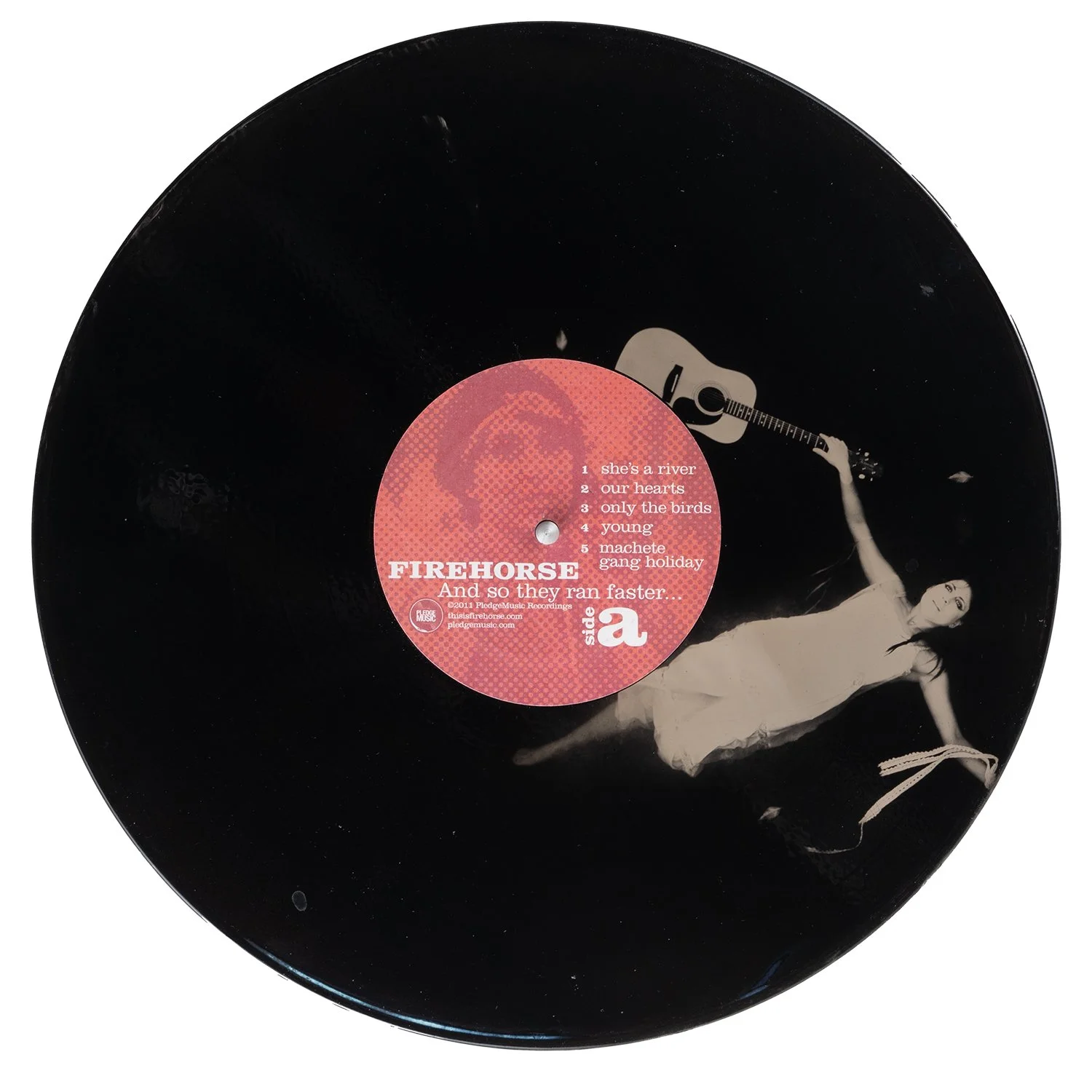
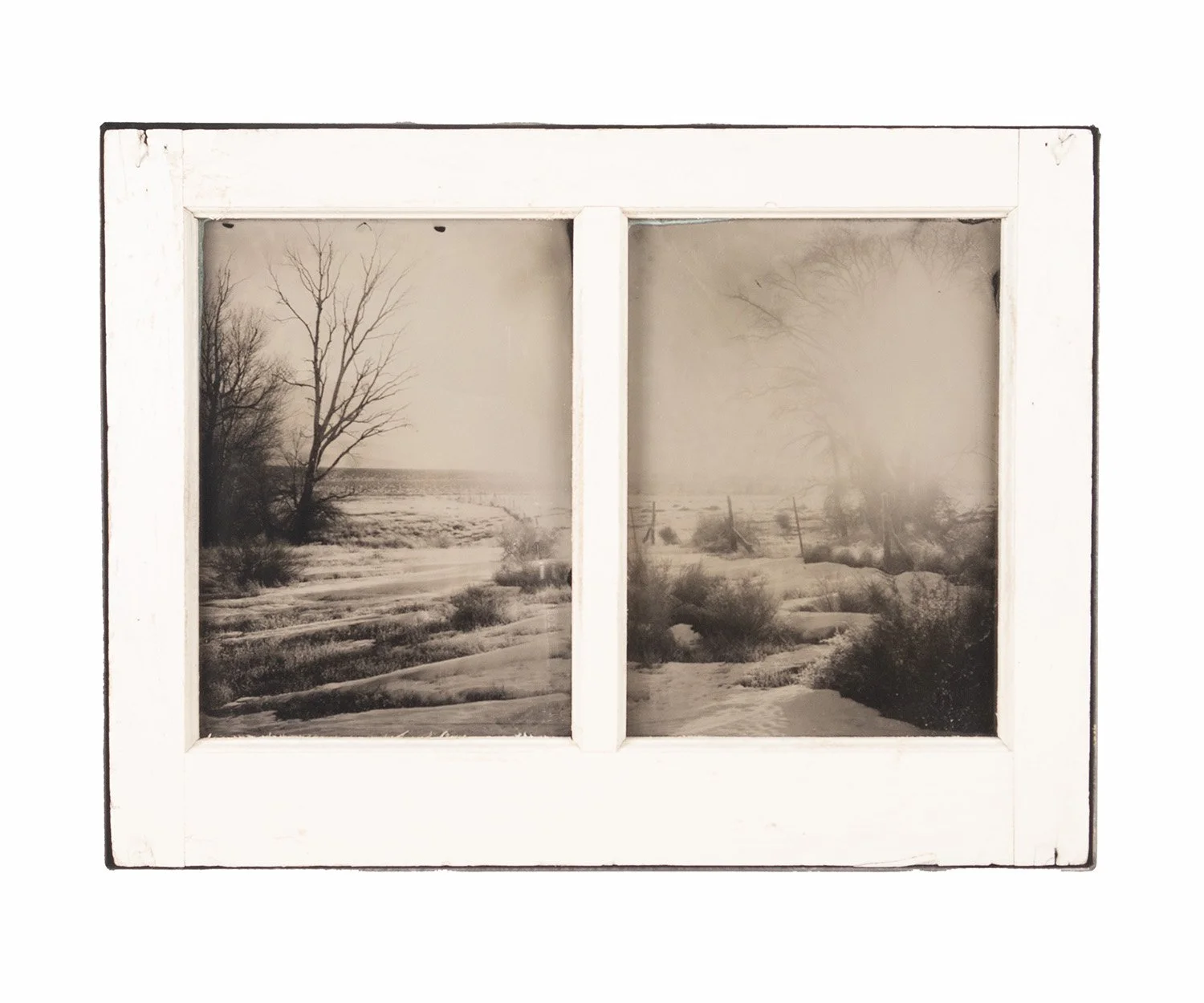
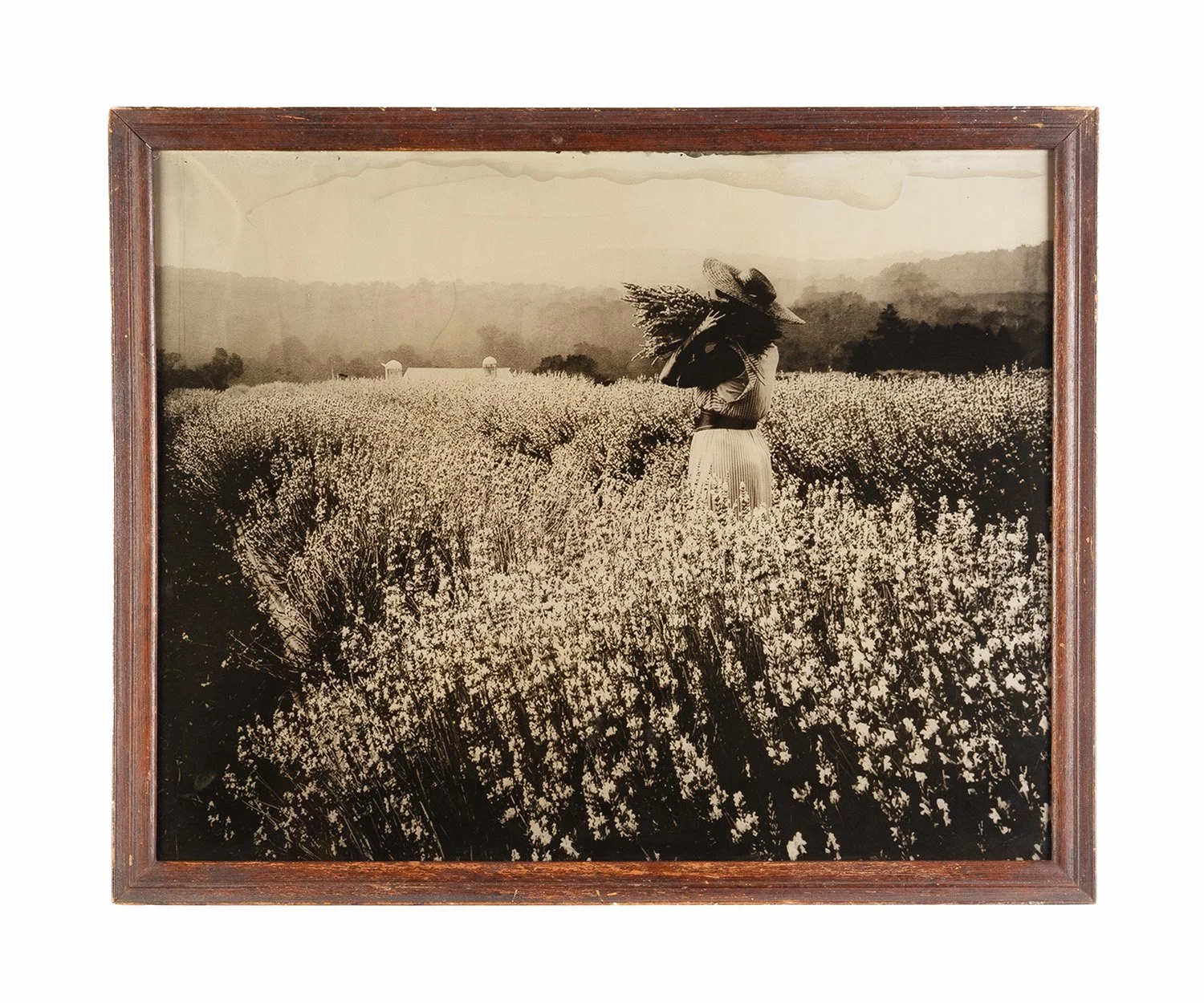
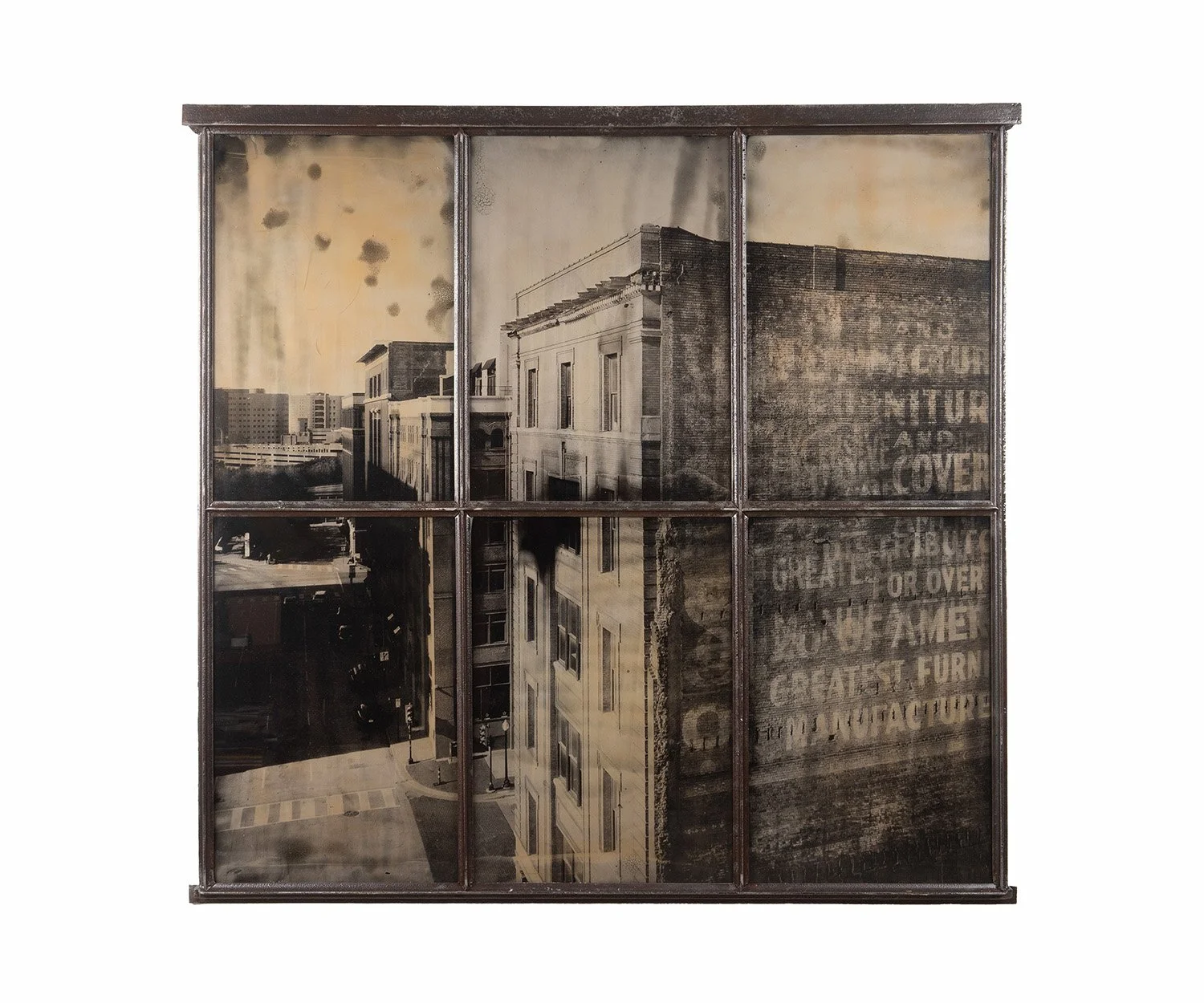
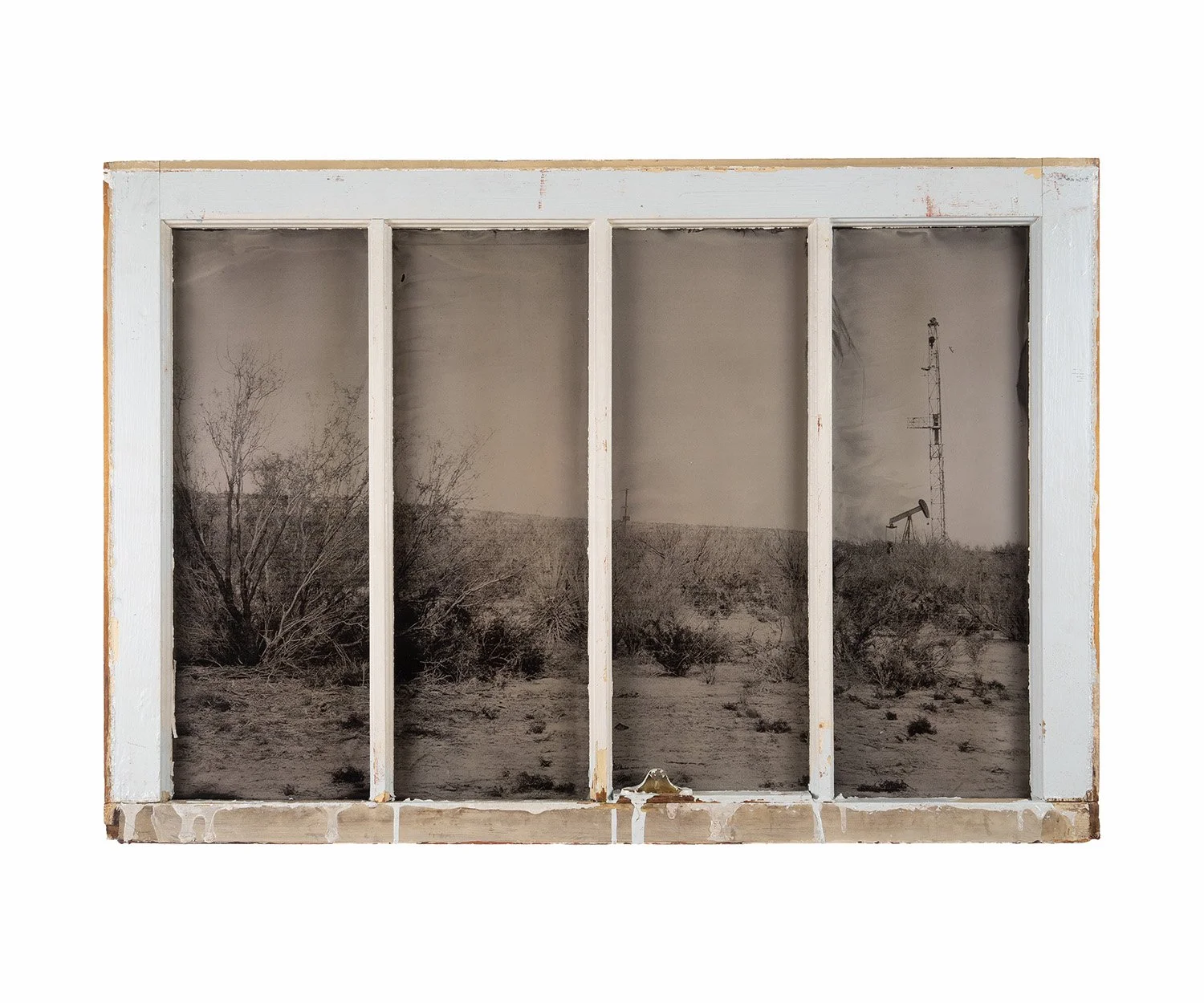
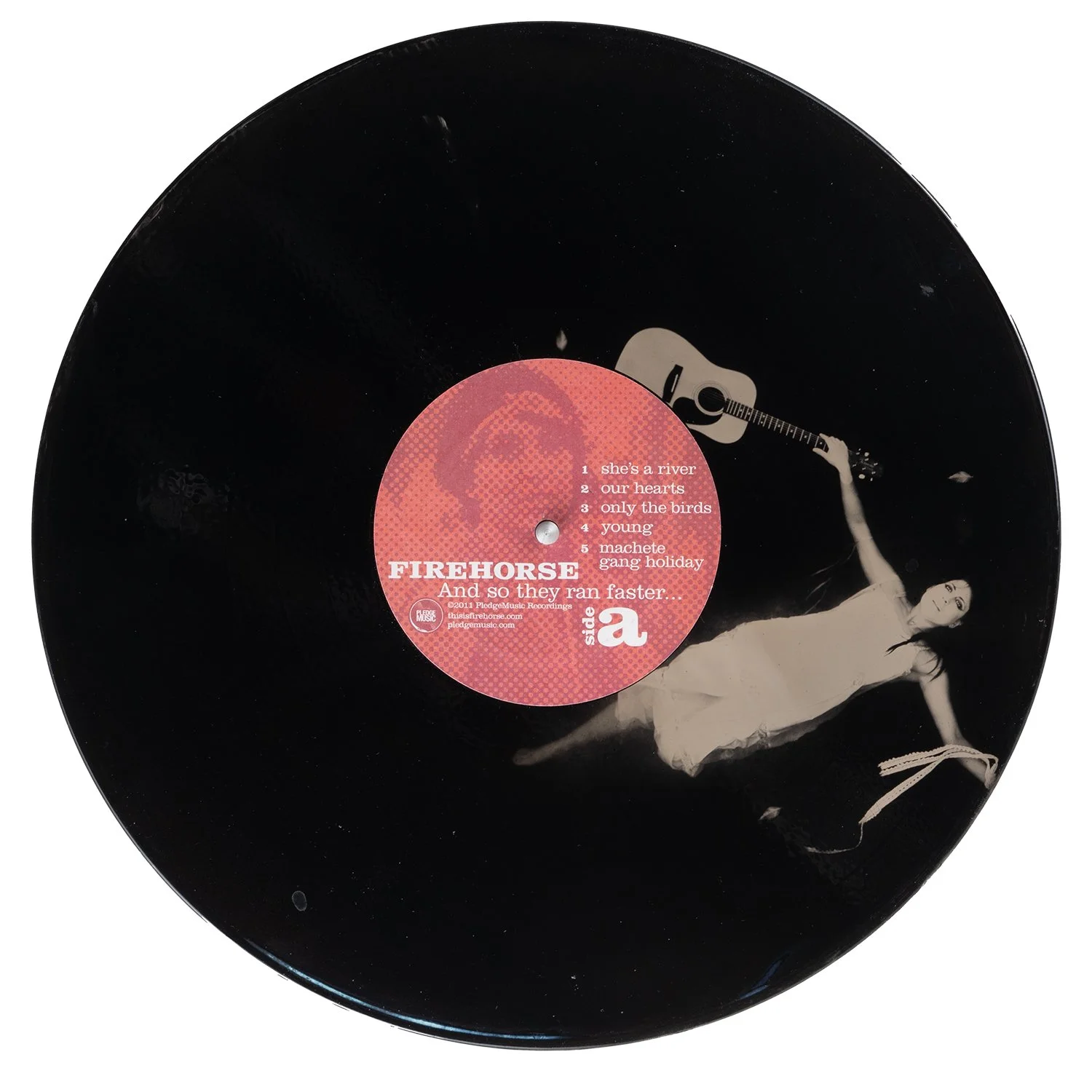
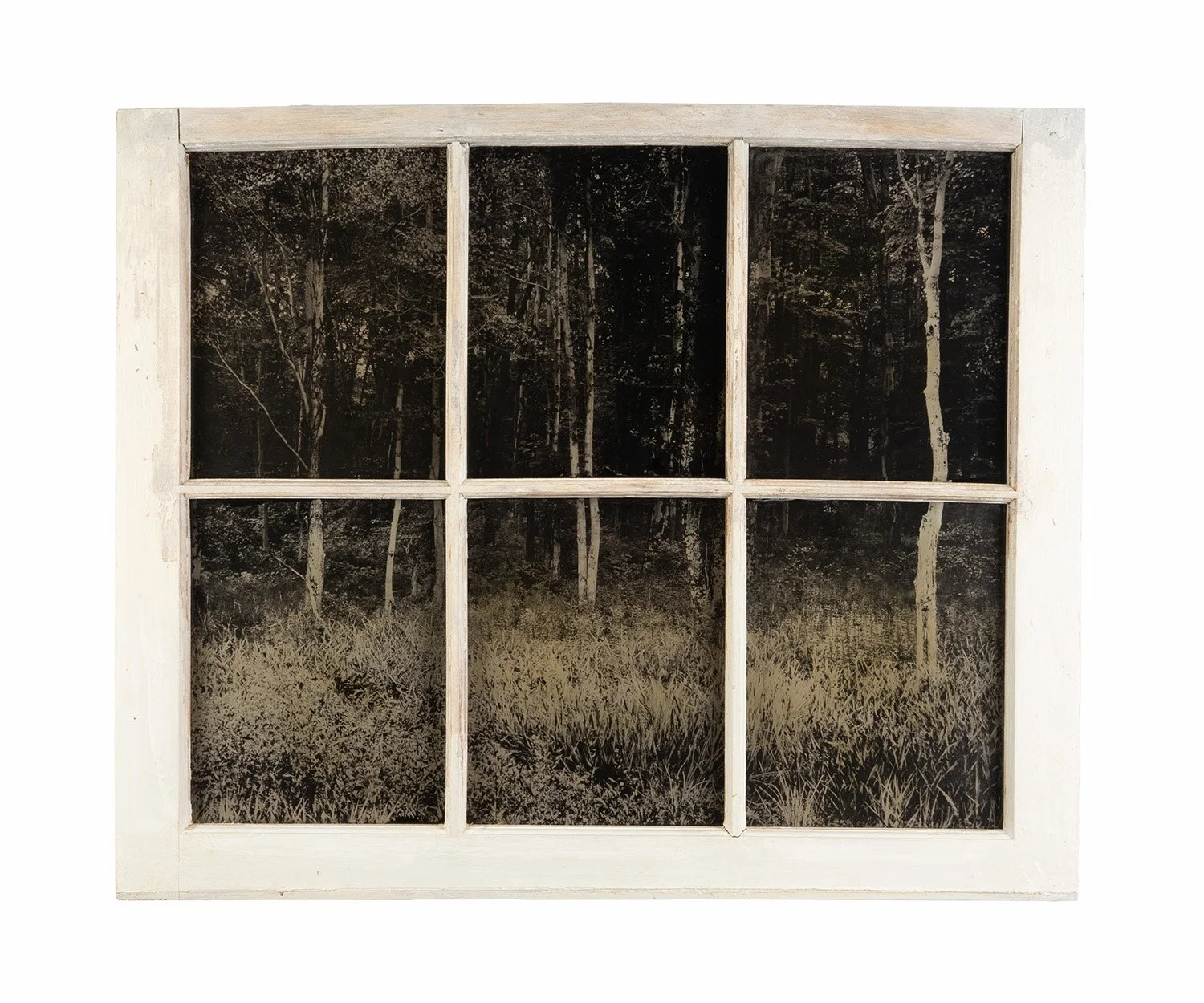
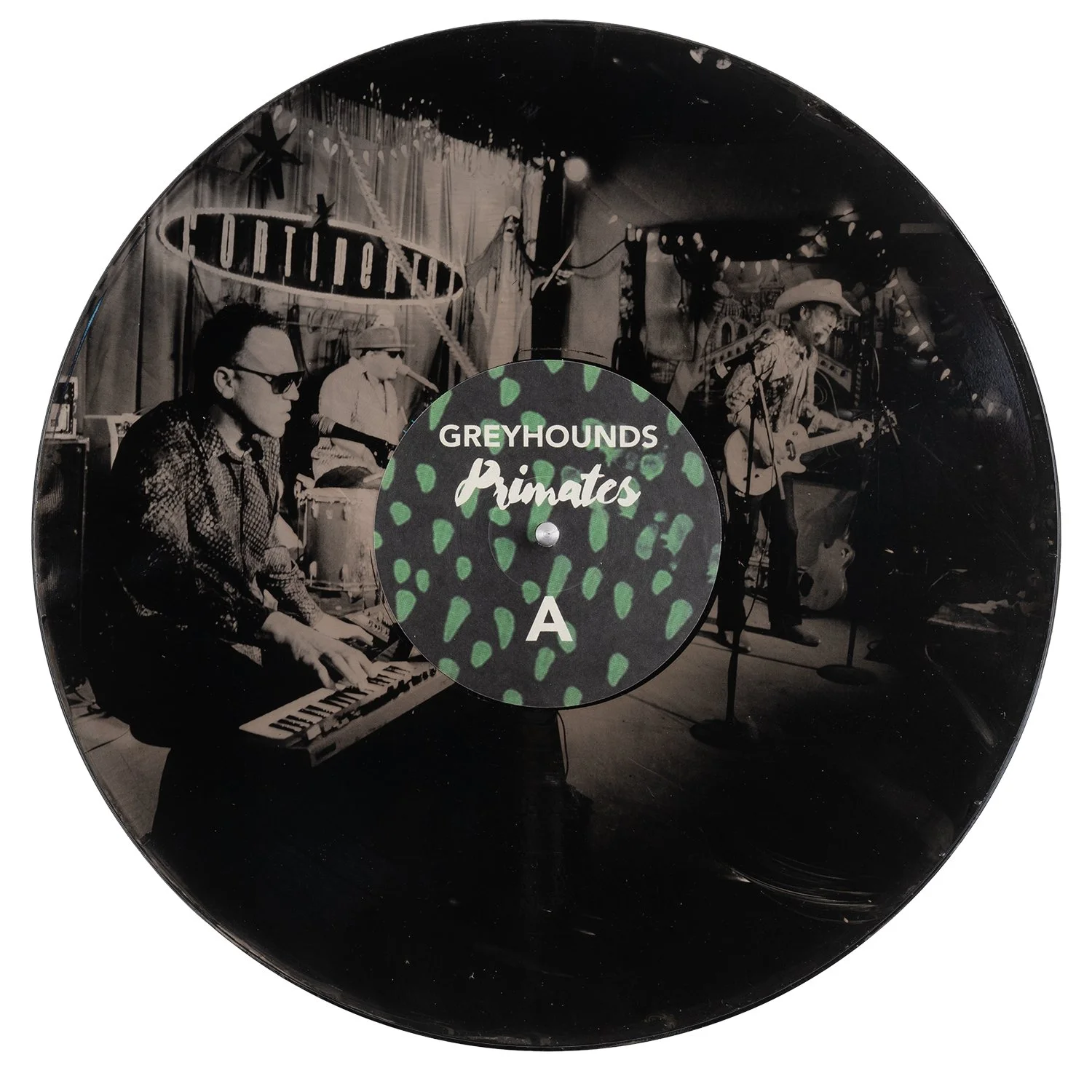
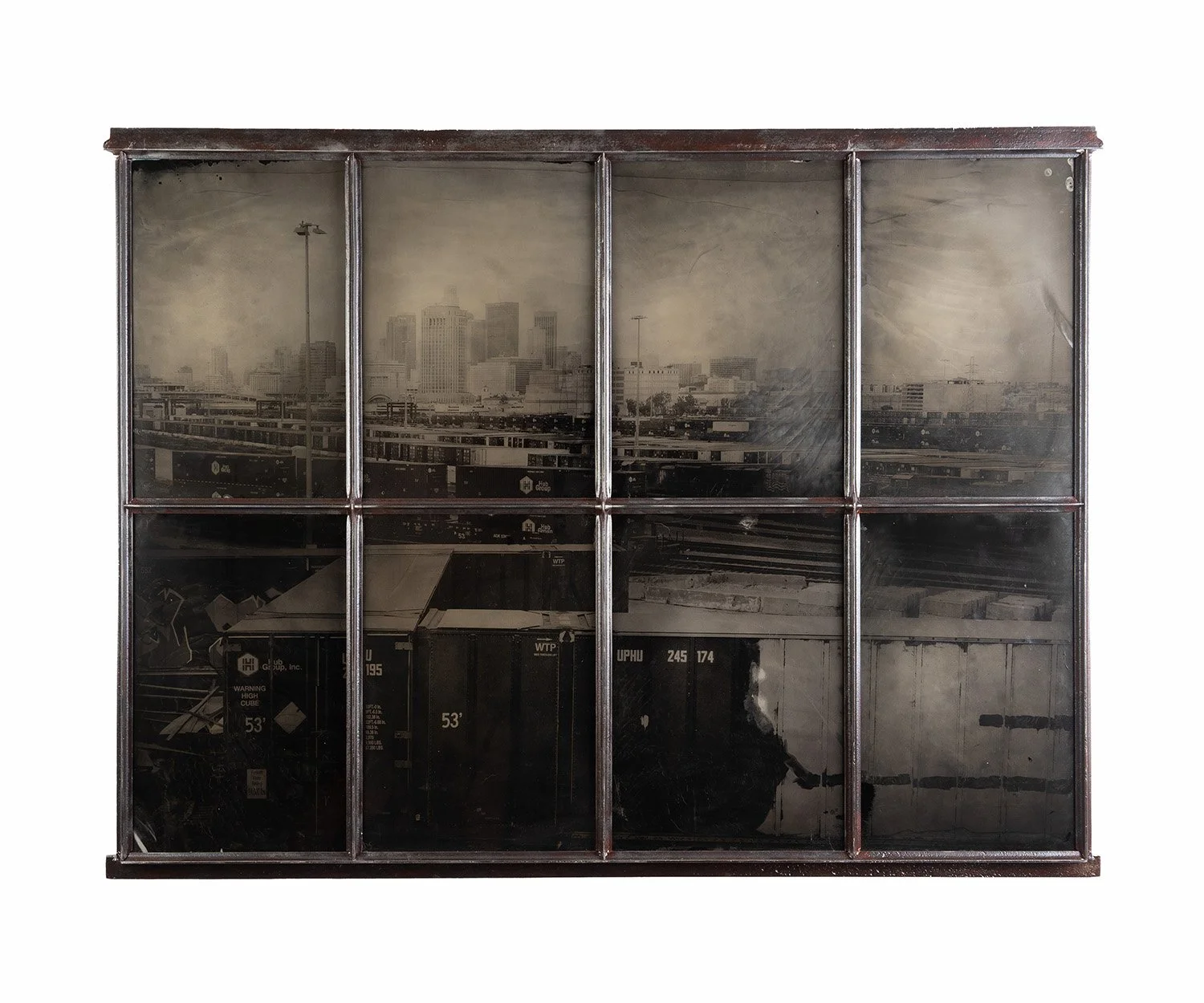
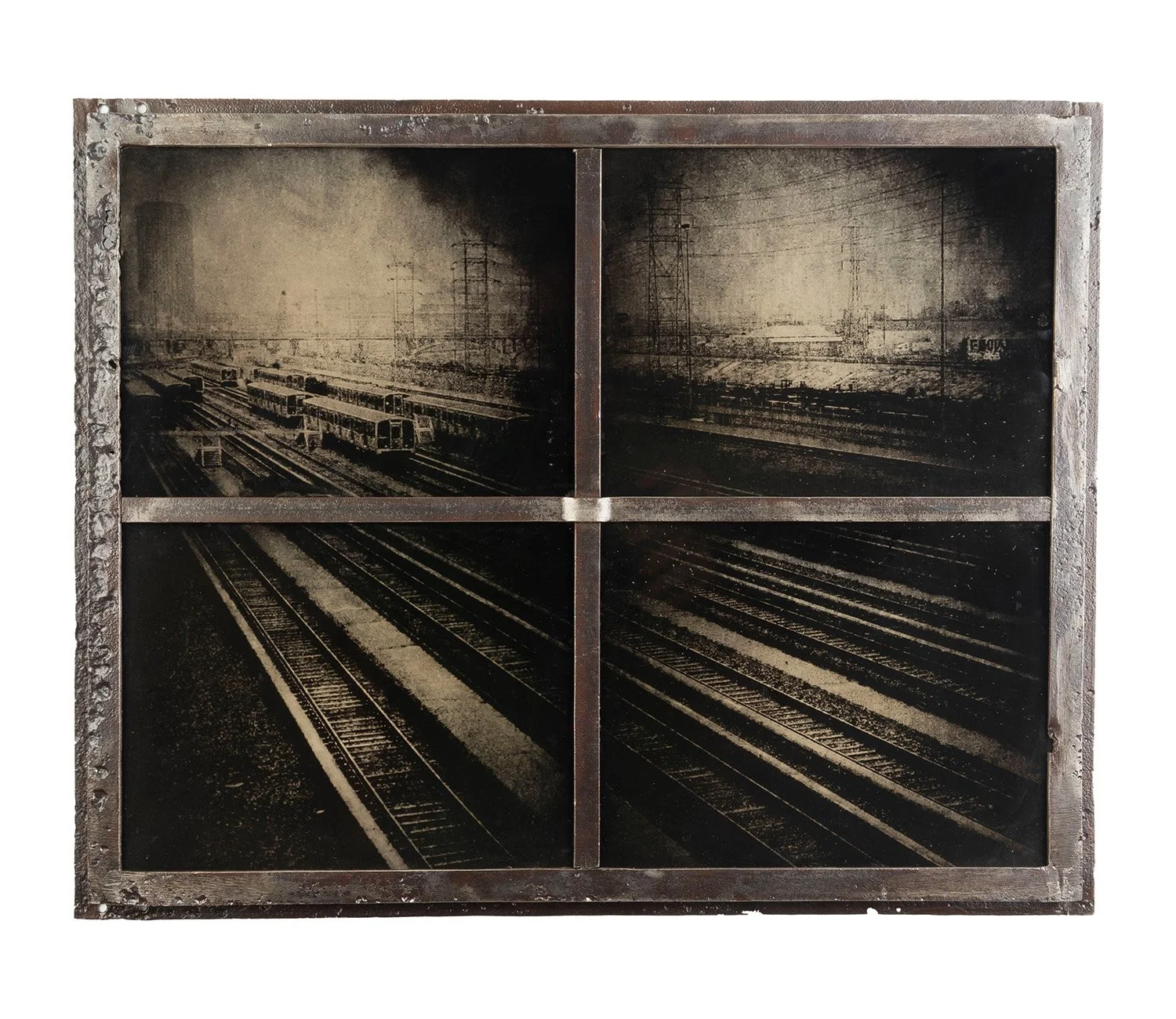
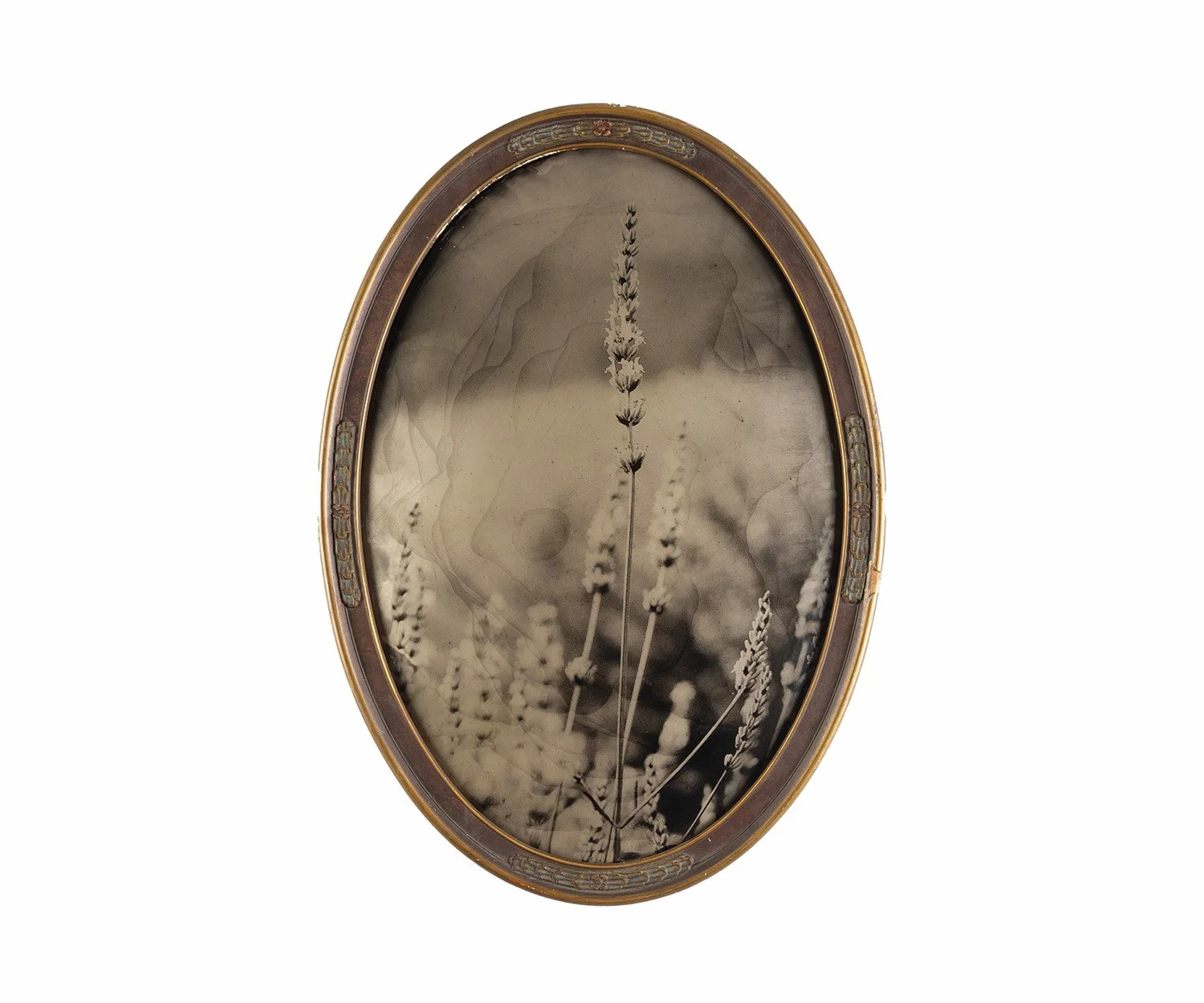
There is something wonderfully satisfying about that idea. It brings the photograph back to its source while giving the camera another purpose. And this offers a good place to begin with Hanenberg, an Albuquerque-based photographic artist whose work moves between image-making, historical processes, and the possibilities of salvaged objects. Vinyl records, box cameras, and windows are the starting points that form the three bodies of work he is currently exploring. In each, the surface has a role to play in what the photograph becomes. And each also finishes as an extraordinary photographic object.
The takeaway here is that Hanenberg is interested in making things, finding out what works, and following an idea far enough to discover what it might ask of him. The finished photograph belongs to an object with its own shape, texture, and prior use. Bringing those elements together is where much of the work takes place.
Born in New Jersey, close to New York City, Hanenberg grew up with encouragement for his creative interests. His father, a carpenter, often made things from wood scraps and bent metal. At thirteen, after seeing a wood carver demonstrate his craft, Hanenberg began taking lessons arranged by his mother. Long before photography became a serious pursuit, there was the example of someone working with available materials, along with the chance to learn what his own hands could do.
It is tempting to draw a straight line from those early experiences to the objects he works with today, though a creative practice rarely unfolds quite so neatly. Still, a familiarity with making, adapting, and finding a use for something already at hand feels very much at home in his current practice. It is interesting to begin to see the pieces of the puzzle come together to form an artistic life.
Later, photography gained a stronger foothold during college, when he acquired his first SLR and began photographing friends on rock climbing outings. Travel offered more subjects, and after college he started sharing his photographs and trying to sell prints at art fairs. His interest in the arts was strong, as was an awareness that he had more to learn. So, in the summer of 2007, he attended Maine Media Workshops to study photography further and help develop his creative process.
A move to New York followed, where he assisted photographers who brought opportunities to participate in editorial and commercial shoots. He also began making portraits and product photographs for smaller publications. Those experiences helped build the practical foundation for a practice that would eventually take a much more hands-on turn.
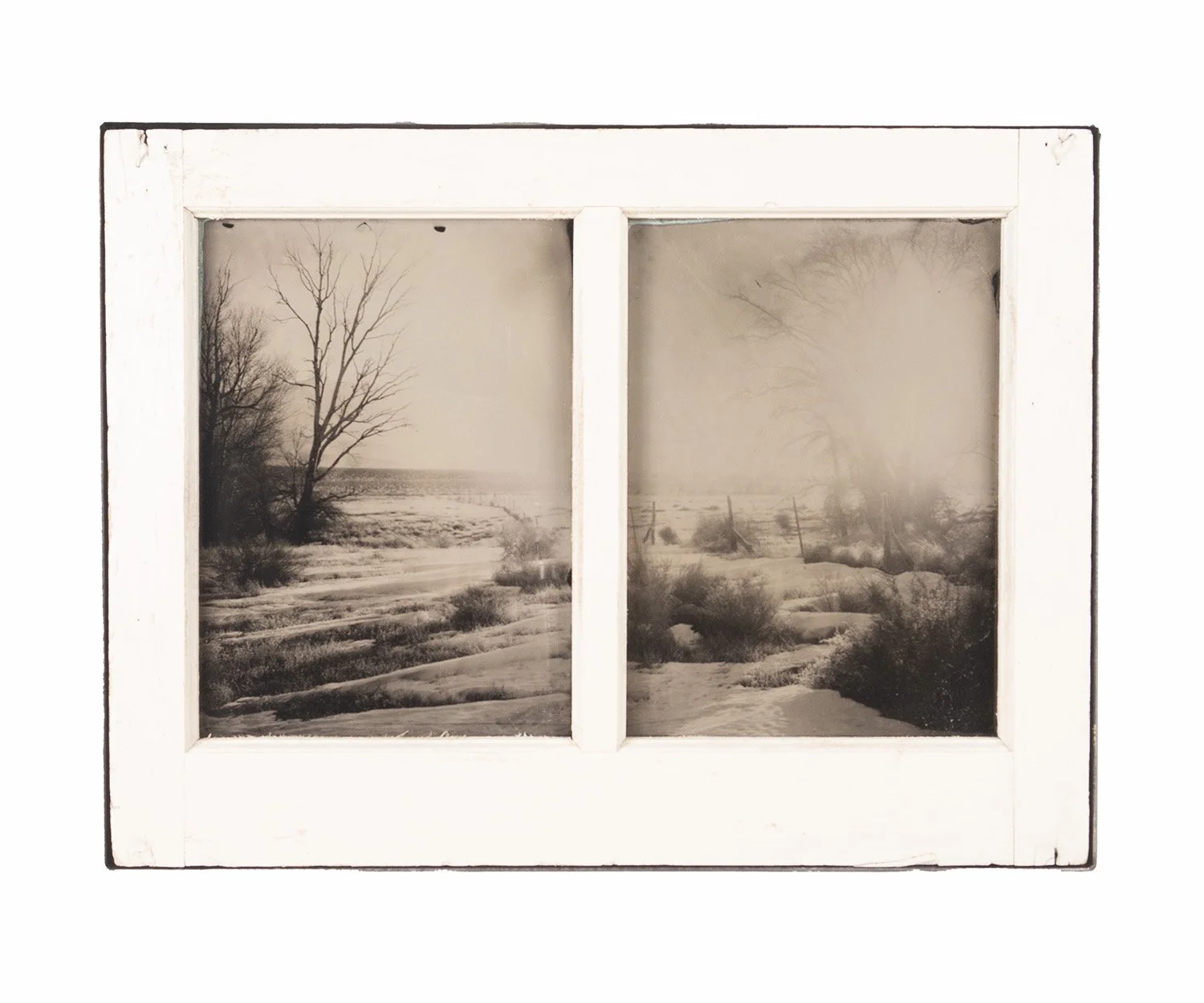
In 2019, another workshop gave him the opportunity to explore a process that had interested him for some time: wet plate collodion.
“After the workshop I was hooked,” he says. “I started experimenting with printing on other substrates and objects using the process.”
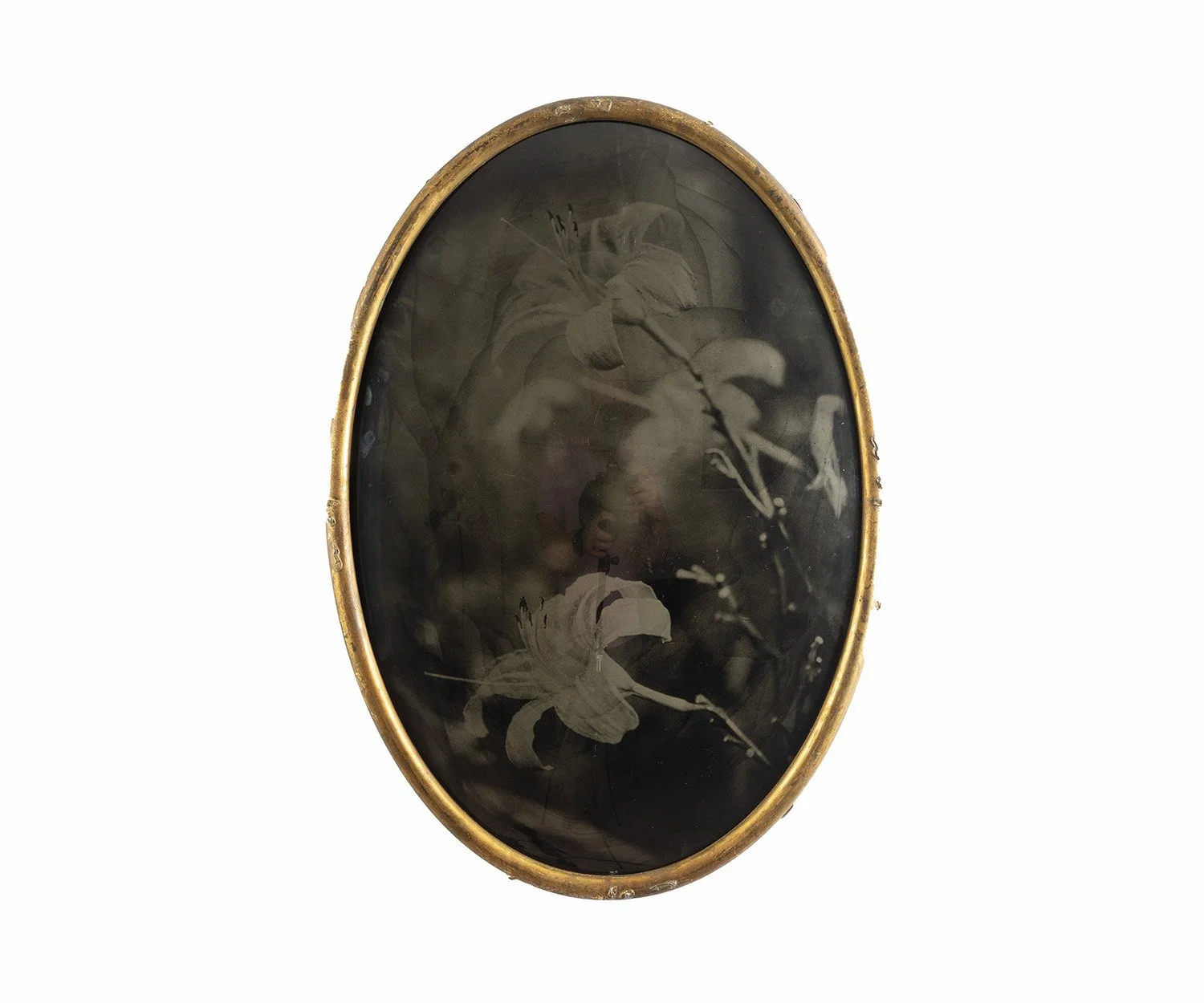
Clearly, this is where things begin to open up. Learning the process gave Hanenberg a starting point, and almost immediately he wanted to see where else it could go. What would happen if the photograph became part of a record? Could an old camera accept an image on its exterior? How much of an object's character could survive the preparation needed to make that possible?
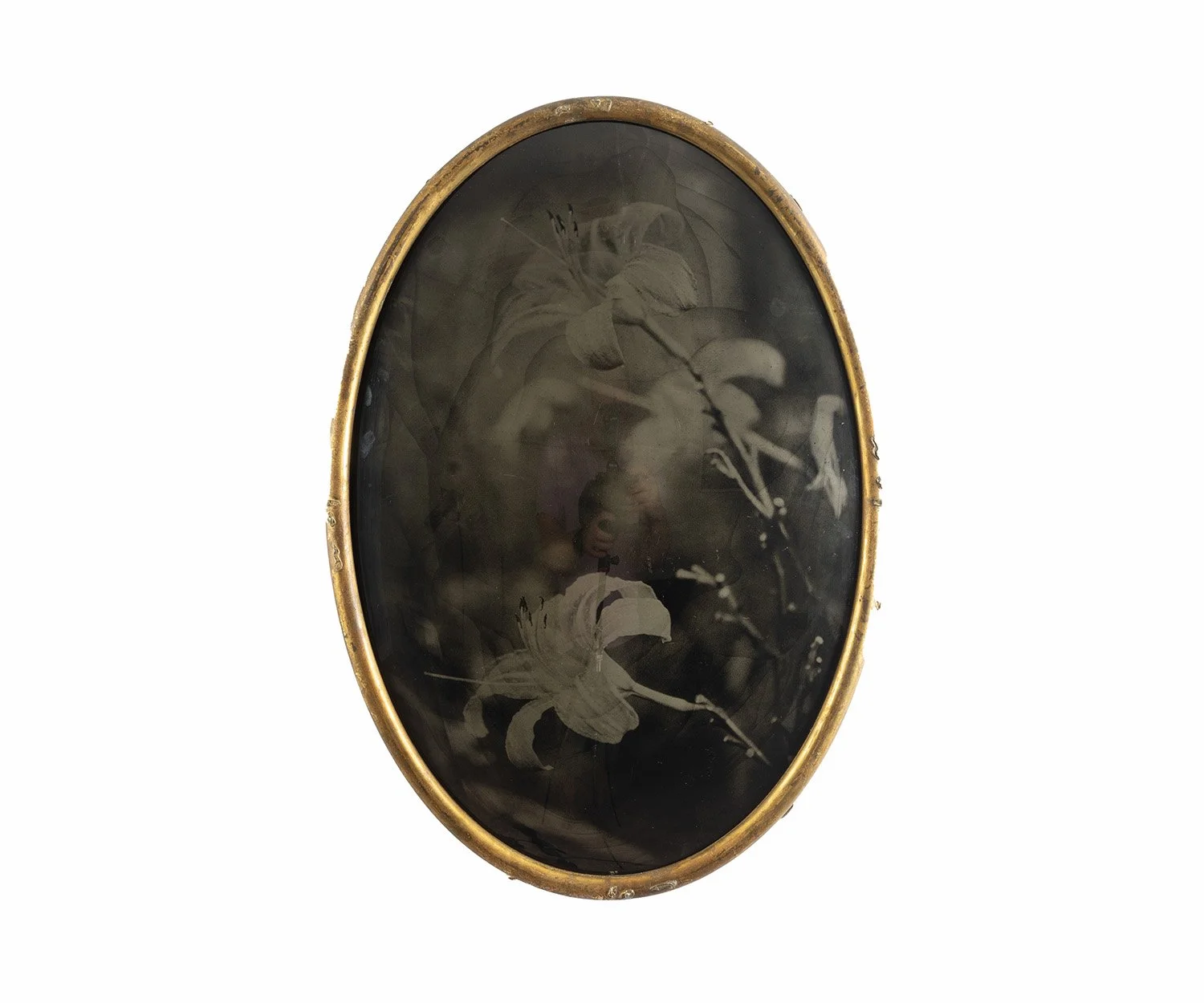
This last question proved especially important. Hanenberg wanted to preserve the texture and feel of the things he chose. Preparing a surface to accept collodion required much trial and error with varnishes, shellacs, and epoxies, each attempt bringing him closer to a workable result. The challenge involved both the chemistry and the object beneath it. A successful image still needed to feel connected to the material that carried it.
“What I love most is the constant experimentation and exploration,” he says.
There is plenty of room for both. In our discussion, Hanenberg describes wet plate as finicky even before introducing the complications of printing on objects. Anyone who has ever tried it knows this all too well. Those added difficulties are part of what makes a successful piece even more rewarding. Each surface poses a problem to work through, and solving it makes another idea possible.
His record pieces bring a different kind of planning into the photograph itself. The idea of placing musicians on records offers a direct relationship between subject and surface, but it also comes with compositional demands. A record is round, and its label occupies the center. Hanenberg has to think about those facts while making the original image, allowing for the final crop and keeping important information from disappearing.
I find that connection particularly interesting. We often think of choosing a presentation after a photograph has been made. Here, the intended object is already influencing how Hanenberg sees through the camera. The edges of the finished piece reach back into the act of framing. Its physical limits become part of the final visual decision.
His equipment is similarly guided by what a particular piece requires. As always, the right tool for the job is essential. Intrepid 4×5 and 8×10 cameras, a Mamiya RZ67, and a Sony a7 are among those he uses. He reserves the 8×10 for tintypes and ambrotypes and often works with transparency film elsewhere in his practice. Although he initially wanted to keep the entire process analog, making the pieces he imagined led him to welcome digital tools as well.
“My process is a mashup of mediums and methods,” he explains.
It is an approach that leaves room for the work to develop. The finished pieces are created in the darkroom, but the route there can change according to the needs of the image and its eventual surface. His commitment is to finding a way to bring the two together.
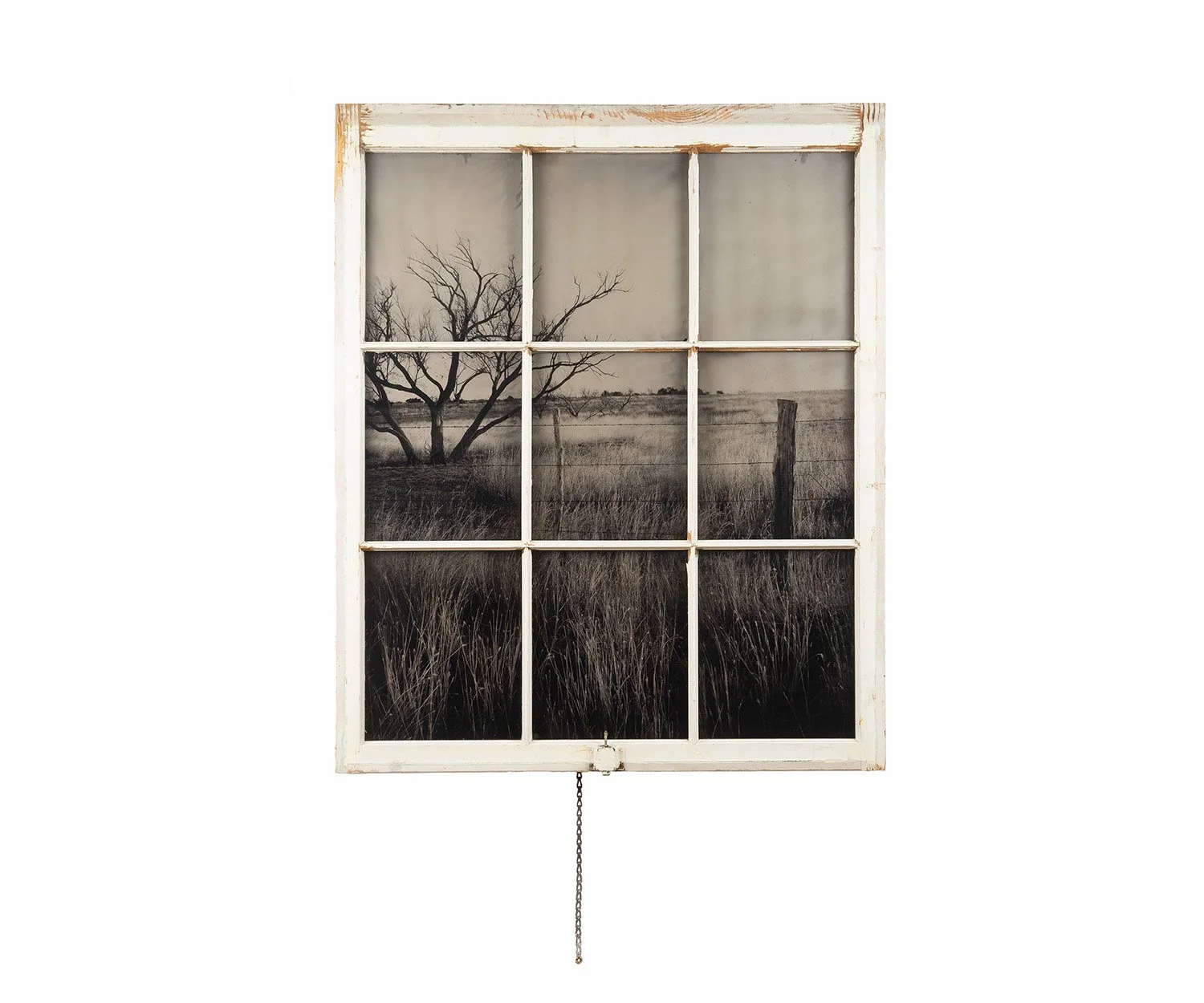
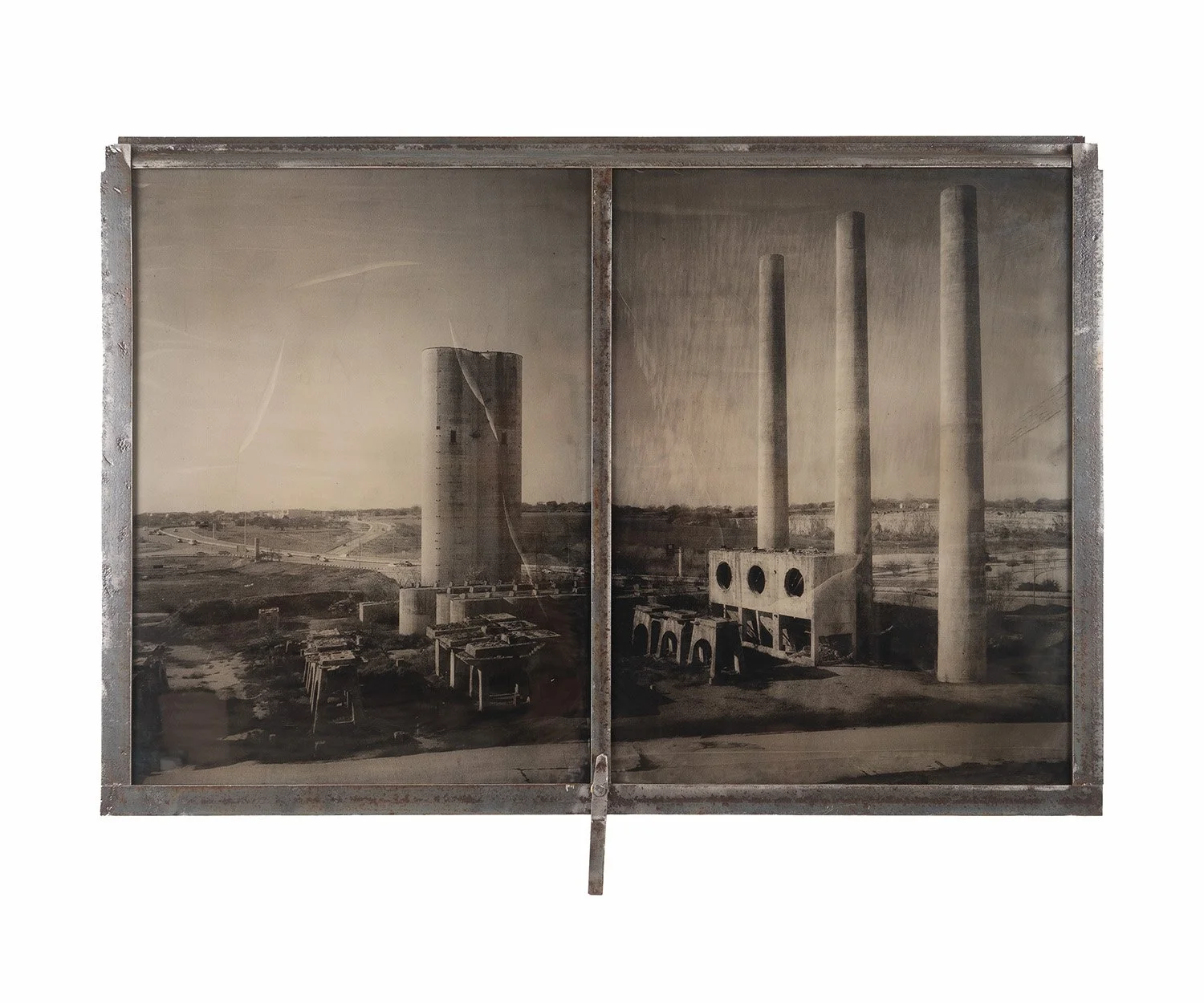
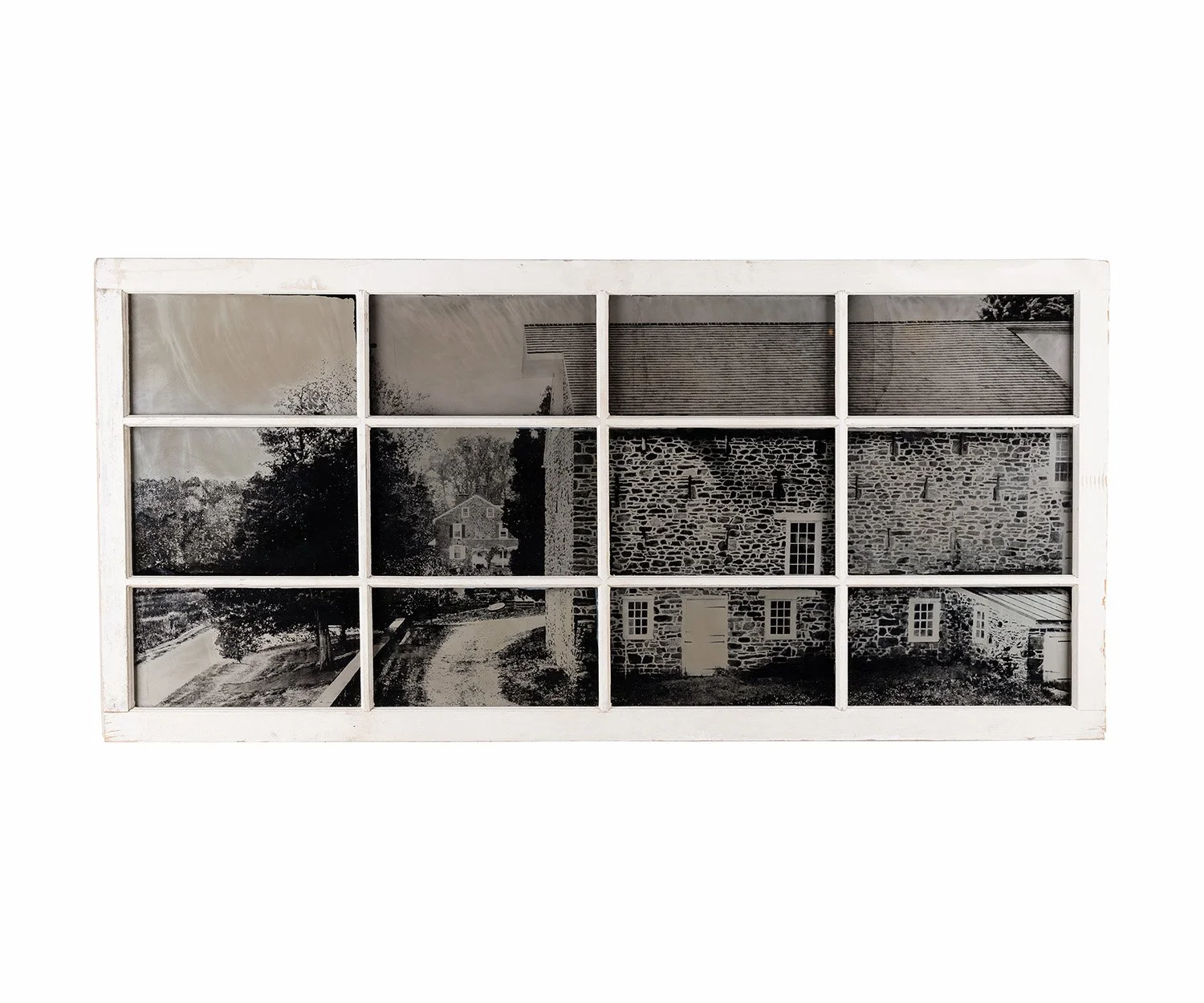
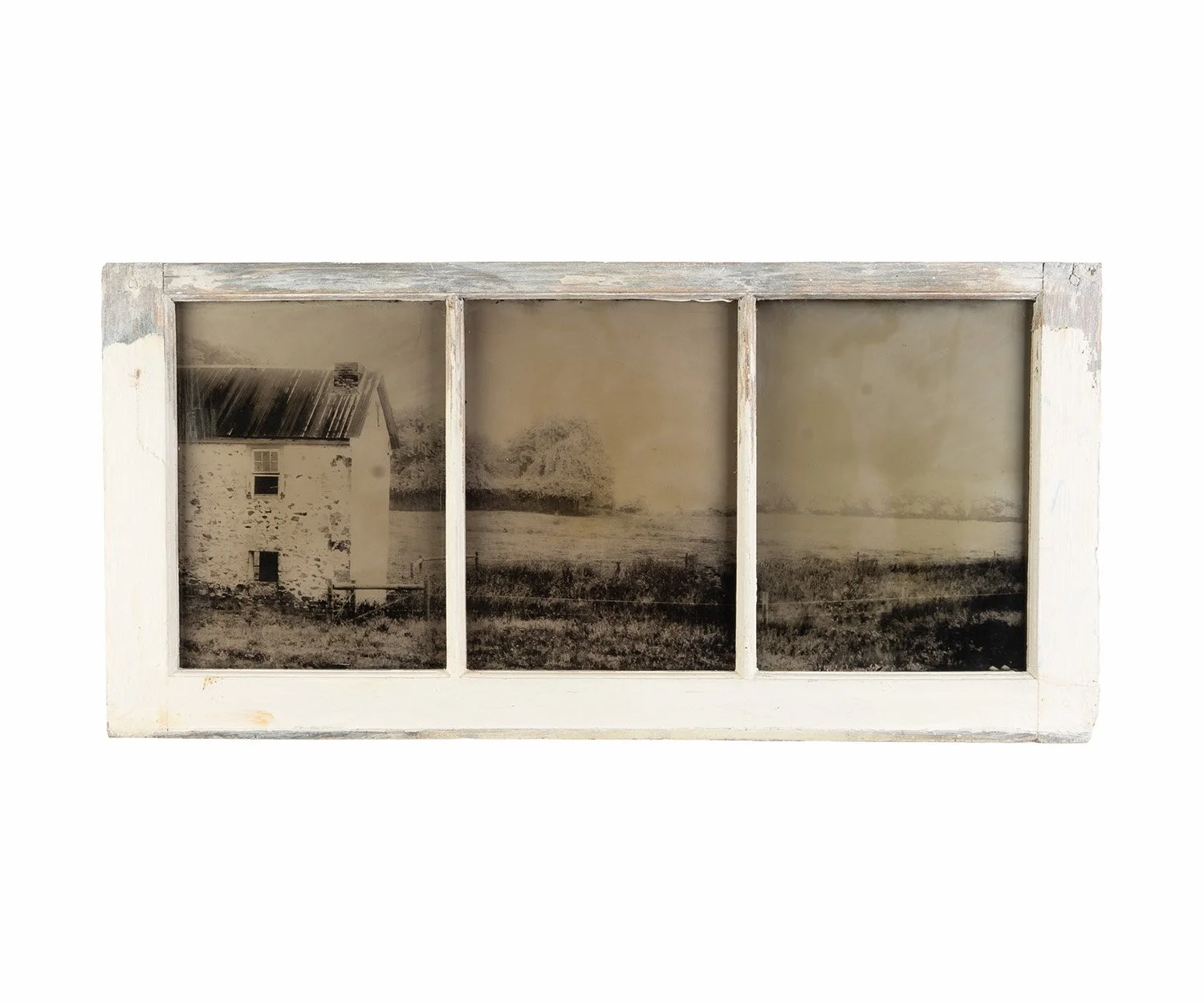
Windows offer another direction for that exploration. Viewing collodion plates framed in these windows is an act of looking back through time while still occupying a contemporary space. Hanenberg hopes to collaborate with organizations on a series that could benefit historic preservation, extending his interest in older objects toward the care of the places they belong to. For now, this remains an idea he would like to pursue in the future. In the meantime, antique shops continue to supply other possibilities, and he has begun collecting objects that may eventually become projects of their own.
That seems a fitting place to leave him: with materials gathered, some solutions found, and other questions still waiting on his workbench. The impulse that runs through these pieces is easy to recognize. Pick something up, consider its shape, and wonder what could happen if a photograph became a part of it.
Looking back to Hanenberg's box cameras, that thought comes full circle. A camera goes out into the world, makes an image, and returns carrying that image on its own surface. We can look at the photograph and the thing that made it at the same time. For an artist interested in what a photograph can become, there is still a great deal to explore in that simple yet complex exchange.
GALLERY
ABOUT THE ARTIST
Andrew Hanenberg is a mixed-media photographer based in New Mexico, known for working with alternative processing techniques popularized in the 19th century.
His knack for printing photographs on found objects is a defining feature of his work. By integrating repurposed or salvaged materials with his photography, he crafts thematic artworks that tell a story far richer than the visual can alone. In 2007, he attended the Maine Media Workshops, where he studied photography for the first time and learned the craft of visual storytelling, laying the foundation for his creative journey. Drawing on that experience, he began a professional career in New York. There, he supported photographers for editorial and commercial shoots for Fortune, ESPN, and People magazine, honing his expertise before expanding his artistic horizons.
Today, his work has been included in juried shows, including an honorable mention at the Size Matters Juried Exhibition at San Diego Mesa College Art Gallery celebrating photo-based artwork smaller than 10”.
Andrew lives in New Mexico, where he continues challenging the limitations of what a photograph can be.
ABOUT THE AUTHOR
Michael Kirchoff is a commercial and fine art photographer and the Editor-in-Chief of Analog Forever Magazine, a publication dedicated to supporting contemporary analog photography and the artists who continue to shape the medium through process-driven and conceptually rich work. Through interviews, curated exhibitions, written features, and collaborative projects, he works closely with emerging and mid-career photographic artists from around the world while helping foster a broader appreciation for film-based and handmade photographic practices.
In addition to his work with Analog Forever, Michael is the Founding Editor of Catalyst: Interviews and co-host of The Diffusion Tapes podcast, where conversations center on creativity, artistic intent, and the evolving landscape of photography. His editorial and curatorial work often explores the relationship between process, materiality, and personal vision, with a particular interest in artists whose work demonstrates thoughtful cohesion both visually and thematically.
Michael has served as an independent curator, juror, portfolio reviewer, and educator for organizations, galleries, and non-profits throughout the United States and abroad. He was also a Contributing Editor at One Twelve Publishing from 2020-2024, writing for Poignant Portfolios, as well as his own column, Traverse.
During his tenure on the Board of Directors for the American Photographic Artists Los Angeles chapter from 2006–2016, he helped develop educational programming, artist lectures, and community initiatives supporting both commercial and fine art photographers.
Based in Los Angeles, Michael continues to advocate for the photographic arts through publishing, curation, mentorship, and collaborative projects that encourage deeper engagement with contemporary photography and the artists behind it.
RELATED ARTICLES




In rural Kansas, large-format photographer and master printer Michael Strickland is pushing traditional printmaking to extraordinary lengths. For his Of the Earth series, Strickland grinds soil, clay, and charred wood gathered from the landscapes he photographs into pigments for his color carbon prints, physically embedding the land within the finished work. We spoke with Strickland about process, place, the disappearing craft of photographic printmaking, and why the physical print still matters.